

Employee advocacy is almost always framed as a marketing play.
Reach more people. Generate more pipeline. Extend brand awareness beyond the company’s own channels.
That framing isn’t wrong. But it’s incomplete.
Because the same mechanism that sends brand messages out into the world (employees sharing content on LinkedIn) is also one of the most effective ways to get those messages into the heads of other employees.
We tested that hypothesis. We analyzed over 1,000 LinkedIn posts featuring company-centric content, and what we found changed how we think about the relationship between employee advocacy and internal communications.
This post covers what we found, why it matters for enterprise communications teams, and the specific ways an employee advocacy platform closes the gap between internal and external comms.
The Research: What Happens When Employees Share Company Content on LinkedIn?
We analyzed 1,000+ LinkedIn posts containing company-centric content: blog posts, behind-the-scenes photos, announcement posts, and recognition content.
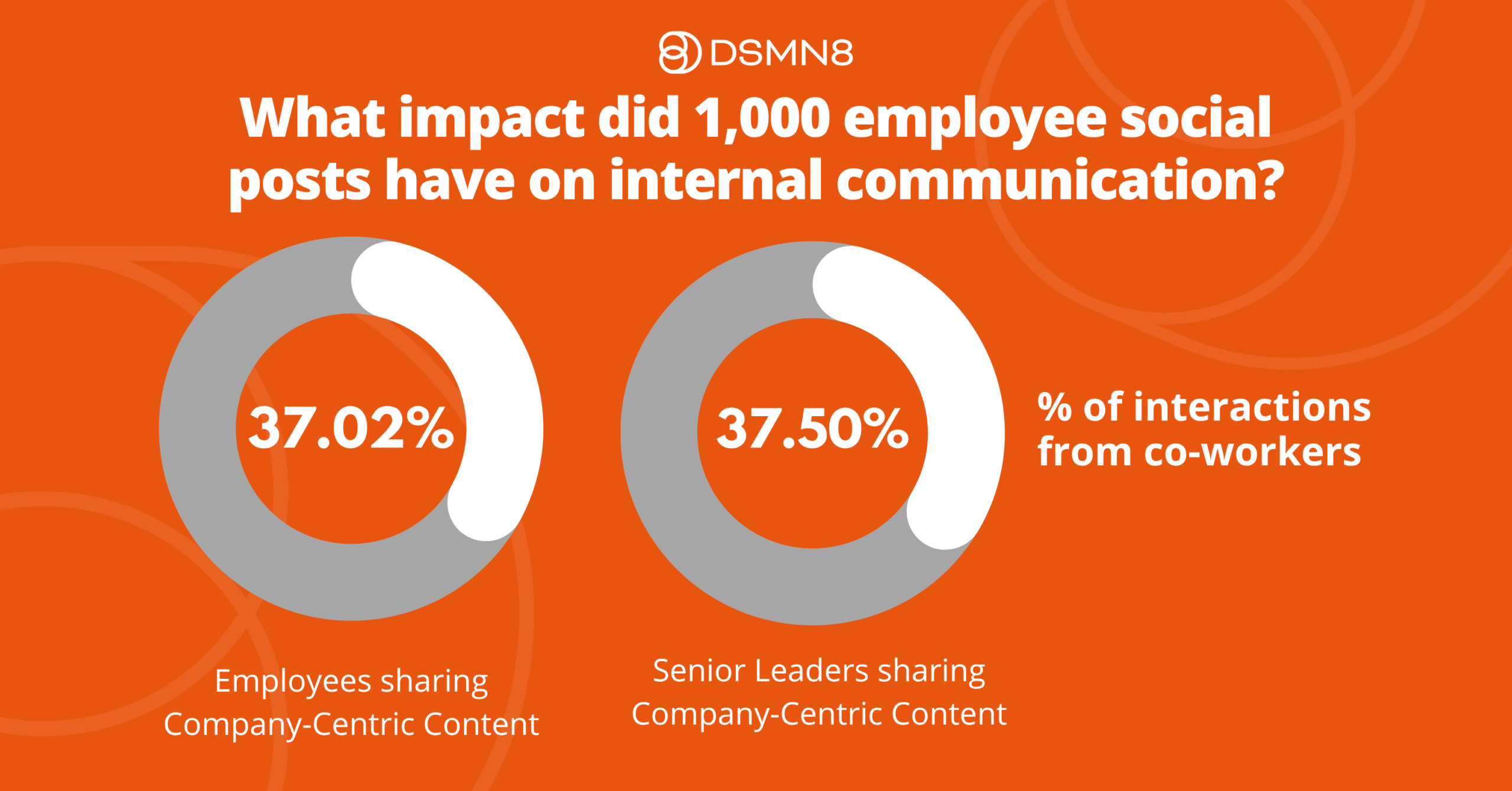
We split the data between senior leaders (VP and above, 400 posts) and non-senior leaders (599 posts), then looked at who was actually engaging with those posts.
The headline finding:
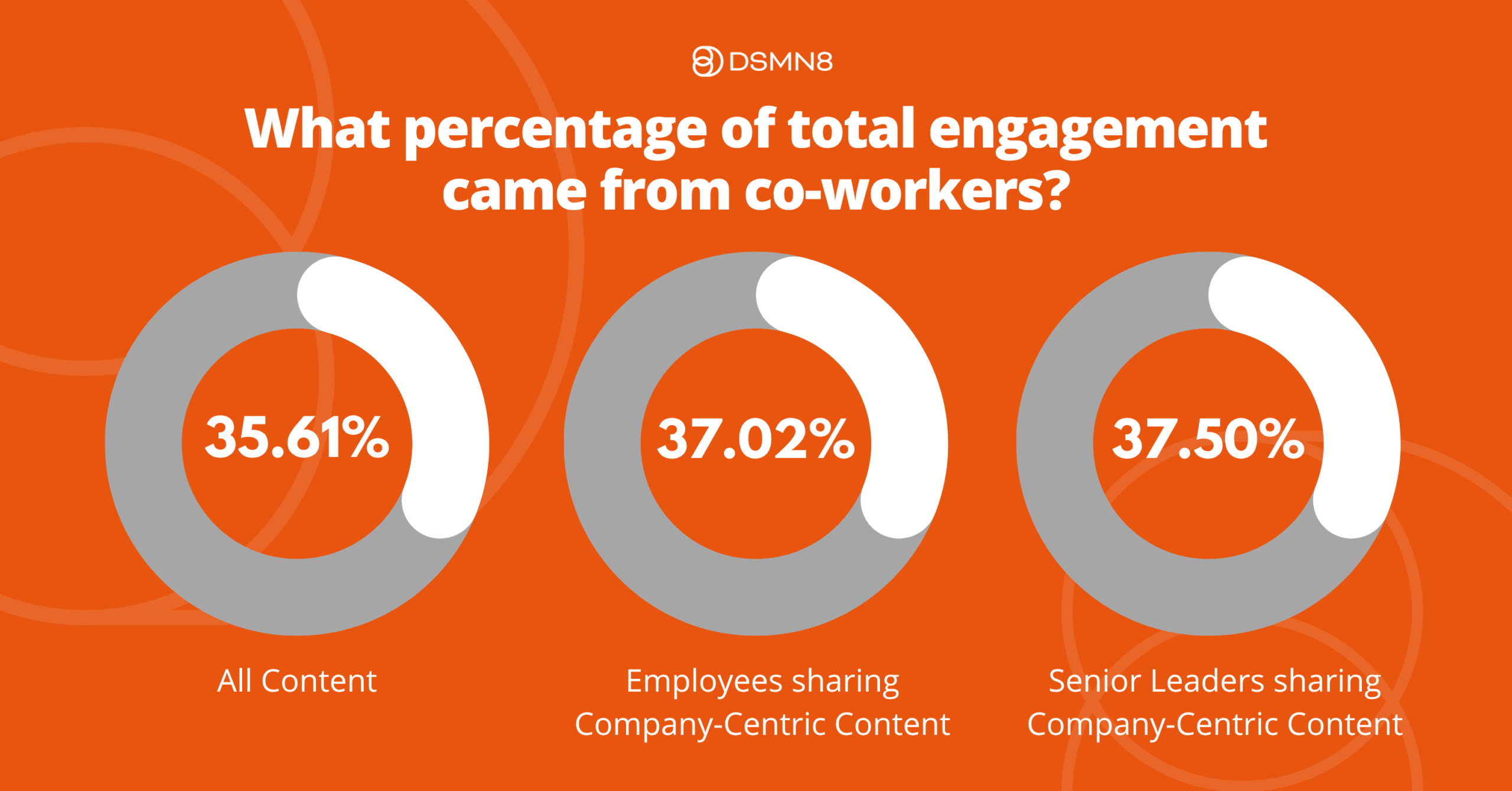
35.61% of all interactions on company-centric posts came from co-workers.
That number goes higher when a senior leader is posting. Co-workers accounted for 37.5% of interactions on senior leader posts, with each post engaging an average of 27 co-workers.
Non-senior leader posts engaged an average of 22 co-workers per post.
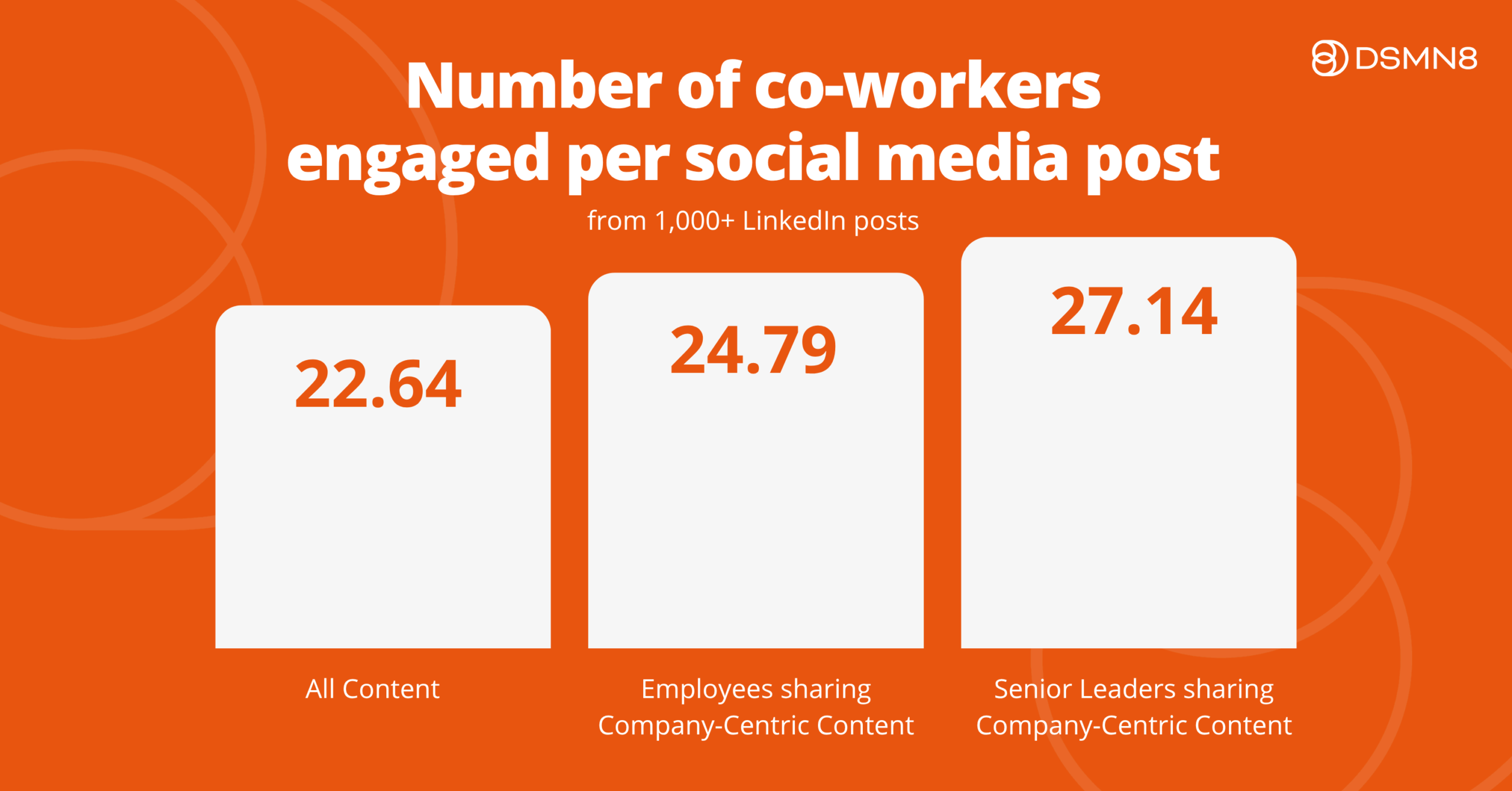
What does that mean in practice? A company with 250 senior leaders actively sharing content on LinkedIn could reach 6,750 colleagues through those posts, without a single internal email, push notification, or Slack message.
Those employees aren’t just seeing the content. They’re liking it, commenting on it, and resharing it. They’re engaging with brand messages in the same way they engage with everything else on LinkedIn: voluntarily, in their own time, in a feed they actually check.
Not every employee reads all internal emails. Not every employee visits the intranet regularly. But lots of them do scroll LinkedIn.
That’s the gap employee advocacy bridges.
Why Internal and External Communications Drift Apart (And Why It Matters)
In most enterprise organizations, internal and external communications operate as separate functions. Different teams, different tools, different metrics, different calendars.
Internal comms manages announcements, culture messaging, and leadership updates. External comms manages brand voice, thought leadership, and social presence.
The result: employees are often the last to know what the company is saying publicly.
Executives post on LinkedIn without coordination. Sales hires share third-party content because nobody told them what to push this month. A product launch goes live externally before the team has seen the messaging.
This isn’t a failure of intent. It’s a structural problem: there’s no shared operating layer between the two functions.
An employee advocacy platform becomes that layer. Not by replacing either function, but by giving both access to the same content, the same governance, and the same distribution infrastructure.
🔎 Want to see what this could look like for your company? Try our Employee Advocacy Reach Calculator.
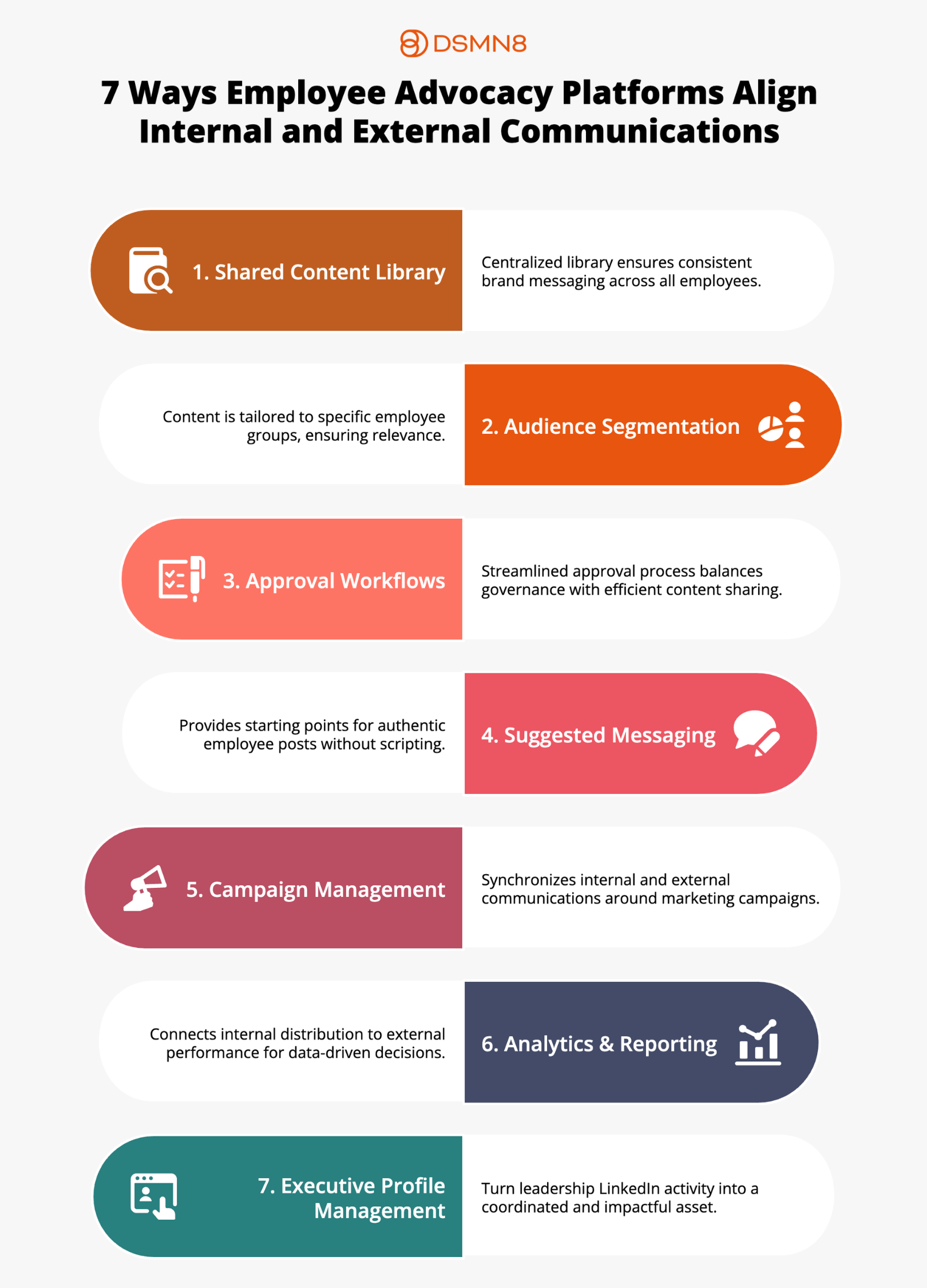
7 Ways Employee Advocacy Platforms Align Internal and External Communications
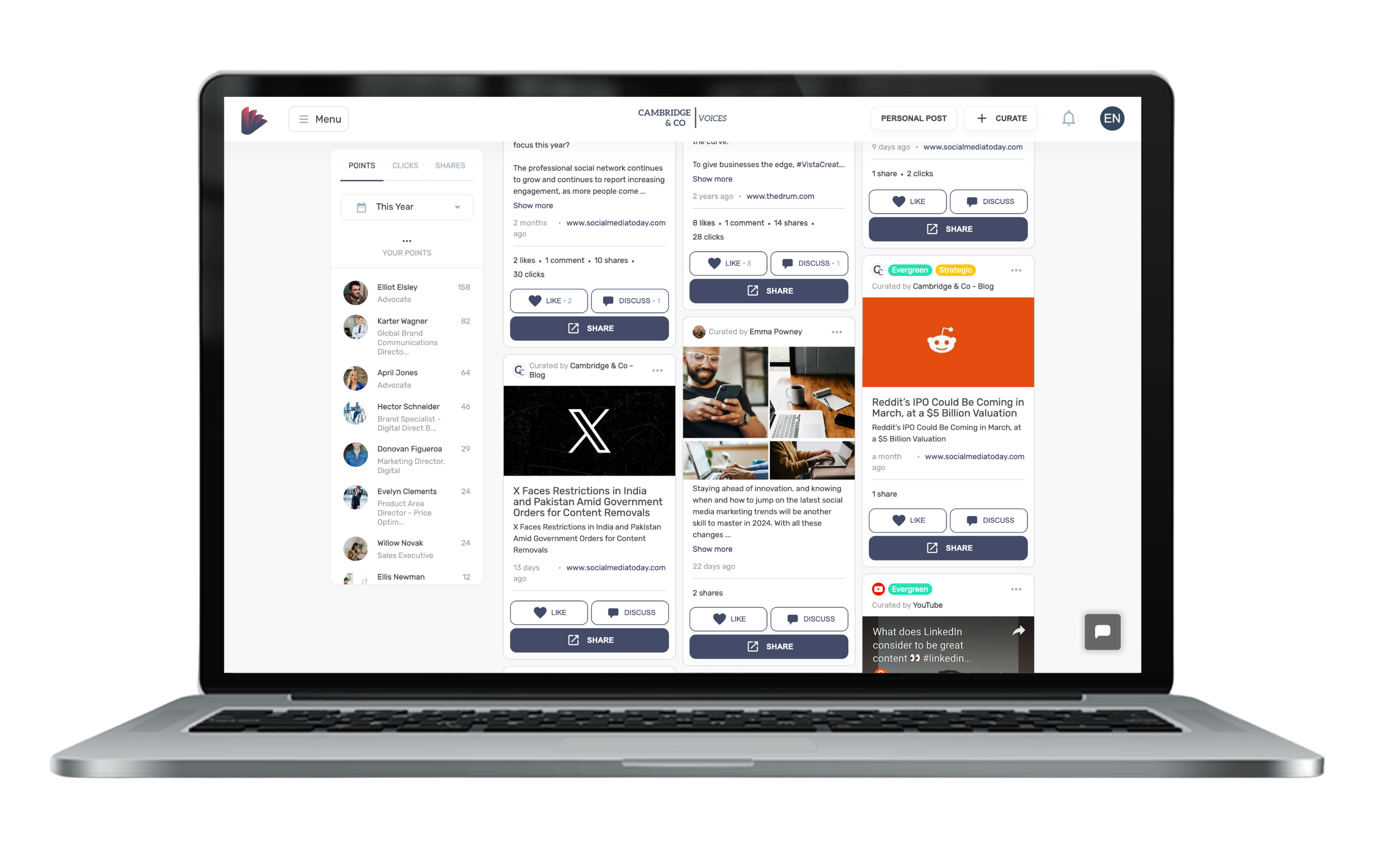
1. A Shared Content Library Creates One Version of the Brand Story
When internal and external teams source content from different places, inconsistency is the default outcome. Someone in sales shares a post using last quarter’s messaging. A new hire doesn’t know what’s current.
Employee advocacy platforms solve this with a centralized content library: a single place where approved, current, on-message content lives. Internal comms teams contribute campaign content and culture posts. External comms contribute thought leadership and product messaging.
Every employee who chooses to share is working from the same source.
2. Audience Segmentation Means the Right Message Reaches the Right Employee
External communications are targeted by audience segment, buyer persona, and funnel stage. Internal communications should follow the same logic, but rarely do.
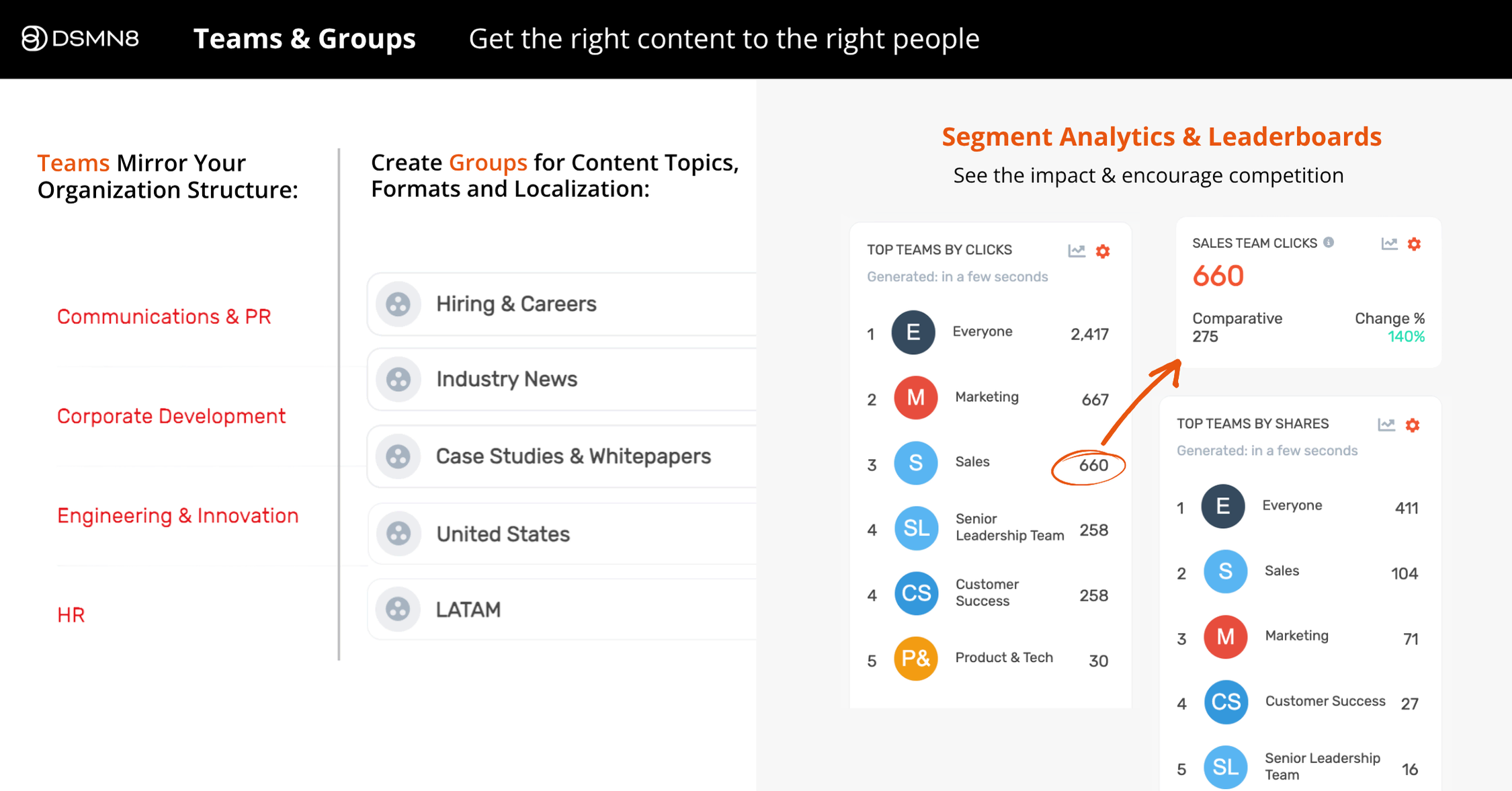
Enterprise employee advocacy platforms with segmentation capabilities let comms teams assign content by region, business unit, seniority, or role. Thought leadership aimed at financial services decision-makers surfaces to the team members who actually speak to those buyers. Culture content tied to a hiring push appears to employees in regions with open roles.
DSMN8’s segmentation works at a granular level: custom feeds per employee mean every person sees content that’s relevant to both their internal role and their external audience, without being overwhelmed by content that isn’t.
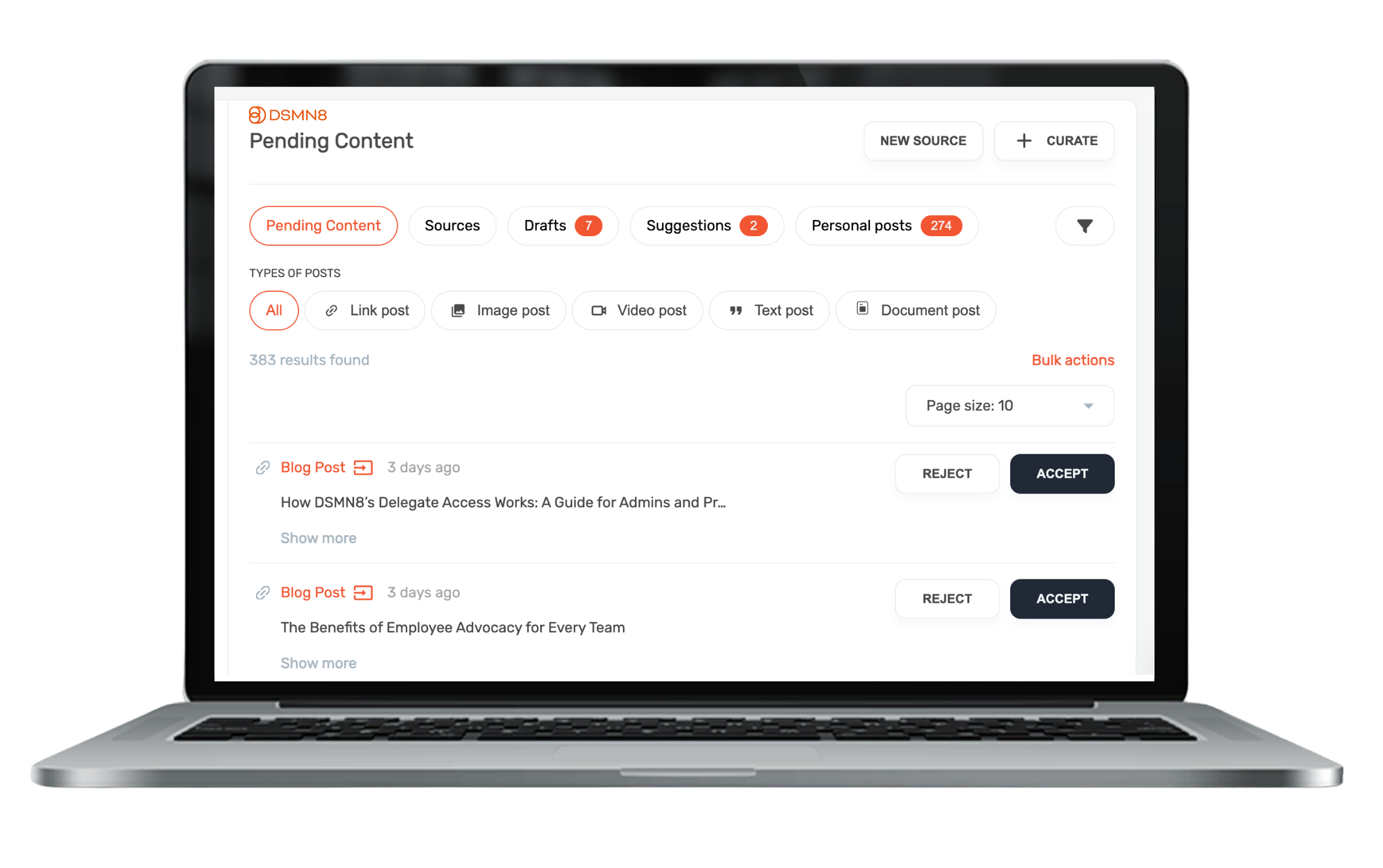
3. Approval Workflows Let Comms Teams Govern Without Creating Bottlenecks
The instinct in large organizations is to lock down communications. But rigid approval for every piece of content makes sharing impractical, and impractical programs stall.
Taking a tiered approval approach resolves this. High-stakes content (anything regulated, legally sensitive, or tied to a material announcement) should have a sign-off before it’s curated for employees to share.
But standard content should be pre-approved and available immediately. This prevents bottlenecks for internal and external comms teams and ensures a consistent flow of content for employees to share.
And for senior leaders? Create content specifically for them, and use DSMN8’s simple workflow for executives to quickly review content and edit or opt out if they choose before it goes live.
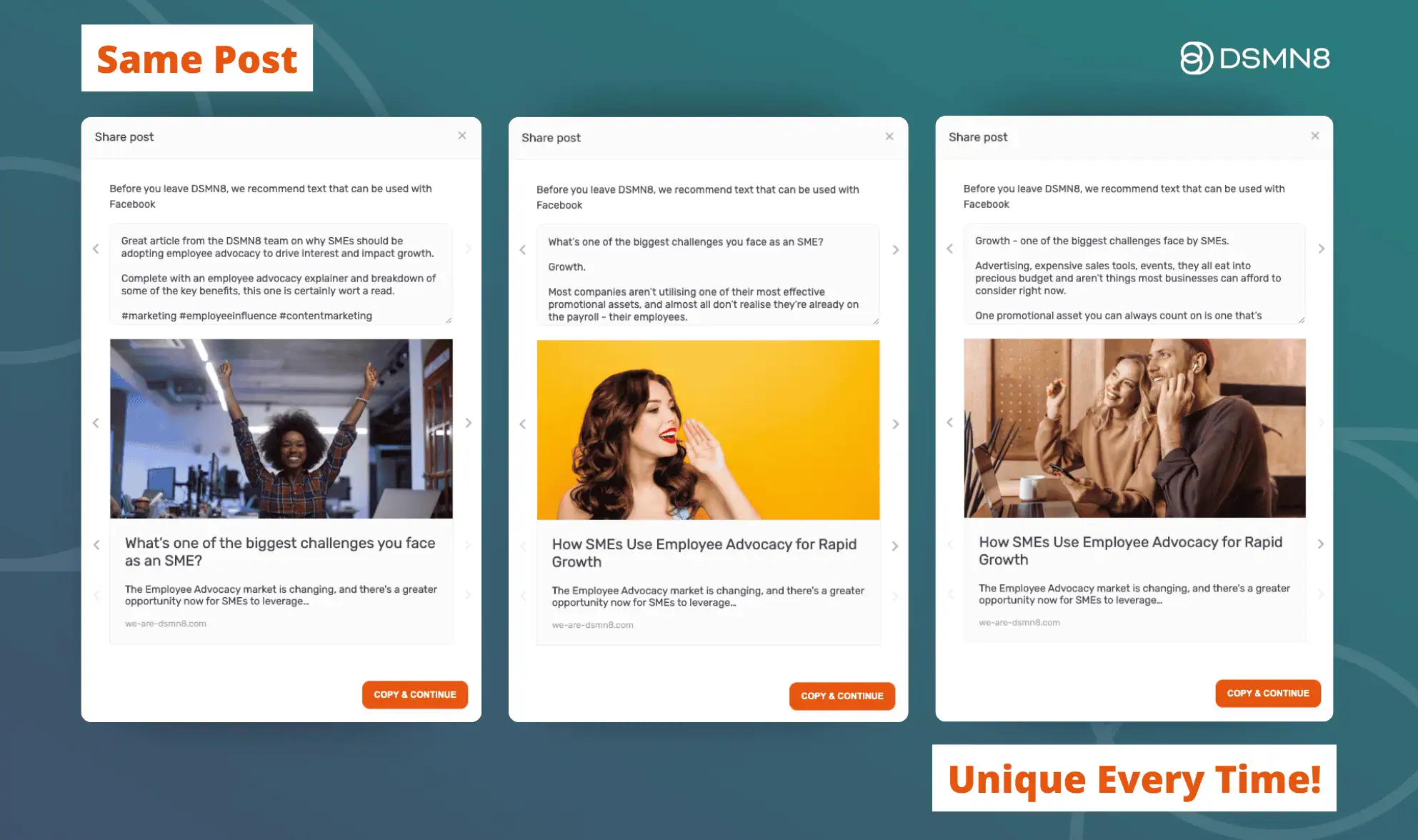
4. Suggested Messaging Aligns Employee Voice Without Scripting It
One of the core tensions in enterprise advocacy is between brand consistency and authentic employee voice.
Pre-written scripts reduce the authenticity that makes employee content perform. But leaving employees without guidance results in off-message posts, or no posts at all.
Suggested messaging helps here. Draft captions that employees can use as-is or edit freely give people a starting point without prescribing an output. Tools like Personal Voice AI help employees post content in their own style without losing the core message.
Internal comms can write suggestions that reflect the culture narrative. External comms can write suggestions aligned to campaign timing and product positioning.
The employee gets something helpful. The brand gets consistency across a distributed workforce without losing the personal element that makes employee content more trusted than brand content.
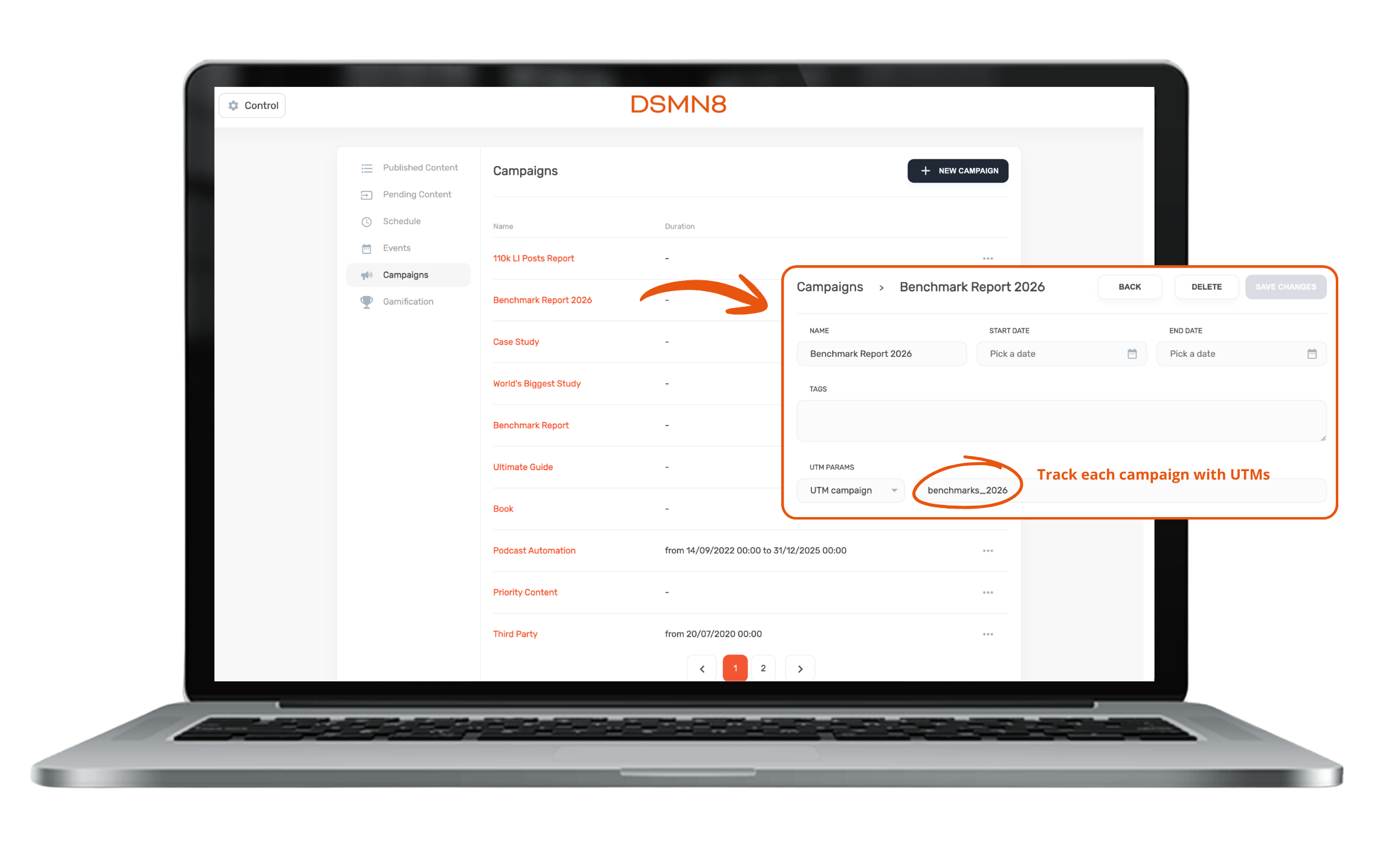
5. Campaign Management Keeps Internal Teams and External Messaging in Sync
Enterprise marketing runs on campaign calendars: product launches, industry events, earnings periods. The communications challenge is getting internal audiences activated at the same moment external activity peaks.
Employee advocacy platforms with campaign management let comms teams pre-load content tied to specific dates and themes, then surface it to employees at the right moment, all tracked with UTMs.
A product launch campaign can include customer-facing messaging for sales, thought leadership for executives, culture content for HR, and technical posts for engineering, all going live simultaneously.

6. Analytics Connect Internal Distribution to External Performance
Without data, internal comms teams have no visibility into whether their content is reaching external audiences. They produce and distribute. What happens next is invisible to them.
Employee advocacy analytics close this loop. The data shows which content employees are actually sharing, which posts are generating reach and engagement, and which employee segments are most active externally.
Admins can see directly how content performs on social media. That data informs future content decisions, identifies which internal audiences are effective external ambassadors, and creates accountability against shared outcomes.
DSMN8’s analytics track reach, engagement, shares, and user adoption across the program, giving comms teams a single dashboard that spans both the internal distribution and the external results.
7. Structured Executive Programs Make Leadership LinkedIn Activity a Coordinated Asset
Executive thought leadership is where internal and external communications overlap most visibly, and where misalignment is most costly.
A CEO who posts on LinkedIn without coordination with comms creates risk. A leadership team that goes quiet during a critical market moment leaves a gap that competitors fill.
Our data shows that senior leaders posting company-centric content on LinkedIn drives a 37.5% co-worker engagement rate, averaging 27 colleague interactions per post.
That means leadership’s LinkedIn activity isn’t just an external comms play; it’s one of the most effective internal reach mechanisms available.
Structured executive advocacy programs make this intentional. Comms teams curate content specifically for leadership, track how executive posts perform against brand goals, and coordinate what leaders say externally with what internal teams need.
The executive’s LinkedIn presence becomes a coordinated asset rather than an unmanaged channel.
Want to see how structured executive advocacy works in practice? Explore DSMN8’s Executive Influencer Platform.
What The Data Tells Us About the Opportunity
The 1:27 ratio from our research (one senior leader post engaging 27 co-workers) has a straightforward implication at scale.
A company with 250 senior leaders actively sharing on LinkedIn could reach 6,750 colleagues per round of posts.
At 500 non-senior advocates sharing (using the 1:22 ratio), that’s 11,000 employee touchpoints without a single internal broadcast.
The employees who see those posts are doing so voluntarily, in a channel they already trust, in content served alongside posts from people they’re connected to personally. That’s a different quality of attention than an internal email with a 40% open rate.
Employee advocacy doesn’t replace internal comms. But it reaches the employees that internal comms misses.
💡 Wondering where your organization’s employees already stand on LinkedIn? Get a free employee advocacy audit to see how your team compares to competitors.
In this episode of the Employee Advocacy and Influence Podcast, DSMN8 CEO Bradley Keenan digs into the relationship between employee advocacy and internal communications, covering where they overlap, and how enterprise teams should think about both:
How DSMN8 Helps
DSMN8 is the employee advocacy platform that brings internal and external communications together in one place.
Employees find and share the latest company content from a single dashboard, on desktop and mobile.
Comms teams segment content by department, region, and seniority. Integrations with Slack, Microsoft Teams, and Salesforce mean employees can share directly from the tools they already use. Analytics track reach, engagement, and program participation across the whole workforce.
Book a demo to see how it works for your organization.
Additional Resources
More on employee advocacy & internal comms:


Emily Neal
Emily is SEO Lead at DSMN8. She focuses on organic growth strategy across search and AI search and co-authors DSMN8's original research, including the Employee Advocacy Benchmark Report and edited CEO Bradley Keenan's book. Her background spans SEO strategy, technical web, long-form content, digital PR, and marketing automation.