
Last updated: 30th Sept 2026.
Social selling used to feel optional, a “nice to have” for forward-looking reps.
But in 2026, it’s increasingly non-negotiable.
Buyers have evolved: they self-educate, build vendor preferences before contact, and expect value before they even connect with sales.
At the same time, technology now supports smarter prospecting, analytics, and employee networks in ways that were unimaginable a few years ago.
In this article, I’ll walk you through the key trends, statistics, and strategic moves that define social selling in 2026, backed by high-credibility sources.
Below, you’ll find:
- What modern B2B buyers expect & how that changes the seller’s role.
- The ROI proof behind social selling and tools like Sales Navigator.
- How to build an efficient, human-first process to social sales.
- Where employee advocacy fits into social selling success.
Buyer Behavior & Decision-Making Shifts
The buyer’s journey today is dramatically different from what many salespeople learned a decade ago.
Here are the critical shifts:
- 67% of B2B buyers prefer a rep-free experience, and 45% used AI during a recent purchase.
Buyers want to explore and evaluate independently, which raises the bar for being visible and trusted before outreach. (Gartner, 2026) - 80–90% of buyers form their vendor shortlist before making formal contact.
That means by the time your SDR or AE reaches out, the prospect may already have narrowed options, including ones they found via social media content, social proof, or peer networks. (Harvard Business Review, 2022) - 69% of B2B buyers turn to a sales rep to validate AI-generated insights.
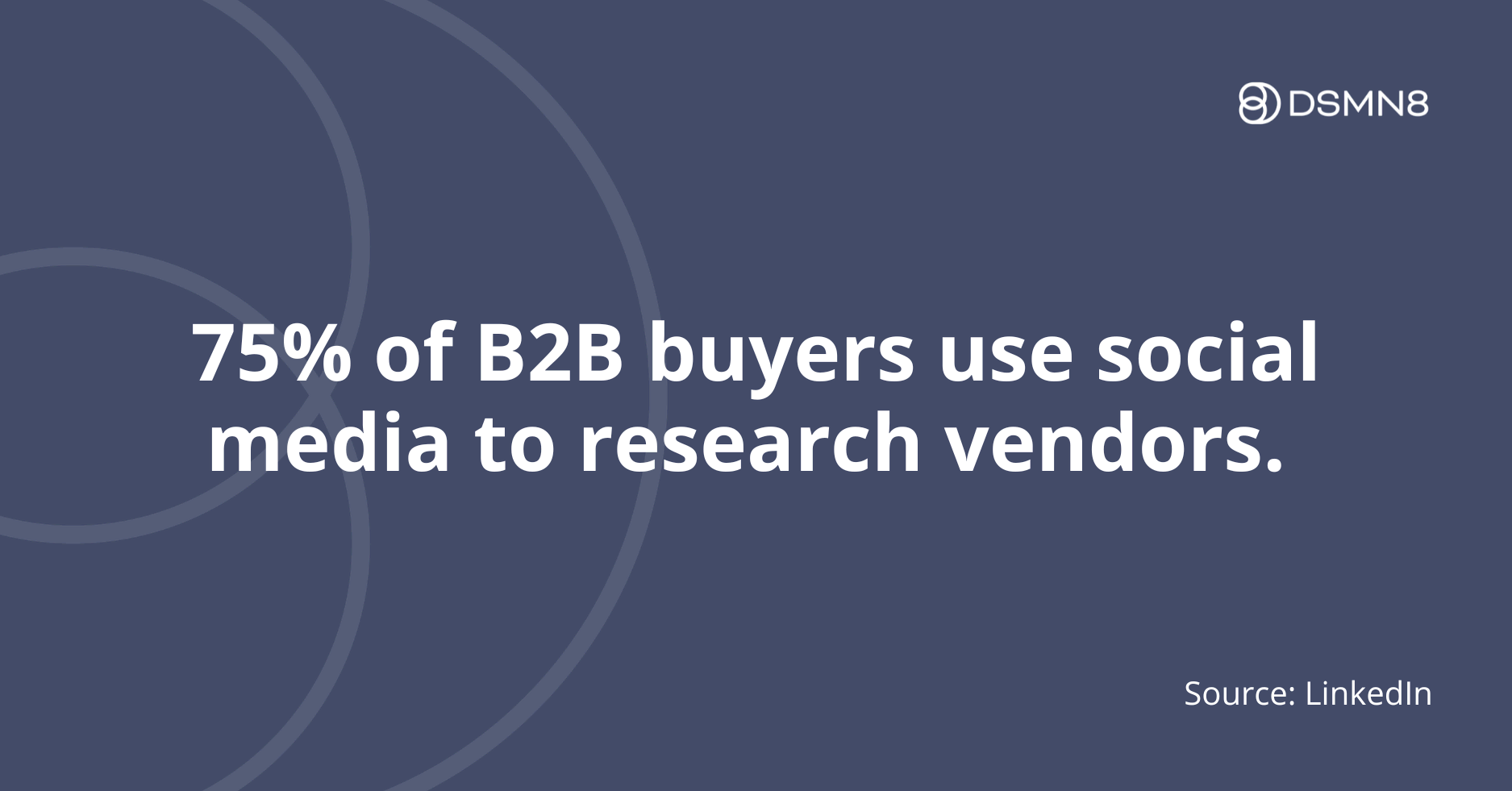
Buyers now consult an average of seven information sources per purchase. (Gartner, 2026) - 75% of B2B buyers use social media to research vendors.
Social networks are key touchpoints in every stage of prospect evaluation. If your team isn’t active, they’re missing part of your buyer’s path. (LinkedIn) - 77% of B2B buyers say their recent purchase was “very complex.”
Complex buying means you must earn trust, manage multiple stakeholders, and maintain visibility over long cycles. Social selling helps you stay present. (Gartner, 2024)
💡 Key takeaway: Your role as a seller is less about “pitching” and more about being visible, helpful, and trusted before you even ask for a meeting. Social selling is how you stay in the background, part of the decision process.
The Shift to Digital & Social-First Sales
If you’re still thinking of social selling as “something extra,” it’s time to shift your mindset. Sales is going digital first.
- Gartner predicted that 80% of B2B sales interactions would occur via digital channels by 2025.
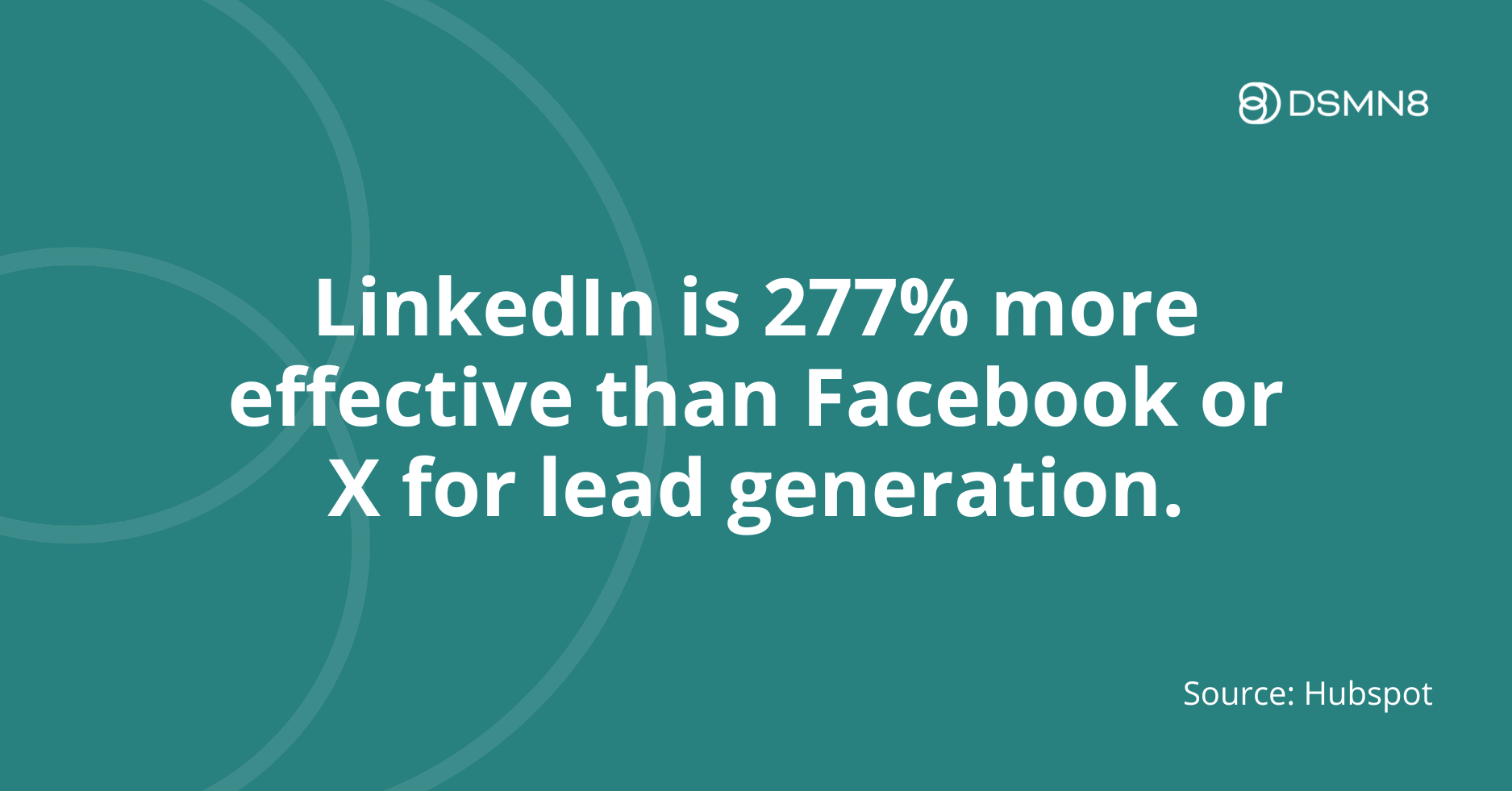
Whether via social, video, or virtual meetings, remote/digital workflows dominate. This shift highlights that a brand’s entire digital foundation, from its web hosting and site speed to its social engagement, now directly impacts the buyer’s journey. (Gartner, “Future of Sales”, 2020) - LinkedIn is 277% more effective than Facebook or X for lead generation.
This isn’t just branding. An active social presence correlates with business outcomes. (HubSpot, 2020) - 97% of B2B marketers include LinkedIn in their content marketing strategies.
Social is now a baseline expectation. If you’re not creating or enabling content, you’re running behind. (Kinsta) - 35% of sales reps say their highest-quality leads come from social channels. (HubSpot 2025 Sales Trends).
💡 Key Takeaway: Social selling isn’t an optional channel; it’s a baseline expectation. The sales process itself is migrating online, which means visibility, content, and network effects matter more than ever.
Social Selling ROI & Performance
Let’s talk about ROI. Below are some of the most compelling, tool-level, and process-level stats showing social selling works.
- LinkedIn Sales Navigator delivers 312% ROI over three years, with payback in < 6 months.
According to a Forrester TEI study commissioned by LinkedIn in 2023, adopters saw strong financial returns from increased pipeline, efficiency, and productivity. This study was conducted across multiple global customers. - Sales Navigator users saw +42% larger deal sizes and +59% revenue influence.
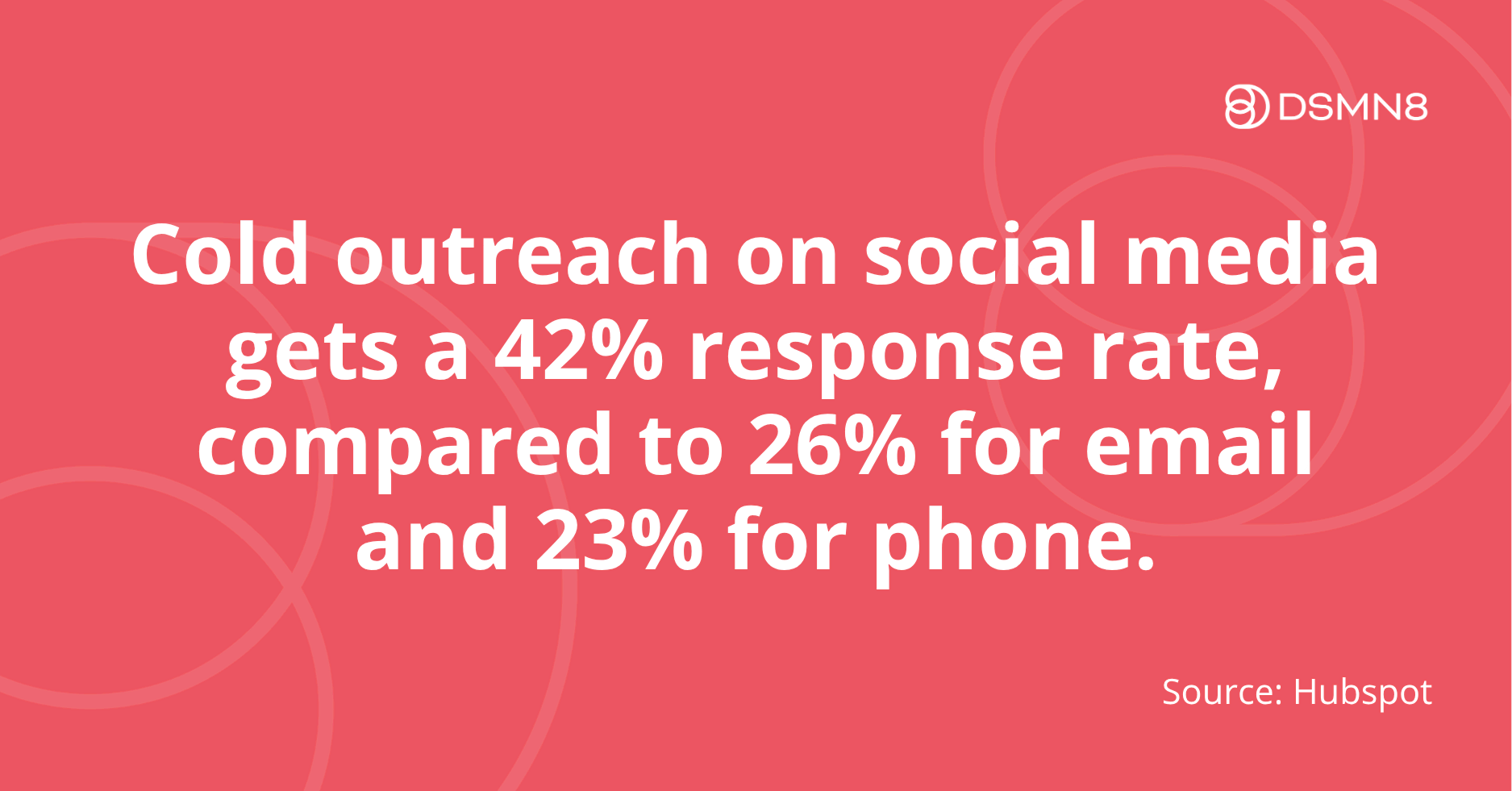
That means it’s not just more deals, it’s better deals and more influence across the pipeline. (Forrester LinkedIn Study) - Social media outreach results in a 42% response rate.
Compared to 26% for email and 23% for phone, cold outreach on social media is more effective for salespeople. (HubSpot Sales Trends Report 2025) - Personalizing the caption on a link post lifts it from 1.6 to 10.3 average clicks, 6.4x more clicks than sharing with the default caption. (DSMN8, Stop Copy-Pasting Your Employee Advocacy Report, 2026)
💡 Key Takeaway: The ROI math is strong. With the right process and tools, social selling can produce measurable uplift in revenue, productivity, and pipeline quality.
Efficiency, Enablement & Sales Productivity
High performance in social selling doesn’t come from random posts.
It requires structure, enablement, and a tech stack that supports speed.
- 76% of leadership teams believe sales enablement and sales operations are crucial to driving sales performance.
Training, templates, content libraries, and analytics aren’t “nice-to-haves” — they’re the difference between scattered activity and scalable success. (G2, 2025). - 50% of sellers who use social media spend less than 10% of their time on it.
This highlights that effective social selling doesn’t require hours of posting, just consistent effort supported by the right tools and content. (Sopro, 2025).
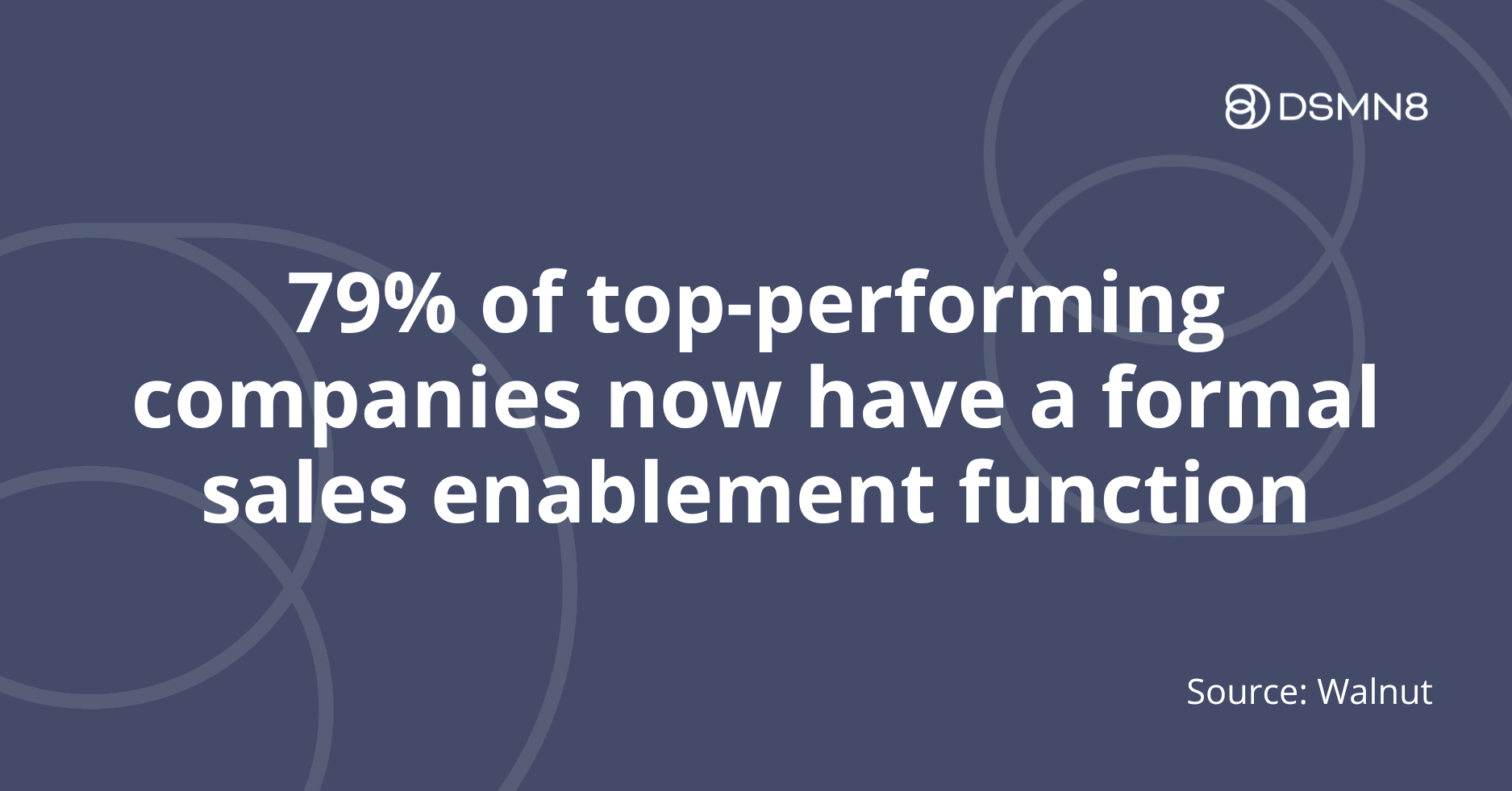
- 79% of top-performing companies now have a formal sales enablement function.
The highest-growth organizations treat enablement as a revenue engine, not an admin task. (Walnut, 2025)
💡 Key Takeaway: Tools + training + process make social selling scalable. You can’t just hand reps a LinkedIn license, you need to enable them with content, cadence, coaching, and analytics.
Curious how your company compares?
Get a free Competitor Analysis Review to benchmark your team’s LinkedIn presence vs. your competitors.

Thought Leadership, Trust & Advocacy
- 92% of B2B buyers engage with salespeople recognized as industry thought leaders.
Authority and credibility matter. If your people talk, share, and educate, prospects respond. (Edelman 2025) - Posts with employee perspectives earn ~9.2x higher engagement vs. curated posts.
The human voice outperforms brand messaging in reach and resonance. (DSMN8 2026 Report of 517,374 LinkedIn Posts). - 84% of B2B buyers say thought leadership improves their perception of a company.
This reinforces that content beyond selling (ideas, commentary, trend takes) influences decisions. (Edelman 2025) - 33% of employee advocacy program managers say that salespeople are the most active participants. (DSMN8 2026 Employee Advocacy Benchmark Report)
💡 Key Takeaway: Authenticity drives trust. Employee voices and thought leadership outperform brand posts, making people, not pages, the most powerful sales channel.
Find out how Salesloft 10X’d their social media reach with employee advocacy in this episode of the podcast.
Heather Wiita, Senior Brand and Social Media Manager, takes us inside the strategy and structure behind one of the most impressive employee advocacy programs we’ve seen, with over 200 active participants and C-suite champions.
The Future of Social Sales
The next era of sales isn’t just digital, it’s integrated.
Social selling isn’t just another tactic alongside cold outreach or ads anymore. It’s the thread connecting how brands build trust and how buyers choose who to work with.
Here’s what’s shaping the next phase:
🌐 1. The AI-Augmented Seller
Artificial intelligence is rapidly changing how sellers operate. From LinkedIn’s AI summaries to predictive CRM insights, reps can now identify warm prospects, tailor outreach, and measure impact faster than ever.
83% of sales teams using AI grew revenue in the past year, versus 66% of teams without it (Salesforce, 2026).
But here’s the critical part: AI amplifies what’s human. If your online presence lacks authenticity, AI won’t fix it.
That’s why employee advocacy platforms like DSMN8 are integrating with AI content assistance: to help employees personalize content at scale while keeping it on-brand, compliant, and genuinely human.
“The future of social selling will be a partnership between human storytelling and machine intelligence.”
— Bradley Keenan, CEO, DSMN8
💬 2. The Rise of Employee Networks
Algorithms are rewarding real connections over brand pages. A study of 500,000 LinkedIn posts conducted by DSMN8 in 2025 revealed that content created by employees generates 9x more engagement than content curated for them.
Buyers trust people, not logos, and employees are fast becoming the most credible media channel your company has.
📊 3. Integrated Measurement & Revenue Attribution
In the coming year, social selling will mature from “soft metric” to hard revenue attribution.
Forward-thinking organizations are leveraging advocacy tools like DSMN8 alongside their CRM and Analytics tools to directly track the influence of social interactions on pipeline and conversion.
This closes the loop between marketing visibility and sales outcomes, a long-awaited bridge between brand and revenue.
🚀 4. Multi-Platform Influence
LinkedIn remains the heartbeat of B2B, but buyers are diversifying where they consume insights, from podcasts to X, Threads, and niche Slack or Discord communities.
A 2025 academic preprint found that multi-platform social strategies generate 2–5% incremental sales uplift versus single-channel approaches.
For brands, this means expanding beyond LinkedIn posts into short-form video, thought leadership articles, and micro-community engagement, all powered by employees who already know your audience.
🔁 5. The Return of Authenticity
Despite all the data, the heart of social selling remains human.
What cuts through in 2025 is the combination of credible data, genuine storytelling, and consistent visibility.
That’s why the most successful teams aren’t outsourcing authenticity; they’re empowering employees to tell their stories with the right guardrails in place.
💡 Key Takeaway: The future of sales belongs to organizations that can scale trust. AI will accelerate processes, but it’s your people who make prospects believe.
Additional Resources
More on social selling:
Ready to get started with the #1 employee advocacy platform?
Wondering how active your team already is, and how this compares with your competitors?

Emily Neal
Emily is SEO Lead at DSMN8. She focuses on organic growth strategy across search and AI search and co-authors DSMN8's original research, including the Employee Advocacy Benchmark Report and edited CEO Bradley Keenan's book. Her background spans SEO strategy, technical web, long-form content, digital PR, and marketing automation.