
Marketing budgets have been stuck at roughly 7.8% of company revenue since 2022, about 18% lower than the average four years earlier, according to Gartner’s 2026 CMO Spend Survey.
But where are these limited budgets going?
Money is already shifting toward social and creator content. 61% of marketers say they’re increasing investment in creator content, and it’s coming out of budgets that used to sit somewhere else.
At the same time, search clicks to owned websites are shrinking as Google’s AI Overviews and AI Mode answer more questions before anyone clicks through.
And buyers, especially B2B buyers, are simultaneously leaning on AI to do their research and telling researchers they don’t fully trust what it gives them.
These shifts change where a marketing dollar goes furthest next year.
Below is a channel-by-channel breakdown of what’s changing, what’s overfunded relative to what it’s actually delivering, and where employee advocacy fits into the picture.
The state of the 2027 marketing budget
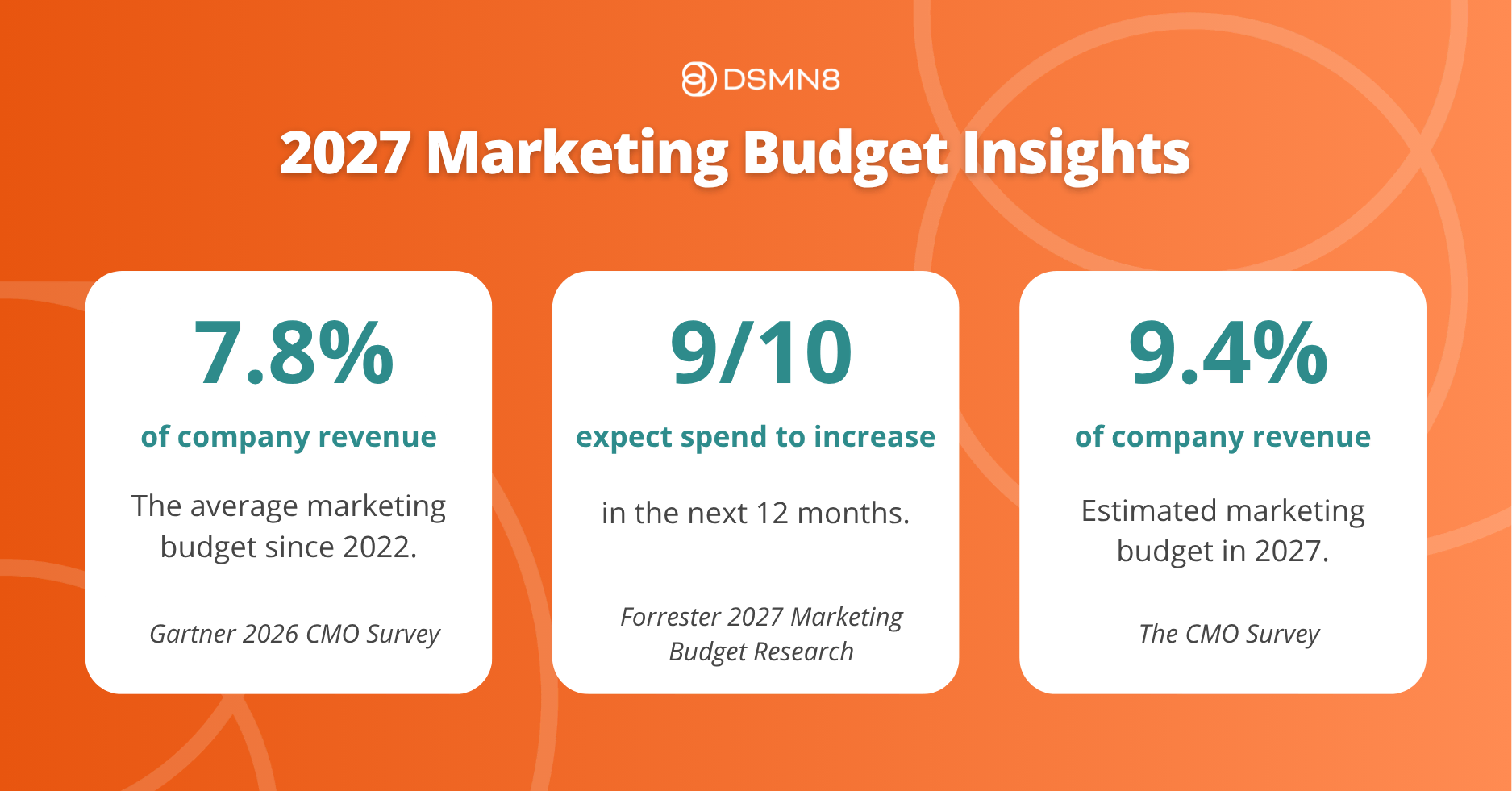
That 7.8% figure comes from Gartner’s 2026 CMO Spend Survey.
A second major survey, The CMO Survey, run by Deloitte, Duke, and the American Marketing Association, puts marketing budgets slightly higher, at 9.4% of company revenue.
Either way, Forrester’s budget planning research finds nearly nine in ten B2B marketing decision-makers expect their marketing investment to increase over the next 12 months.
But more budget only helps if it goes to the right places. That’s the real 2027 planning question: not how much, but where. From regulated industries to higher ed marketing, this challenge spans all sectors.
What’s changing in 2027?
1. Search clicks are declining.
The channels built around “rank well, earn the click” are working against a shrinking pool of clicks. AI Overviews and AI Mode increasingly answer a query before anyone sees the search results page, let alone a company website.
That’s a very different problem than losing a keyword to a competitor, and it means paid search and traditional SEO both need to be evaluated and evolve to include the new era of search: LLMs.
2. Budget is already moving toward creator and social content, not just predicted to.
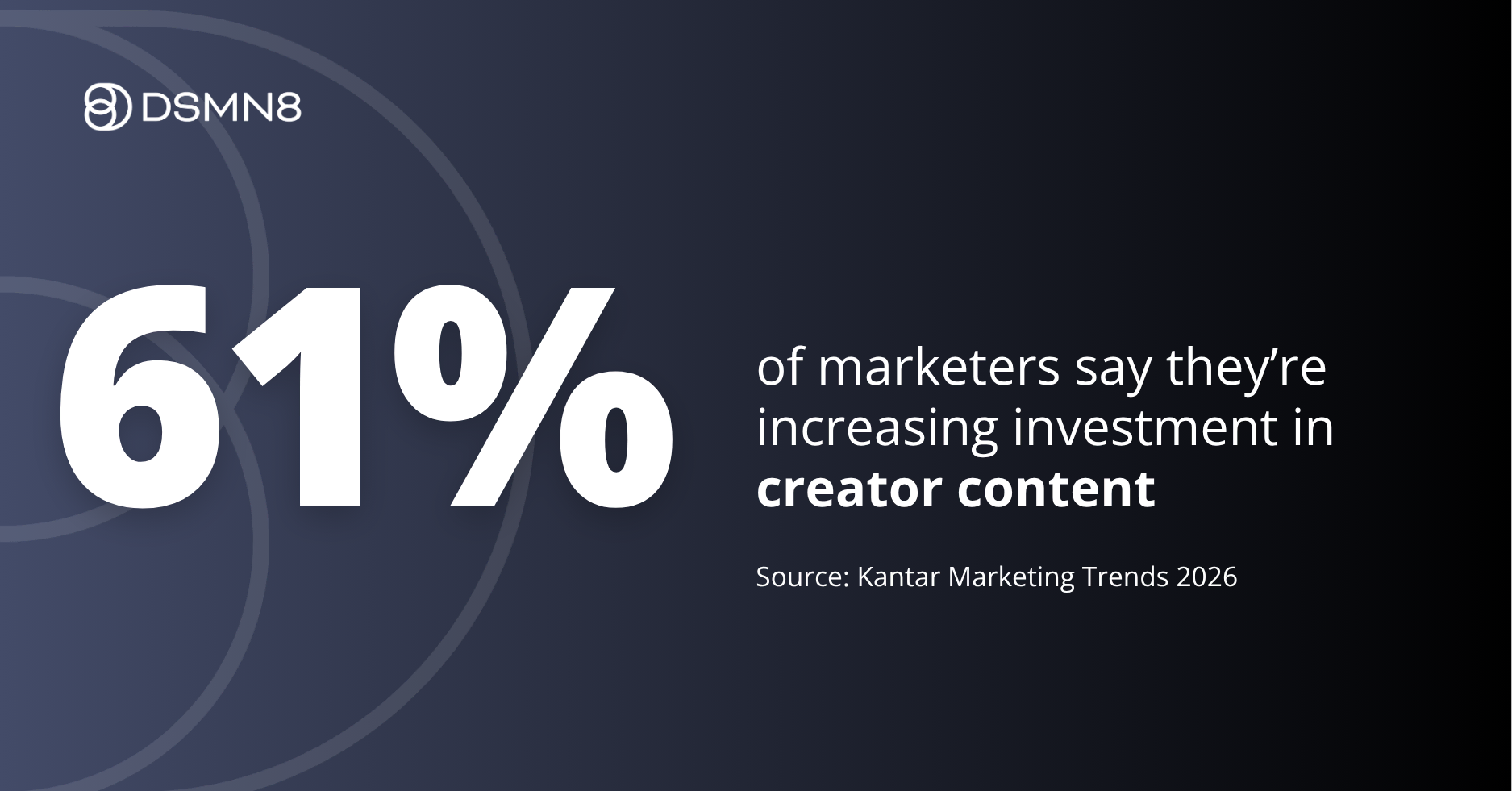
Kantar’s Media Reactions research found that 61% of marketers plan to increase their investment in creator content in 2026.
That’s a real, current reallocation, and it’s happening inside flat overall budgets, which reveals the priority marketers are placing on it.
3. Buyers are leaning on AI and telling researchers they don’t fully trust it.
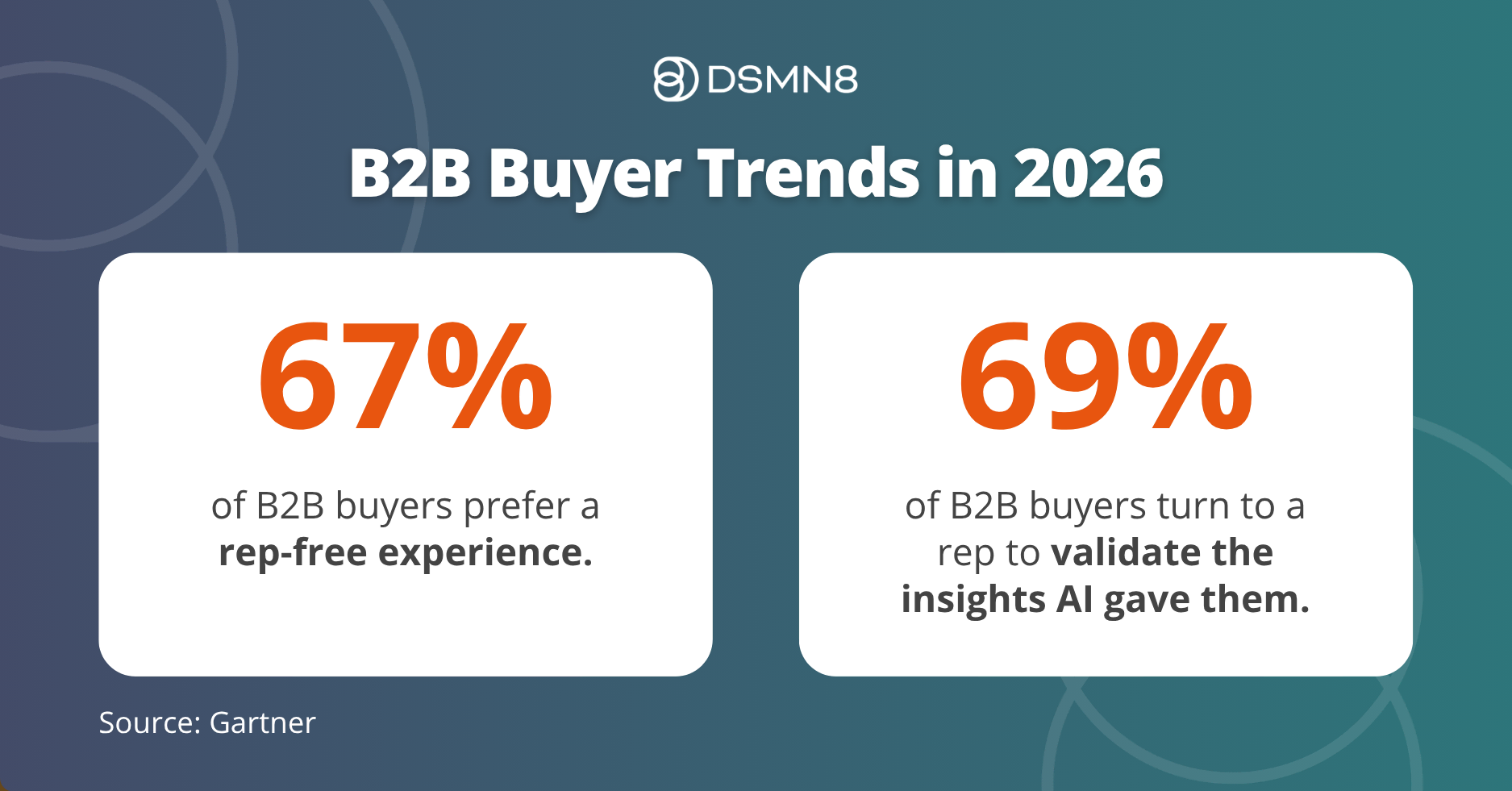
Gartner’s 2026 buyer research found 67% of B2B buyers now prefer a rep-free purchasing experience and 45% used AI during their most recent purchase.
The same research found 69% of buyers still turn to a sales rep specifically to validate the insights AI gave them. Self-directed AI research is producing conclusions buyers don’t fully trust on their own.
The gap between “I did my own research” and “I still want a real person to confirm this” is exactly the space that authentic employee content is built to fill, and it’s a gap that neither more paid media nor more AI-generated content can close.
Where to spend your 2027 marketing budget: a channel-by-channel breakdown
| Channel | 2027 signal | The 2027 outlook |
|---|---|---|
| Paid search | Flat to declining share of an already flat budget. | Fewer clicks to capture as AI Overviews and AI Mode answer questions before anyone clicks. Employee posts and reviews are exactly the kind of third-party content AI answer engines cite, something paid search can’t buy its way into. |
| Paid social | Rising, largely absorbing budget pulled from other lines. | Cost-per-lead climbing as more budget chases the same inventory. In feeds, it reads as an ad because it is one. An employee’s post lands in the same feed as an organic update at no media cost. |
| SEO and organic content | Flat as a share of budget, but under real pressure. | Organic clicks to owned domains declining as AI keeps more users on-platform for answers. Third-party citations (employee posts included) are increasingly what those answers pull from. |
| ABM and intent data | Growing share as programs mature past the experimental phase. | Expensive, and it assumes a level of brand familiarity on the target account that has to come from somewhere. Employee visibility on LinkedIn supports building that familiarity. |
| Events and field | Shrinking share as hybrid and virtual formats absorb more of it. | Cost-per-attendee rising, and the room only holds so many people. Employees posting from an event keep it visible well after the event itself has ended. |
| Email and marketing automation | Stable, a durable line item. | Engagement at risk when email content reads as a brand talking at someone rather than to them, as with company social accounts. Personalization matters. |
| Influencer and creator marketing | Rising fast; a net 61% of marketers plan to increase creator content investment. | An ongoing, per-creator cost that scales with spend, not with headcount already on payroll. Employees are a lower-cost version of the same idea: 40% of consumers discover new products through employee-generated content monthly, rising to 62% for Gen Z, without the sourcing or contract overhead. |
| Employee advocacy | The one line item most companies still don’t budget for on its own. | Needs real program design, curation, pacing, opt-in. It isn’t zero-effort just because it’s zero-media-spend. But it’s the one channel not fighting shrinking clicks or falling trust. |
Sources: Gartner 2026 CMO Spend Survey; Kantar Media Reactions 2026; Sprout Social 2026 Influencer Marketing Report.
Where employee advocacy sits in the budget
Most marketing plans don’t currently include a line for employee advocacy. It gets folded into organic social, treated as a free byproduct of having employees, or left out of the budget conversation entirely.
Employee advocacy should sit as its own line item within the organic and social budget for 2027, not be folded invisibly into it.
Two real costs belong there: the platform itself and program management time. Someone has to curate content, set the cadence, raise awareness internally, and measure what’s working. That isn’t media spend, but it is real spend.
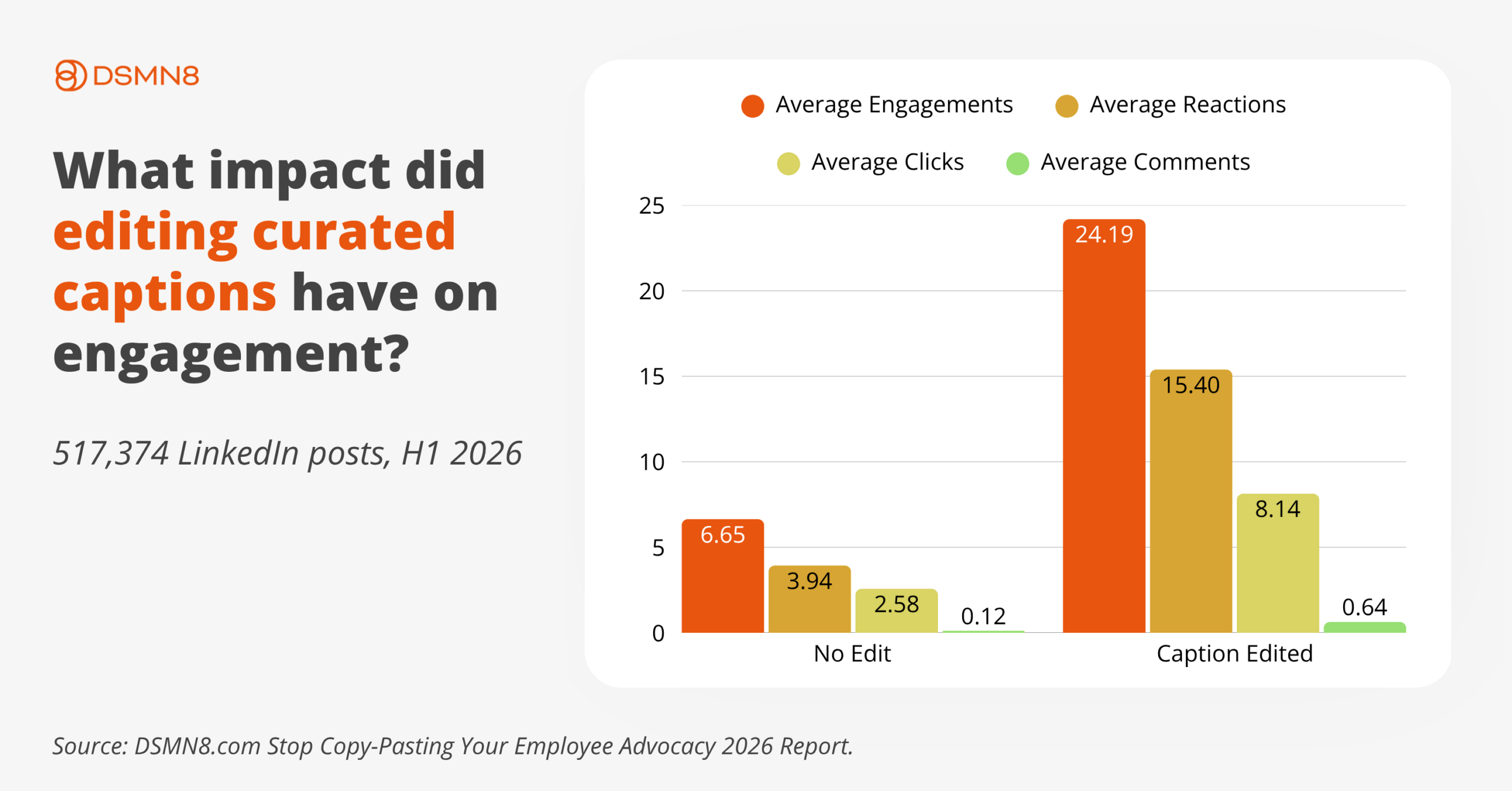
What that investment returns: a 2026 study of 517,374 LinkedIn posts found personalized employee posts earn up to 9.2x the engagement of unedited shares, a gap that widened to 12x by mid-2026.
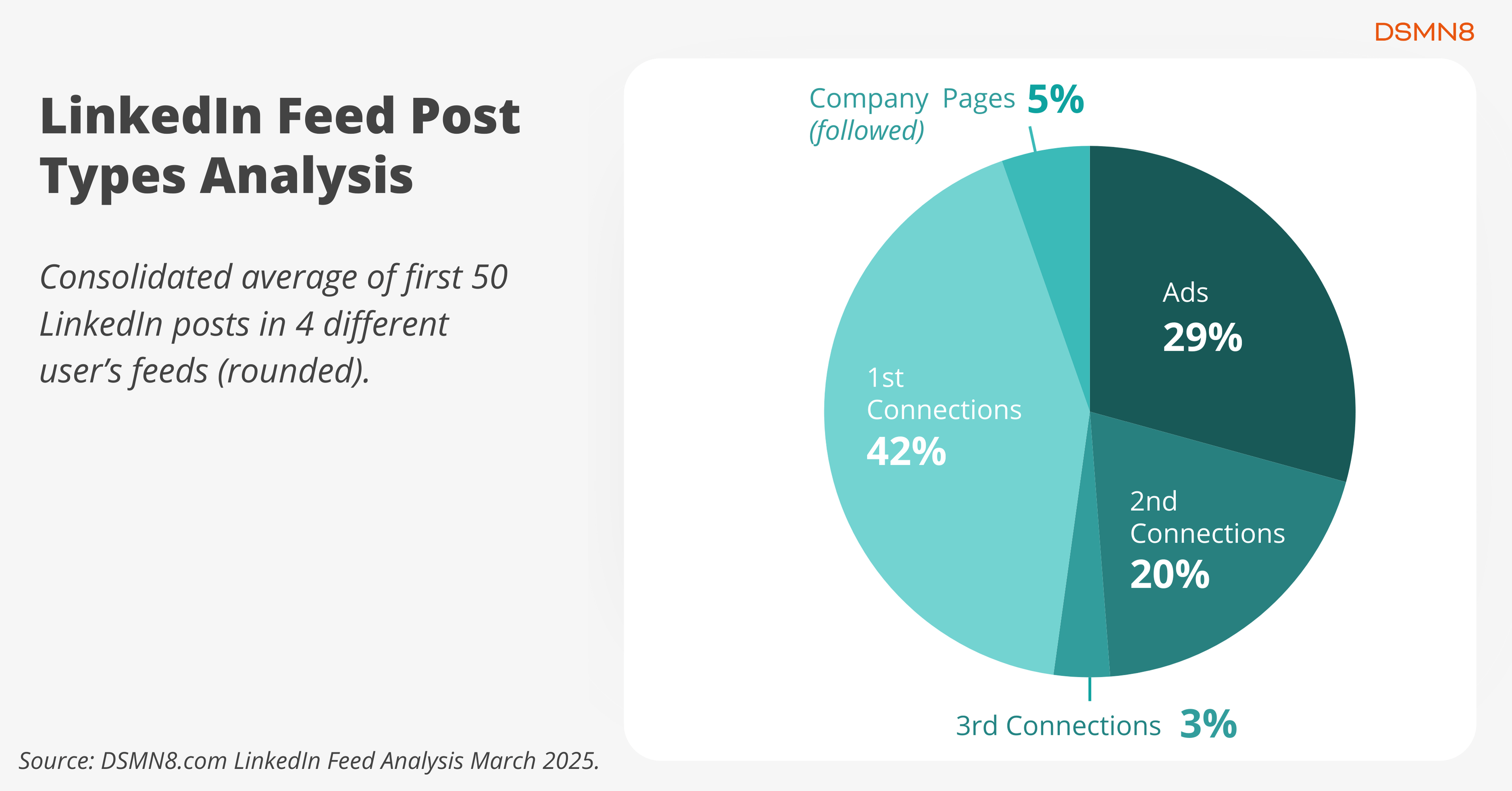
A separate investigation into live LinkedIn feeds found company pages average just 5.37% of the content people actually see, and that not a single organic company page post appeared in a feed without engagement from someone in that user’s own network first.
Employee reach isn’t a bonus on top of company page reach in LinkedIn’s 2026 algorithm. It’s close to a precondition for it.
A simple starting point for 2027
Use the Gartner and CMO Survey figures above as the baseline for the total marketing budget: 7 to 9% of revenue for a typical B2B company, meaningfully higher for high-growth or venture-backed companies actively buying growth.
Employee advocacy doesn’t need a specific percentage of that total to be resourced properly. It just needs to be factored in as a line item within organic social spend, with a name and an owner attached to it.
“Isn’t employee advocacy free, since employees already have LinkedIn accounts?”
There’s no media spend, and that’s one of the strongest arguments for giving employee advocacy a try.
But an effective employee advocacy program does need:
- curated content people actually want to share.
- sensible pacing so it doesn’t read as forty duplicate posts.
- enough measurement to know what’s working.
- technology that makes it easy and efficient to share, with a mobile app and integrations with your internal comms, for example.
The cost sits in headcount and tooling, which is a different kind of cost, not the absence of one.
Budgeting for employee advocacy on purpose is what separates a compounding program from one that stalls out after the initial internal excitement wears off.
Check out our guide to being a great employee advocacy program manager to learn more about what that looks like.
The bottom line
2027 budgets are going up modestly, but where the money goes matters more than how much there is.
Employee advocacy is the one channel in this piece that isn’t losing ground to shrinking search clicks, rising paid costs, or falling trust in AI content. It’s also still the one line item most 2027 marketing plans haven’t named yet.
If you’re building next year’s plan and want to see what a resourced employee advocacy program could look like for your organization, try our ROI calculator and book a demo to explore the DSMN8 platform.
FAQ
What percentage of my 2027 marketing budget should go to employee advocacy?
There’s no single defensible number yet, since it’s a newer budget category for most companies. A reasonable starting point is to give it its own line inside your organic social budget, covering the platform, program management, and content curation, rather than assuming it happens for free. Adjust based on the growth of your program, e.g., expanding to additional regions or departments following positive results.
Is employee advocacy free?
The media cost is genuinely zero, which is a real advantage over paid channels. But running a program well, curating content, pacing it, measuring it, still takes real time and tooling. It’s a lower-cost channel, not a zero-cost one.
How does employee advocacy fit alongside paid social and influencer marketing, rather than instead of them?
It’s not a replacement for either. Paid social and influencer marketing both still work; they’re just getting more expensive. Employee advocacy is a lower-cost complement that happens to be strong in exactly the areas (trust, third-party signal) where the other two are under the most pressure to justify expense heading into 2027.

Emily Neal
Emily is SEO Lead at DSMN8. She focuses on organic growth strategy across search and AI search and co-authors DSMN8's original research, including the Employee Advocacy Benchmark Report and edited CEO Bradley Keenan's book. Her background spans SEO strategy, technical web, long-form content, digital PR, and marketing automation.