

Employee engagement is in trouble.
According to Gallup’s State of the Global Workplace 2026 report, just 20% of employees worldwide were engaged at work in 2025, the lowest level since 2020, and the second consecutive annual decline.
The cost is more than $10 trillion in lost productivity globally. Meanwhile, 17% of workers are actively disengaged: not just indifferent, but working against their organization’s interests.
Most organizations are aware of this. What few have figured out is how to measure it in real time or how to move the needle.
Here’s where it gets interesting. Your employees’ LinkedIn activity might already be telling you something your annual survey isn’t.
Why LinkedIn Behavior Signals Employee Engagement
When an employee publicly shares company news, comments on a colleague’s post, or publishes their own perspective on industry trends, they’re making a voluntary choice.
Nobody forced them, and their professional network of clients, peers, and former colleagues can see it.
This can signal more about your company culture and employee engagement levels than a yearly survey.
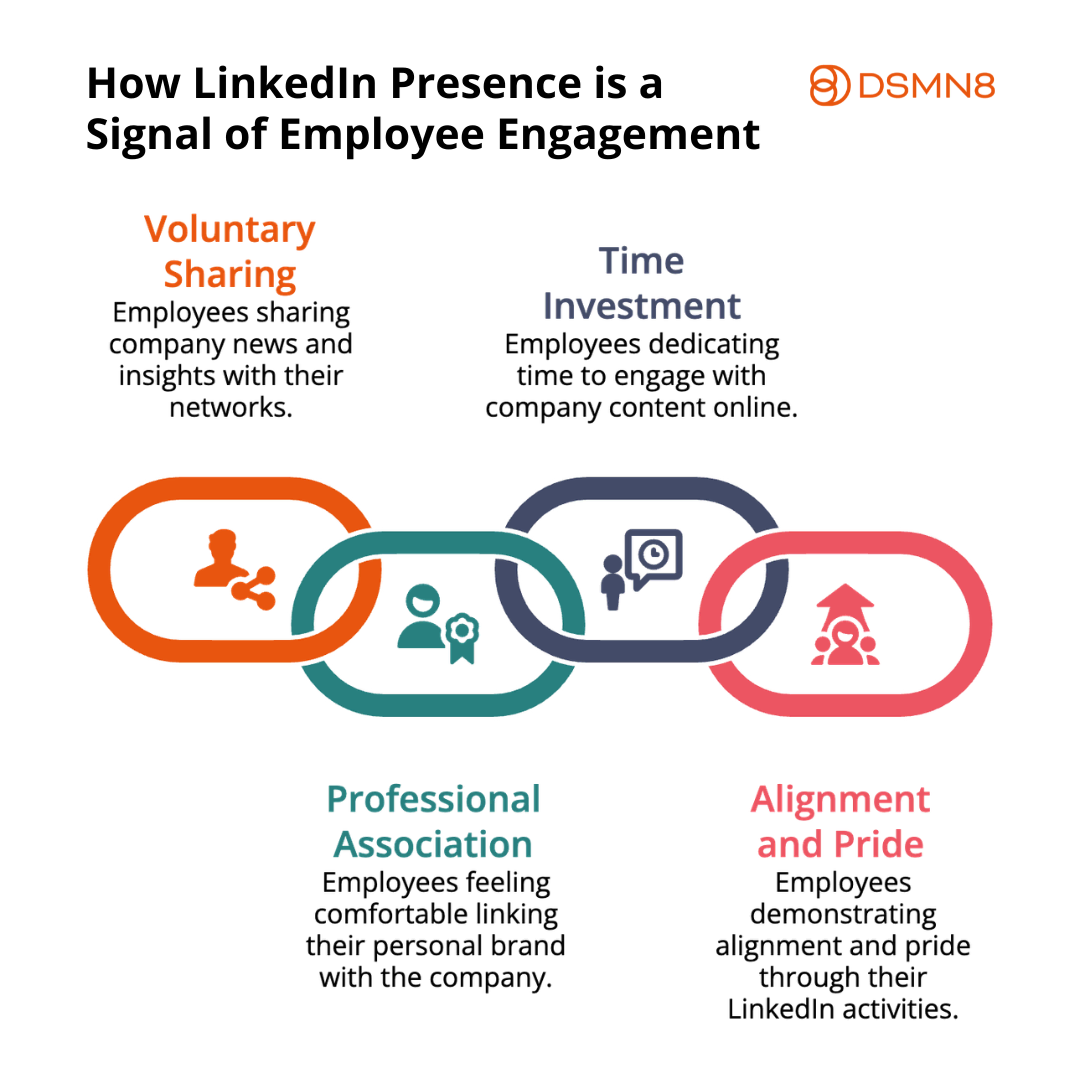
Think about what has to be true for an employee to share a piece of company content on LinkedIn:
- They saw it and recognized it as worth sharing.
- They felt comfortable associating their personal brand with your organization.
- They were willing to spend time engaging with your company online.
An employee who is disengaged doesn’t do that.
LinkedIn participation, particularly on a professional platform tied to career reputation, is a behavioral signal of alignment, pride, and psychological connection to the organization.
Employee advocacy is what engaged employees do, not a synonym for employee engagement. But advocacy activity can serve as a meaningful input to understanding the underlying sentiment within your company.
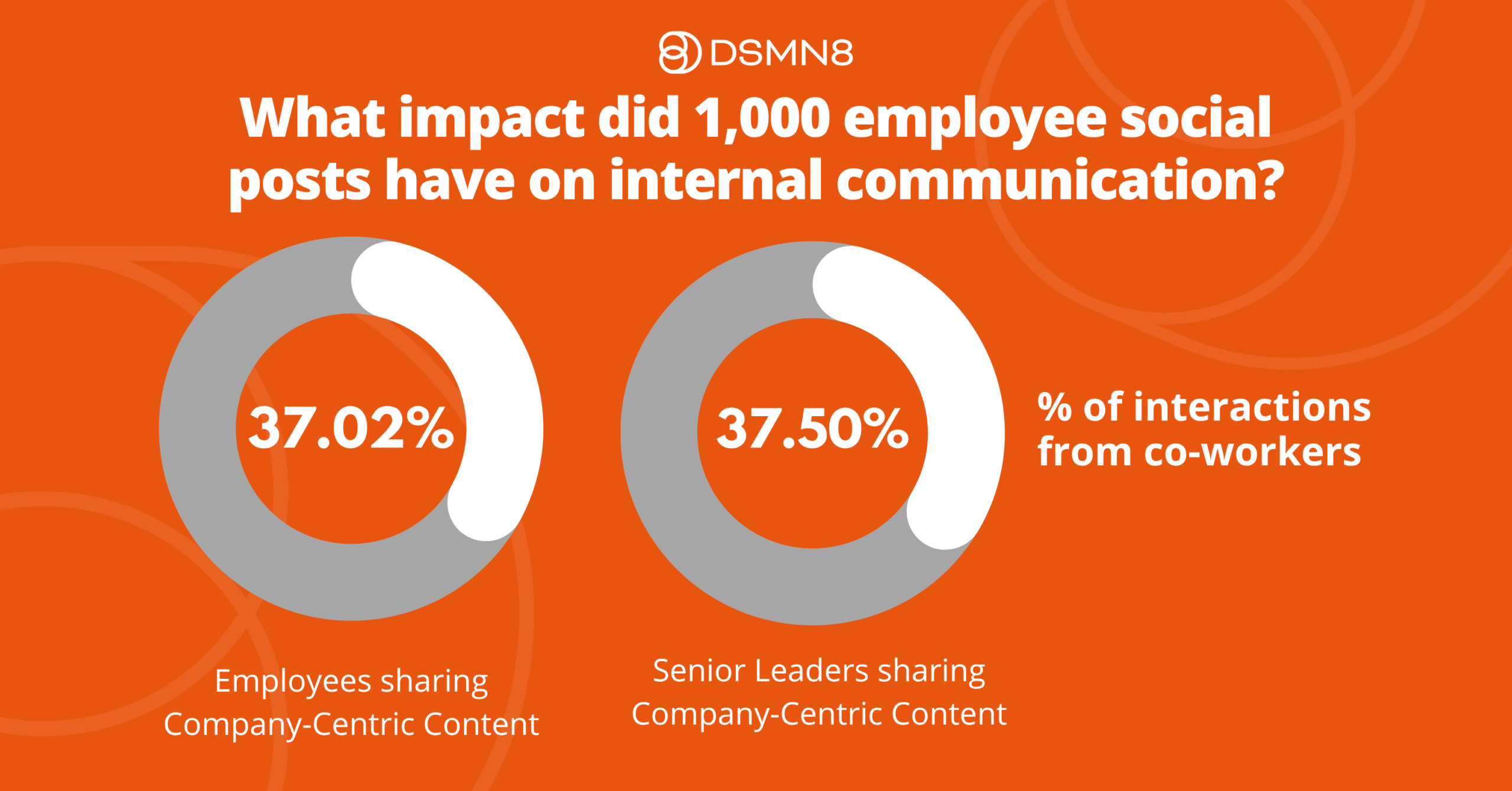
The data backs this up. In our research into how employees interact with company-centric content on LinkedIn, co-workers accounted for over 37% of total interactions on senior leaders’ posts.
The employees engaging most consistently are, almost by definition, the ones who feel connected enough to put their name to it publicly.
And yet most organizations are still measuring engagement once a year.
Traditional measurement tools like annual surveys, pulse checks, and eNPS scores are valuable but slow.
By the time the data is in, the problem is already six months old.
LinkedIn activity, by contrast, is continuous and real-time.
What Employee Advocacy Programs Reveal About Engagement
This isn’t just theory.
In the 2026 Employee Advocacy Benchmark Report, 46% of program managers said increasing employee engagement and morale was a stated goal of their advocacy program.
Of those who had been running programs long enough to measure outcomes, 19% identified improved employee engagement as a direct result, and enhanced employee engagement was selected as the primary benefit of running an advocacy program by 17% of respondents, ranking above sales and talent acquisition.
One program manager described the impact this way: “These programs have not only improved engagement and trust but also driven cultural alignment, inclusivity, and global collaboration.”
Another said: “Organizational culture has shifted from a ‘top-down dissemination’ to a ‘bottom-up co-creation’ approach.”
These are indicative of internal culture change, not just marketing ROI.
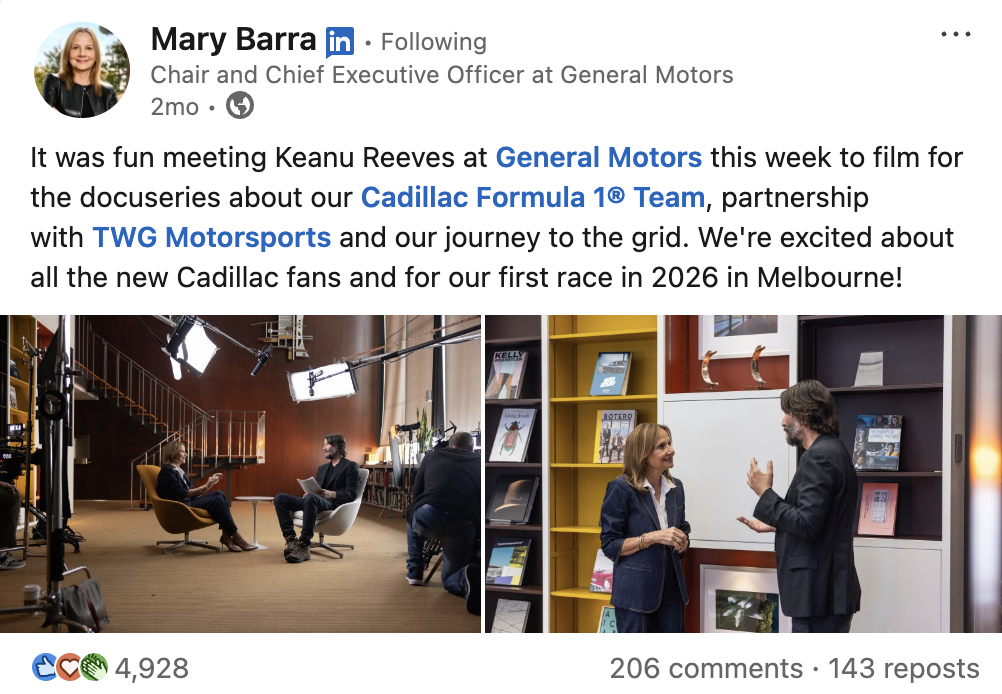
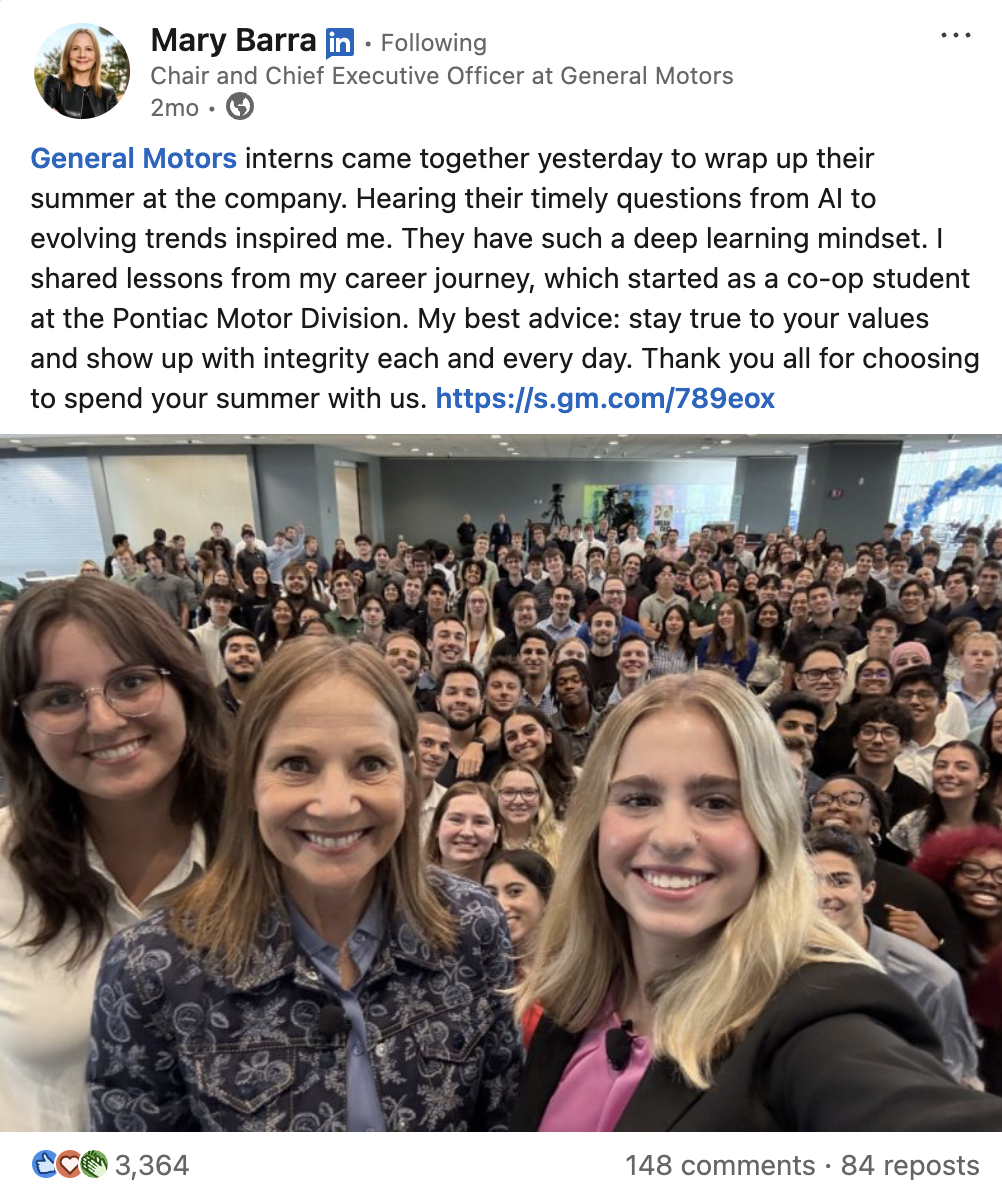
General Motors is a case in point.
When GM launched its employee advocacy program Sharefluence with DSMN8, the goal was to empower employees to amplify the brand while reinforcing their own professional presence on LinkedIn.
Senior leadership played a central role from the start to set the tone and act as role models. The program reached over 20 million people in six months.
But the internal effect, employees actively choosing to represent their employer publicly, is just as significant as the external reach numbers.
Why Advocacy Activity and Employee Engagement Move Together
Employee engagement, at its core, is about the degree to which someone feels connected to their organization’s mission and values.
An employee who publicly advocates for their employer on LinkedIn is demonstrating that connection directly.
This creates a compounding dynamic in organizations with active advocacy programs: participation concentrates among engaged employees, and participating tends to deepen engagement further.
Employee advocacy engagement and employee sentiment move together, and they reinforce each other over time.
A workforce largely silent on LinkedIn (in organizations where sharing is permitted but isn’t happening) may not be disengaged by definition. But the absence of employee advocacy is worth examining alongside your other engagement measures.
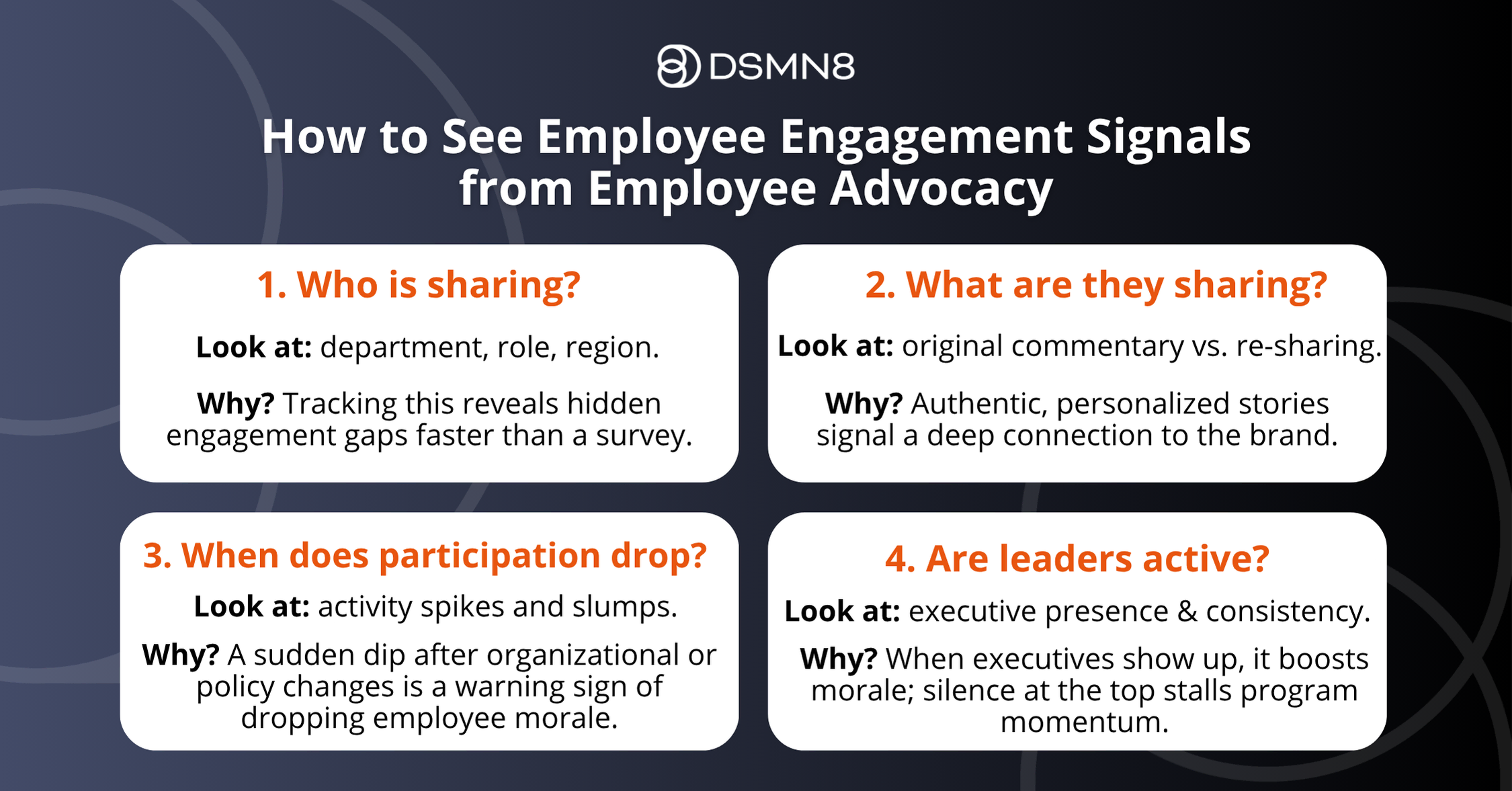
How to Improve Employee Engagement Through Advocacy: Reading the Signals
Building an employee advocacy program isn’t just a marketing decision. It creates behavioral shifts within your company and data you can actually use.
Here’s what to look at:
1️⃣ Who is sharing? Participation patterns across departments, seniority levels, and geographies often mirror engagement patterns. Low participation in one region or function is worth investigating as a potential engagement gap.
2️⃣ What are they sharing? Employees sharing original content: their own commentary, stories, and perspectives demonstrate a deeper level of connection than those sharing pre-written posts verbatim. The nature of participation matters as much as the volume.
3️⃣ When does participation drop? A sudden decline in advocacy activity after a restructure, a policy change, or a leadership transition is a behavioral signal of sentiment shift. It often surfaces faster than a formal survey cycle would catch it.
4️⃣ Are leaders active? Given the co-worker interaction data above, executive LinkedIn presence is as much a cultural signal as a marketing lever. When leaders show up consistently, they give employees something to rally around. Silence at the top has an effect on internal morale and employee advocacy participation.
Want to see how these behavioral signals play out in the real world?
In this episode of our podcast, Demandbase’s Digital Marketing Manager, Vahbiz Cooper, discusses how tracking the specific comments and sentiment on employee LinkedIn posts provides far deeper insights than corporate pages.
By paying attention to whether employees are interacting with each other in the comments or writing their own authentic captions, companies can measure genuine engagement and uncover exactly what their workforce cares about:
As Vahbiz explains:
“Once we saw them writing their own posts and not just reposting from our page, it felt like the engagement that they were getting was real. People started asking questions. We’ve seen people who now want to start building their own personal brand.”
And the impact of executives is clear:
“You would never see our top leaders not posting on LinkedIn regularly… And all of us were really impressed by it. And it motivated us to just follow what they were doing and learn from them.
Start Listening, Your Employees Are Already Talking
A structured employee advocacy program gives you something unstructured LinkedIn activity can’t: consistent, comparable data over time. When participation is habitual rather than occasional, patterns become visible, and signals become actionable.
That means paying attention to who is sharing, when participation drops, and what leaders are or aren’t doing on LinkedIn.
A region that goes quiet after a restructure is telling you something your next pulse survey won’t surface for months.
The goal is to create the conditions where genuine engagement finds a public outlet, and to learn from what you see.
When employees are consistently willing to put your company’s name next to their own on a professional network, they’re telling you something worth listening to.
Used alongside your existing survey data, it becomes one of the most honest reads on company culture you have.
Next Steps
Want to understand what your employees’ LinkedIn activity is telling you?
Get a free competitor analysis review.
Ready to get started with the top-rated employee advocacy platform?
More on Employee Engagement:

Emily Neal
Emily is SEO Lead at DSMN8. She focuses on organic growth strategy across search and AI search and co-authors DSMN8's original research, including the Employee Advocacy Benchmark Report and edited CEO Bradley Keenan's book. Her background spans SEO strategy, technical web, long-form content, digital PR, and marketing automation.