

Last updated: 27th July 2026.
Is it possible to manage an employee advocacy program without any additional software? 🤔
What about the middle ground: social media management tools or internal comms tools with advocacy features or ‘add-ons’?
We’ll evaluate the pros and cons of each method to help you choose the best outcome for your program.
You may find that your organization’s (and industry’s) requirements are best suited to a dedicated platform like DSMN8, or you may manage with a combination of social media management and internal comms tools.
Let’s find out!
Option 1: Manual Employee Advocacy
First, let’s clarify what a ‘manual’ employee advocacy program means.
We define this as a program management method that uses your existing tools to encourage employees to share content on social media.
In short, there’s no ‘home’ for your employee advocacy program.
Your approach will vary depending on the software your company already uses, but an example setup could be:
The Pros and Cons of Manual Employee Advocacy
| Pros | Cons |
|---|---|
| It’s cost-effective to use your existing tools. | Harder to demonstrate ROI without analytics. |
| Easier to get buy-in from leadership as no additional investment would be required. | More time and effort required from advocates and admins for curating and sharing content. |
| A good way to test a pilot program before investing in software. | No gamification to motivate participation. |
| Can be cumbersome to switch between multiple tools for marketing, social media, and communications. | |
| No app for employees not office-based to share content. |
If you’re in a small organization with, let’s say, 20 advocates, this approach could work.
However, issues arise when scaling your program.
You’ll need a way to segment your content to reach the right people, such as by seniority, department, or region.
But that’s not to say it’s not worth testing employee advocacy this way!
It can be a great way to gauge employee interest while supporting your organic social media strategy on a smaller scale.
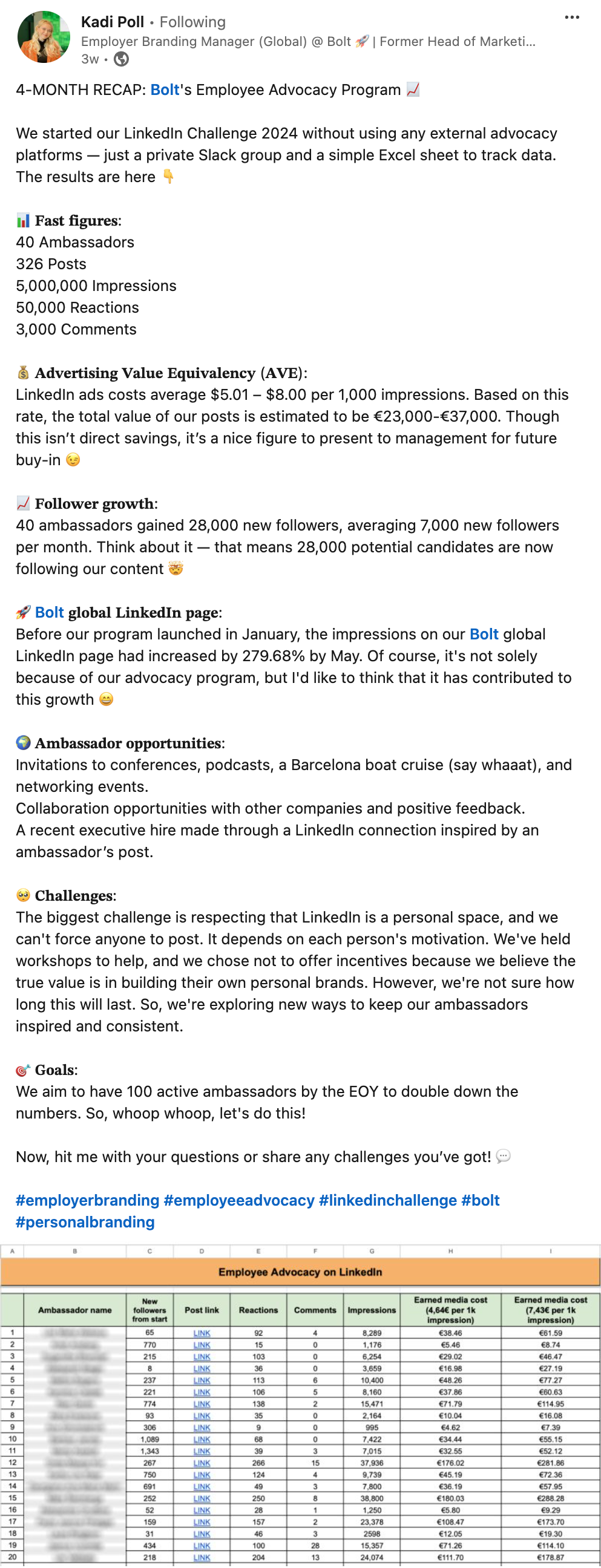
Below is a great example from Bolt, a software company. Employer Branding Manager Kadi launched an employee advocacy program using their existing tools: Slack for communication and Excel for data tracking.
After just 4 months, they’ve reached a whopping 5 million impressions with 40 employee advocates.
Trialing employee advocacy manually with a select group, e.g., your sales and marketing team, can also help you gain buy-in for an official program.
If you’re already at this stage, Bradley and Lewis cover the transition to a formal program in this episode of the Employee Advocacy and Influence podcast:
Option 2: Social Media Management Tools with Employee Advocacy Add-Ons
The second option for managing your advocacy program is to use a social media management tool that offers employee advocacy upgrades or add-ons.
The key thing to keep in mind when considering this approach is the end user, your employee advocates.
Ask yourself these questions:
- Is the platform user-friendly for someone who isn’t a social media marketer?
- Am I looking to onboard employees who aren’t office-based? If so, does the solution come with a mobile app for end users (not just admins)?
- Do the features included support employee advocacy success? For example, gamification for employee engagement, the ability to curate multiple captions for each post, automations, and user segmentation?
Pros and Cons of Employee Advocacy Add-Ons
| Pros | Cons |
|---|---|
| A familiar tool for your social media manager/marketing team. | Some major social media management tools only offer advocacy in enterprise-tier packages. |
| Ability to manage employee advocacy and brand social channels on the same platform. | Often lacking advocacy-specific features like gamification, internal comms, and mobile apps. |
| Getting buy-in to upgrade a tool you’re already using may be easier. | No home just for advocacy, lacking a dedicated space for building a community and identity around your program. |
| Designed for social media professionals, may be difficult for users in other departments. | |
| Lack of employee advocacy expertise for support and training. |
Managing an employee advocacy program with your existing social media tool is possible, depending on the features required and the size of your program.
It may also be easier to gain leadership buy-in to upgrade a tool your marketing team already uses.
However, it’s important to keep in mind that these platforms are designed for marketers.
They may not be user-friendly for employees who aren’t experienced with social media, and often miss key features in important areas like user adoption, engagement, and internal comms.
In addition, the support and training offered by social media solutions will naturally be less tailored to employee advocacy than a dedicated solution.
If you’re deciding whether employee advocacy software is right for you or if social media management tools will meet your needs, these comparisons will help:
Option 3: Dedicated Employee Advocacy Software
The final option for managing an employee advocacy program is a dedicated employee advocacy platform.
The most effective way to scale advocacy throughout your organization and make it part of your company culture is to create a space for your program to live.
Switching between various tools and social media networks to share company content is time-consuming. Many employees won’t do it.
With a platform like DSMN8, advocates can log in on their desktops or use the mobile app to find relevant content to share easily. It can even be automated.
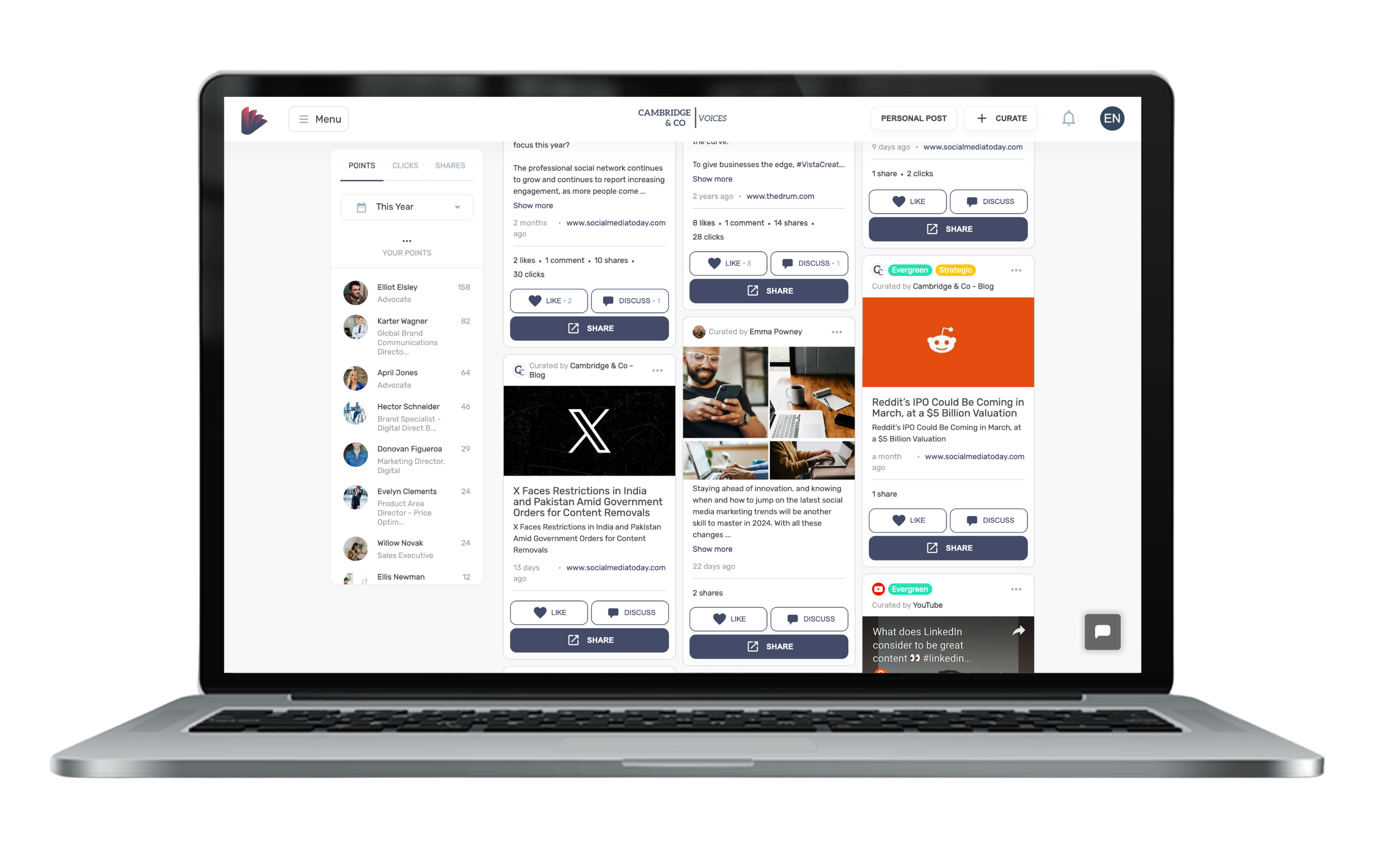
Internal communication features enable you to build a community around your program, from gathering feedback and content suggestions to sending virtual ‘high fives’.
Motivate your team with gamification: competitive leaderboards with the option to offer real rewards if you choose to.
Employee advocacy with DSMN8 makes life easier for program managers and admins, too.
With ‘Dynamic Display‘, content curators can share multiple post captions, images, and link preview titles for every piece of content.
No more identical posts in your LinkedIn feed! 👏
Segment users by groups and teams to get the right content to the right people, tag important posts as ‘evergreen’ or ‘strategic’ to bring it to the top of user feeds, and ‘boost’ content by your CEO or board members.
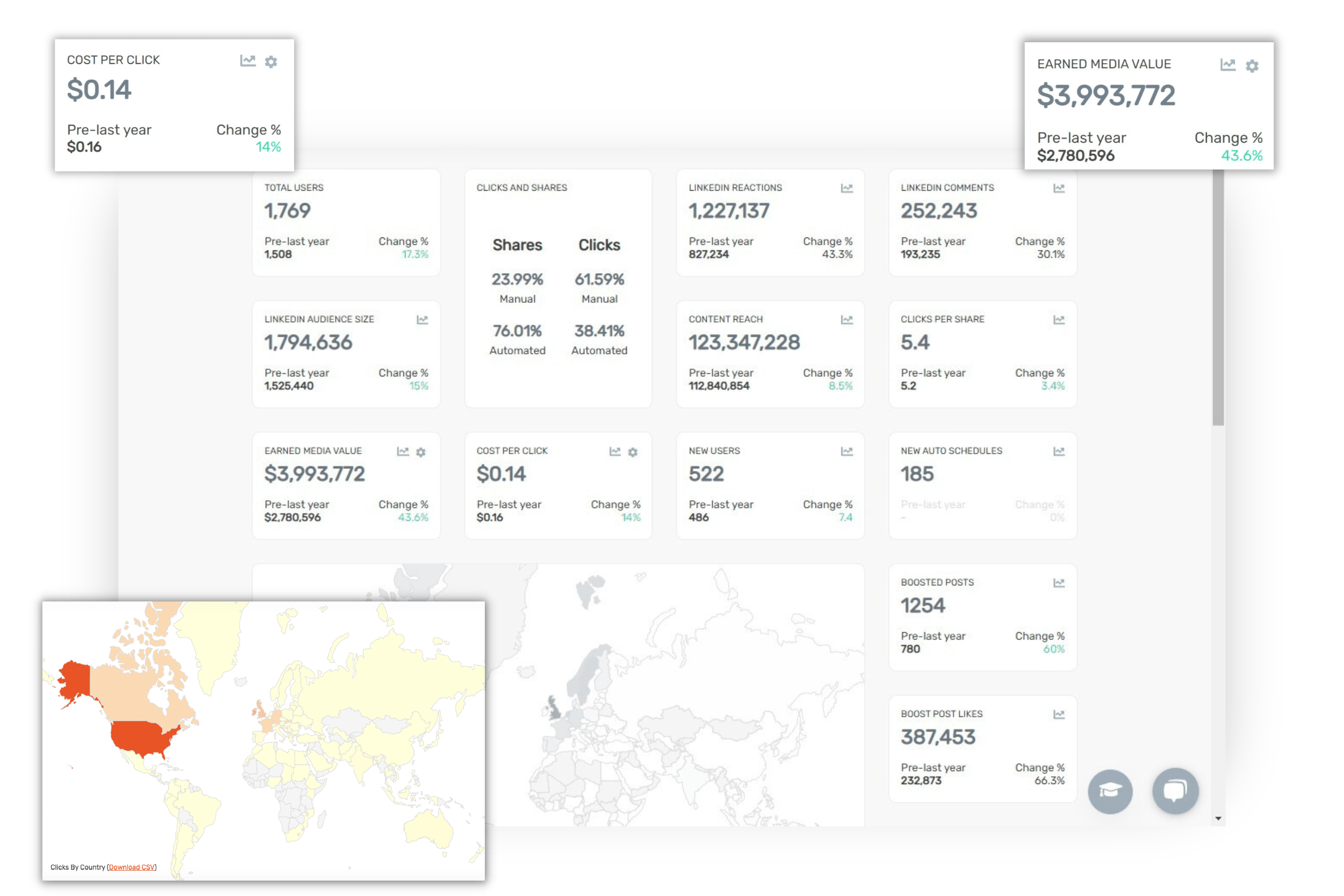
To analyze performance, admins can dive into the analytics suite for individual users, groups/teams, and the whole program.
Find out which content is driving results to adjust your content strategy and demonstrate ROI with earned media value.
That’s not all.
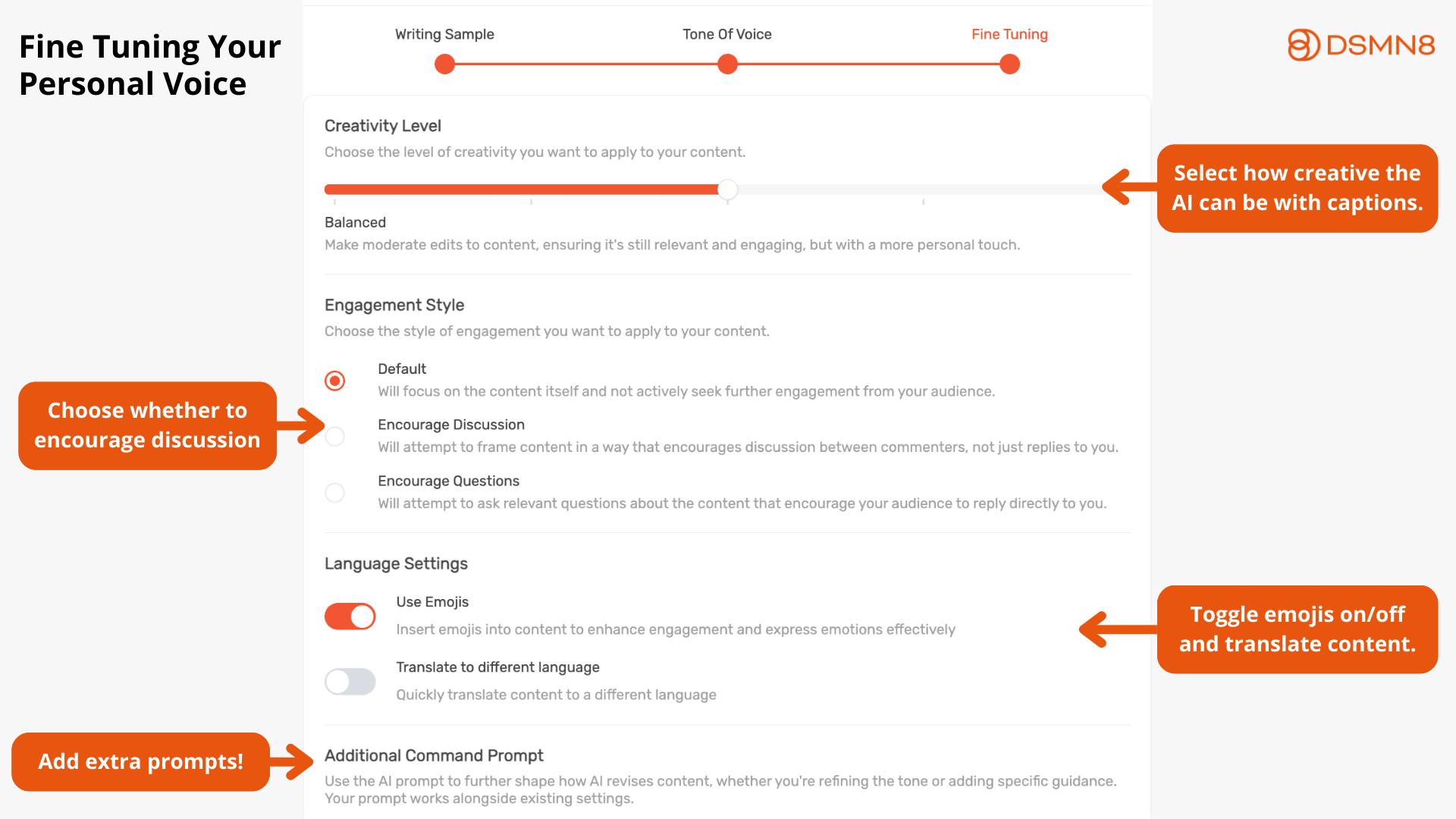
DSMN8 empowers every employee to create their own ‘Personal Voice‘, using example posts from their LinkedIn, chosen writing samples, and a quick multiple-choice quiz. This can then be tailored further with custom prompts if they wish.
What this means for you:
Every piece of content your employees share will remain on-message, but when they click the Personal Voice button, it instantly transforms into something that they’re comfortable sharing.
This gets you better results on LinkedIn (goodbye duplicate content!), and makes it easier for your team to become thought leaders.
Senior leaders love this feature!
How DSMN8 works, in 90 seconds:
Of course, platform features and functionalities are only one side of the process. The other is support and training.
Our customer success managers are experts, having supported and scaled hundreds of employee advocacy programs.
They’re here to provide guidance and best practices, host training sessions with your team, and conduct quarterly business reviews with you.
Don’t just take my word for it, check out our reviews on G2!
Convinced a dedicated platform is the right fit for your team? Compare DSMN8 against 9 other employee advocacy platforms, including Hootsuite Amplify, Sociabble, and EveryoneSocial, to find the best match for your goals.
FAQ
What is the difference between an employee advocacy tool and a social media management tool?
Employee advocacy solutions are purpose-built for running programs: they include features like mobile apps, gamification, content segmentation by team or role, internal communications, and advocacy-specific analytics. Social media management tools are designed for marketing teams to manage brand channels, and may offer advocacy as a bolt-on feature, but typically lack the depth needed to drive adoption across a large, non-marketing workforce.
What features should I look for in employee advocacy software?
The most important features are a mobile app for non-desk employees, content segmentation so the right posts reach the right people, multiple caption options per post to avoid duplicate content, gamification to drive participation, analytics that track earned media value and share rates, and dedicated onboarding and support from advocacy specialists.
Can you use social media tools like Hootsuite or Sprout for employee advocacy?
Both offer employee advocacy add-ons, but these are typically available on enterprise tiers only and are less feature-rich than dedicated platforms. They work best for smaller programs where your advocates are already comfortable with social media tools. For larger programs, or those spanning multiple departments and regions, a dedicated solution tends to deliver better adoption and results.
Additional Resources
For more on how to manage your employee advocacy program and find the right tools for your organization, you’ll find these helpful:
Want results like these for your team? Book a demo.

Emily Neal
Emily is SEO Lead at DSMN8. She focuses on organic growth strategy across search and AI search and co-authors DSMN8's original research, including the Employee Advocacy Benchmark Report and edited CEO Bradley Keenan's book. Her background spans SEO strategy, technical web, long-form content, digital PR, and marketing automation.