

What's on this page:
- Why the Disconnect Exists.
- What Alignment Actually Means.
- Map Advocacy Activity to Social Objectives.
- Factor Advocacy Into Your Content Calendar, Not as an Afterthought.
- Choose Content That Travels Well Through Employee Networks.
- The Role of Employee Advocacy Software.
- Measuring Alignment: What to Track.
- Putting It Together.
- FAQs.
- Additional Resources
Last Updated: August 25, 2026
Most companies treat employee advocacy as a separate initiative from their social media strategy.
Marketing owns the content calendar, while an individual manager (often in comms or HR) owns advocacy, and the two rarely intersect until someone notices that employees are sharing last quarter’s campaign while the brand page has moved on.
The result: duplicated effort, inconsistent messaging across the same audiences, and employee participation that spikes at launch before gradually trailing off.
Building an employee advocacy social media strategy that actually compounds, where advocacy extends the reach of campaigns that already have budget and intent behind them, requires treating it as a planning input rather than a distribution afterthought. This post covers how to make that work in practice.
Why the Disconnect Exists
The problem is usually structural.
Social media strategy sits with the marketing team, who are focused on brand metrics: reach, engagement, share of voice, website traffic.
Employee advocacy tends to get handed to HR, internal comms, or a marketing manager running it alongside their main role.
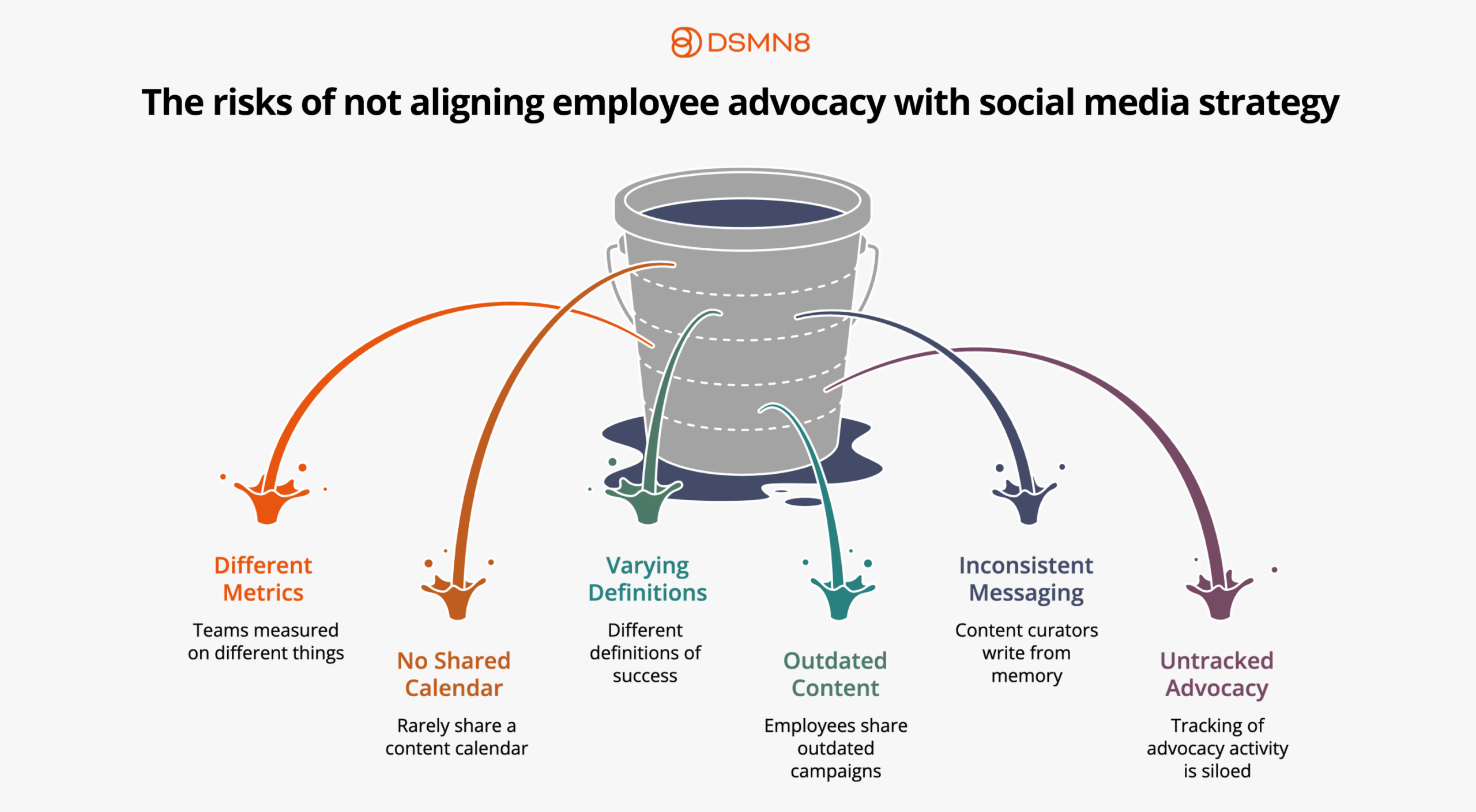
These teams are often measured on different things, rarely share a content calendar, and have different definitions of success.
This can cause significant challenges:
- Employees share outdated content because nobody told them the campaign had ended.
- Brand messaging varies because content curators write from memory rather than from any framework.
- Nobody is tracking how advocacy activity relates to the social metrics marketing actually cares about.
The fix is to treat advocacy as a component of social strategy from the planning stage, not as a distribution channel you activate after campaigns have gone live.
What Alignment Actually Means
It’s worth being clear about what alignment isn’t.
It doesn’t mean asking employees to reshare every brand post or turning your advocacy program into a content-syndication tool where employees become carbon copies of the company page.
That approach kills both authenticity and participation.
It’s the same trap as treating company-page reshares as the finish line rather than the starting point: it caps reach and skips the trust that comes from a real voice.
Instead, ensure that the content employees share reinforces the same strategic narratives and campaign themes that marketing is already driving, while preserving individual voices and perspectives.
Think of it as a content framework rather than a script. Employees know the topic, the angle, and the business objective; how they talk about it should still sound like them. Andy Lambert from Adobe explains in this episode of the podcast:

Andy Lambert, Principle Product Manager @ Adobe and Author of Social 3.0.
There’s a compounding reason to get this right on LinkedIn specifically.
According to LinkedIn’s own research, employees’ collective networks are on average 10 times larger than a company’s page following.
When an employee shares content aligned to a campaign, it reaches decision-makers and prospects through a trusted personal connection. This is the kind of exposure no amount of boosted brand-page spend can reliably replicate.
And in 2026, employee-generated content on LinkedIn also functions as a GEO asset: LinkedIn is consistently among the most-cited domains when AI platforms answer professional queries, which means active employee content contributes to brand visibility in AI-generated answers as well as traditional search.
Map Advocacy Activity to Social Objectives
Before diving into the specific objectives, it’s worth framing why employees engage with advocacy at all.
Jordan explains in this episode of our podcast:

Jordan Tennenbaum, Head of Social Media @ Talkdesk.
That dual benefit is what makes advocacy sustainable. Programs that communicate only the company upside struggle with participation; the ones that lead with employee value tend to build habits.
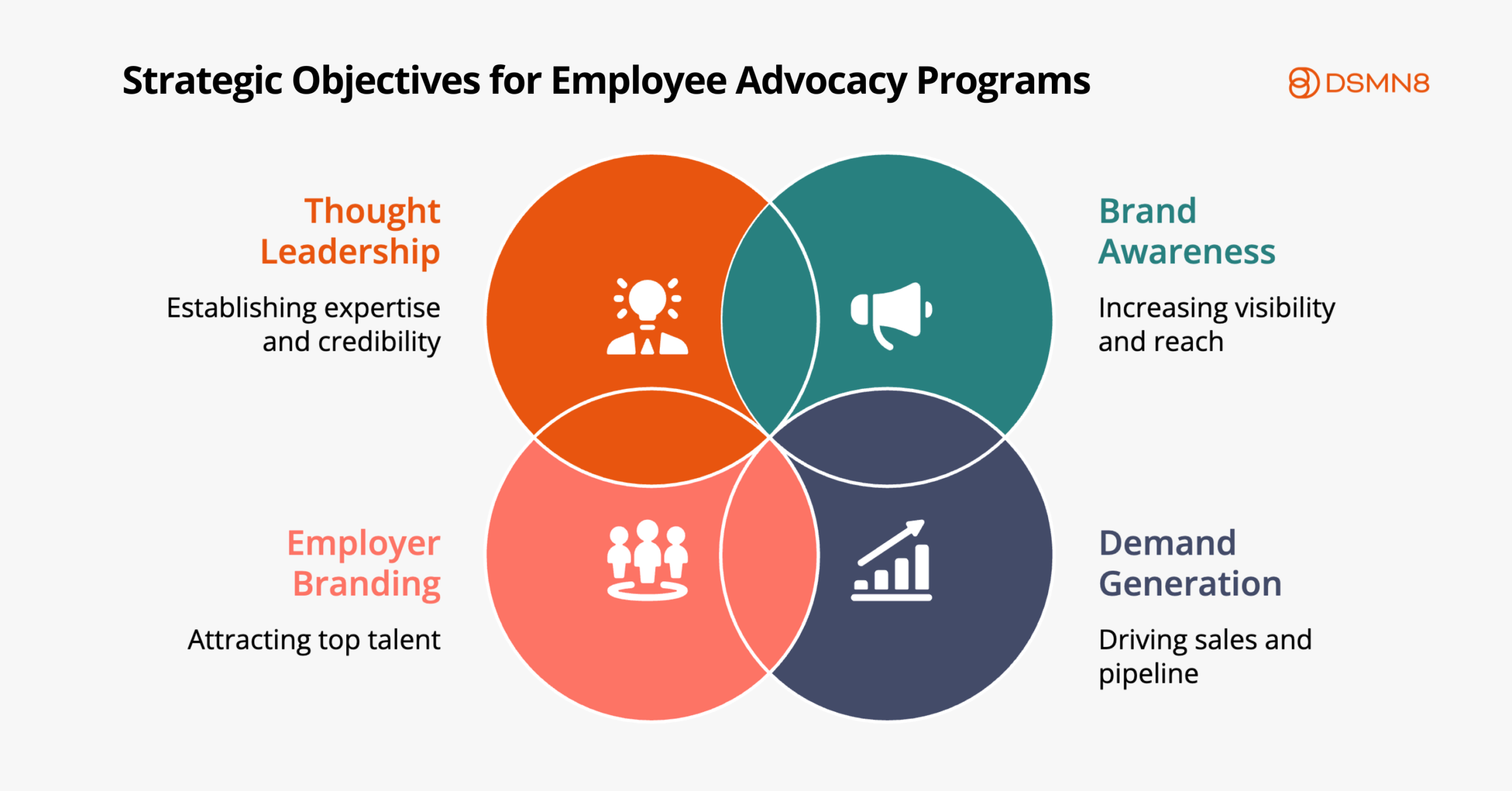
A mistake a lot of programs make is treating advocacy as one tactic doing one job.
In practice, it plays a different role depending on what your social strategy is trying to achieve, and planning content without that clarity is where programs lose focus.
Here are some objectives you’ll likely have:
For each objective, the question to ask when planning your campaigns is:
What does the advocacy version of this look like?
What content types, which employee segments, and what calls to action align with the campaign goal?
Factor Advocacy Into Your Content Calendar, Not as an Afterthought
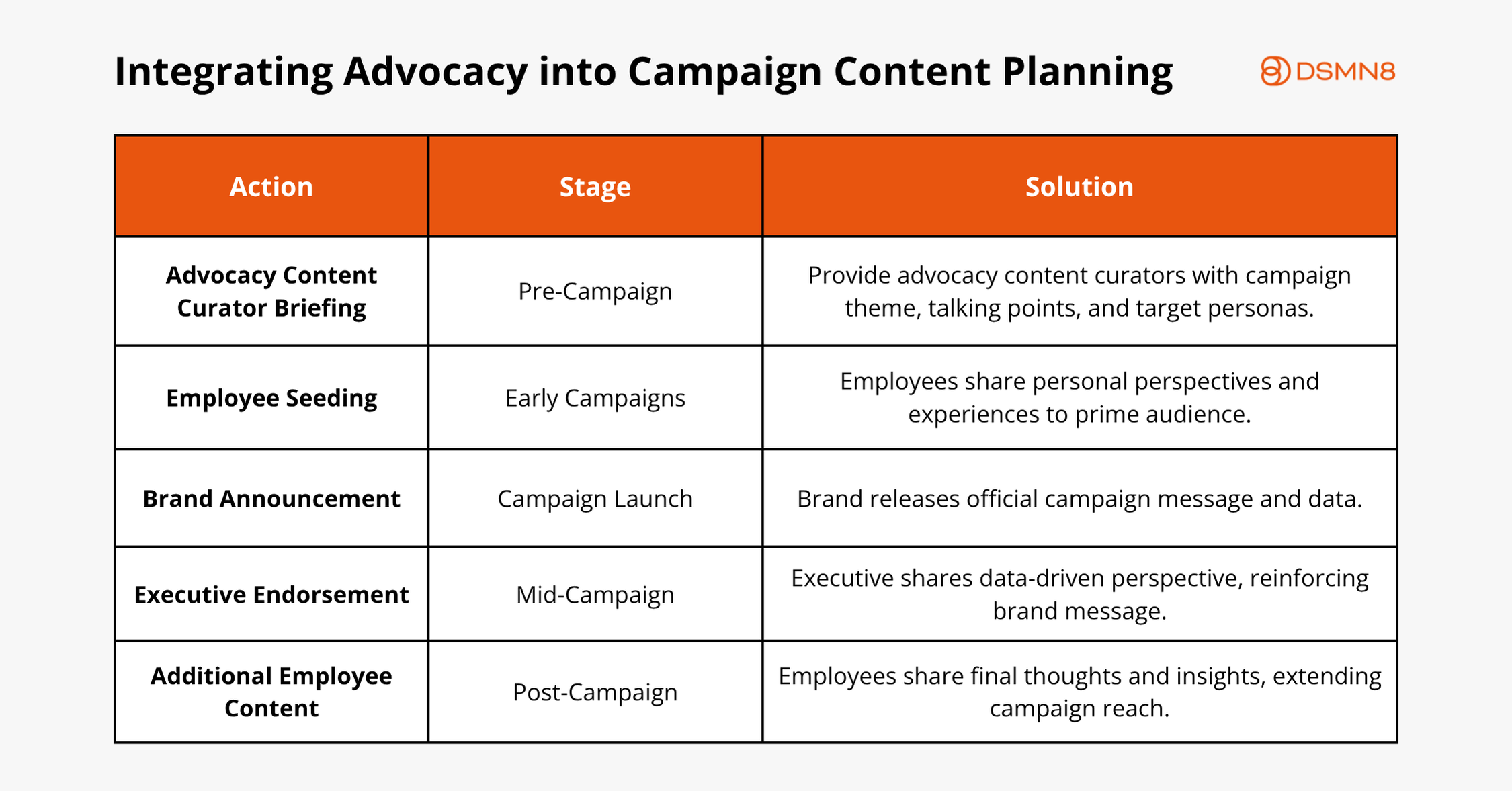
The single most important operational change is to plan advocacy content alongside brand content, not as an afterthought once a campaign is already live.
In practice, this means a tiered content approach.
Brand posts set the narrative: the campaign message, the data point, the product news.
Employee posts humanize it: reactions, perspectives, related experiences, behind-the-scenes context.
These two tiers should be planned in parallel.
Tolulope explained in this episode of our podcast that Hatch saw success following this approach:

Tolulope Aribisala-Tijani, Head of Social @ Hatch.
Watch the full episode:
Timing matters too. Employee content seeded ahead of a brand campaign can prime audiences before the official push goes out. When an executive shares a data-driven perspective on a problem, and the brand then releases a resource that addresses that problem, the two reinforce each other.
Content briefings don’t need to be complex. A short summary of the campaign theme, two or three talking points, and a note about which employee segments or personas the content is most relevant to is enough to get consistent, on-brand sharing without removing the personal voice that makes advocacy effective in the first place.
💡 Learn more: The Definitive Handbook to Employee Advocacy Success.
Choose Content That Travels Well Through Employee Networks
Not all content performs the same way when shared by an employee versus a brand page. Content that consistently outperform for employee advocacy tend to share a few characteristics: they’re specific rather than generic, they carry a clear point of view, and they give the person sharing them something to react to or add context around.
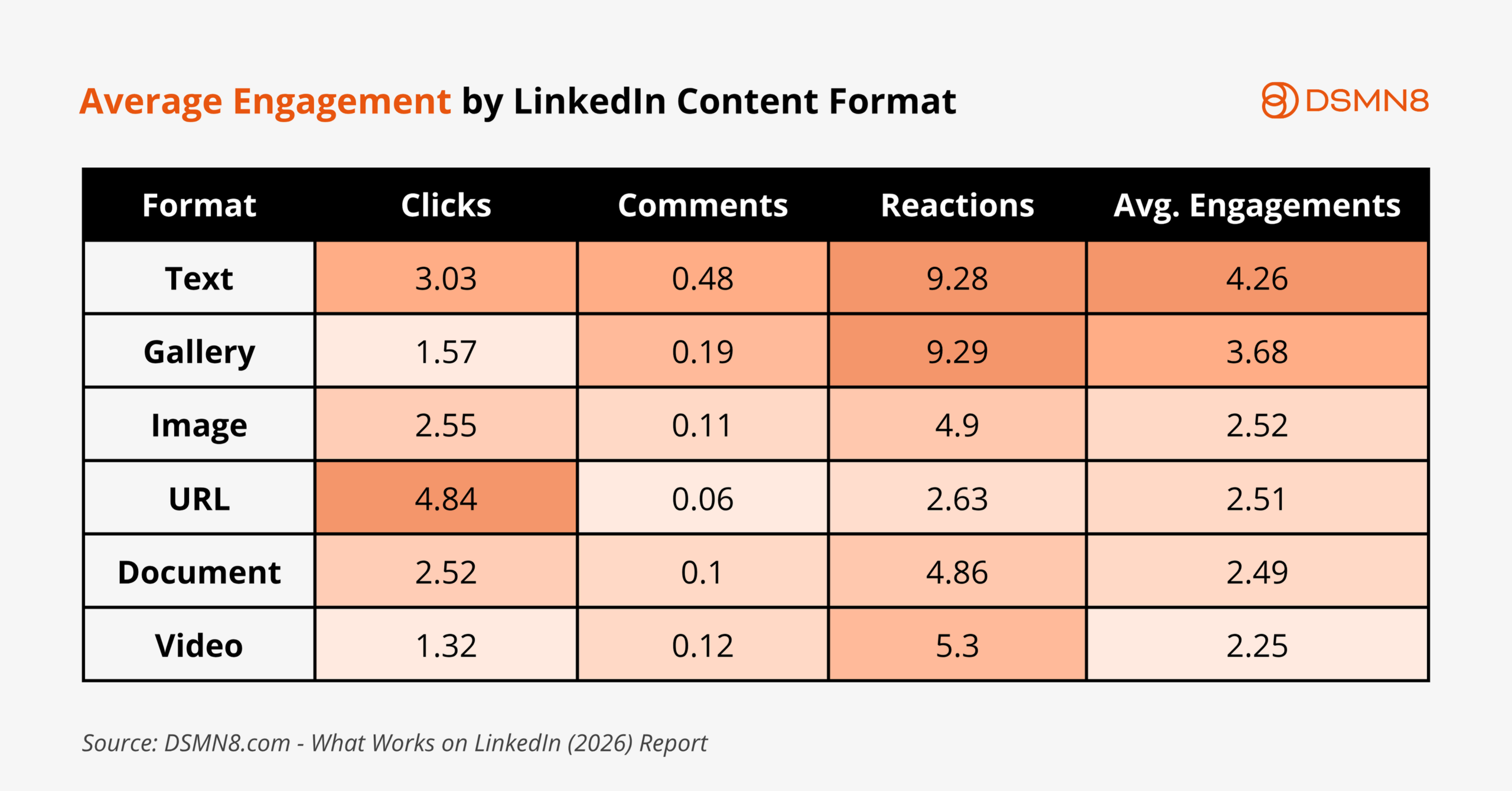
DSMN8’s analysis of 110,000 LinkedIn posts found no single winning format: the right choice depends entirely on the outcome you’re trying to drive.
For reach, text posts generate nearly five times more impressions than any other format. For engagement and community, gallery posts lead on reactions. For traffic and attribution, link posts produce the highest average clicks.
It’s also worth flagging what doesn’t travel well: promotional product content, generic awareness posts, and anything that reads like a press release. Employees won’t share it, and if they do, their networks won’t engage with it. Content that only works as an advert has no place in an advocacy program.
The Role of Employee Advocacy Software
Managing this alignment manually doesn’t scale. Emailing content suggestions to 50 employees, tracking who shared what, and figuring out which posts are driving actual results requires a level of coordination that falls apart quickly as programs grow.
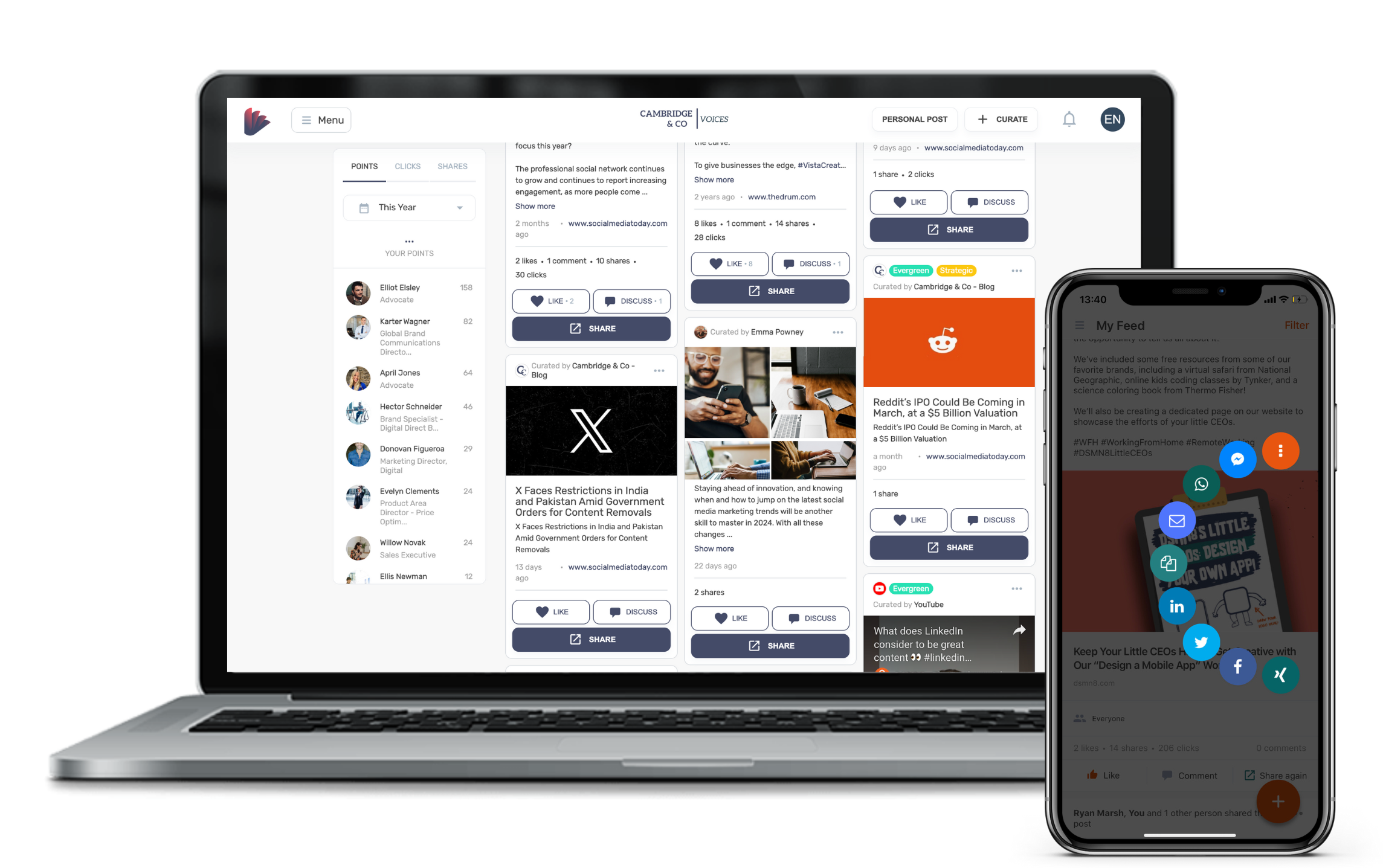
A dedicated employee advocacy platform solves the operational problem. DSMN8, for example, enables content curators to add multiple caption variations (so employees aren’t sharing identical posts), segment content to the right advocates by team or persona, and flag strategic or evergreen content for prioritization.
Employees access a curated feed of approved content, apply their personal voice, and share with one click, or use auto-scheduling for a fully hands-off approach.
The analytics side is where integration with social strategy becomes measurable.
DSMN8 automatically adds UTM links to employee-shared content and tracks earned media value and content performance. This gives marketing teams data that sits alongside, rather than separate from, the metrics they’re already reporting on.
This is a meaningful distinction from using a social media management tool with advocacy features added on: those tools are built around brand publishing workflows, not employee sharing workflows, and the difference shows in both usability and reporting.
Measuring Alignment: What to Track
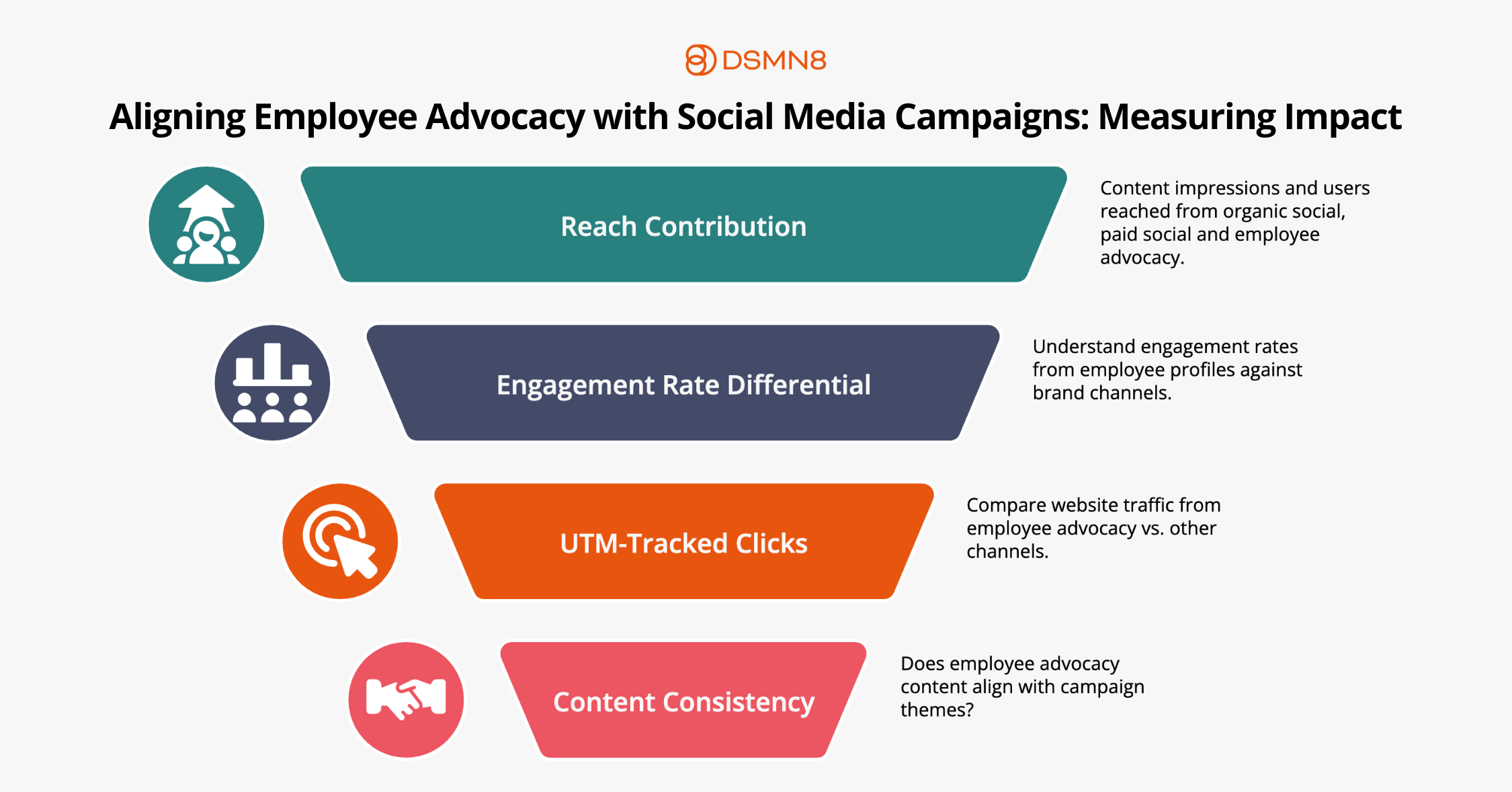
Once advocacy is integrated with social media strategy, measurement shifts from participation metrics (how many employees shared) to contribution metrics (what did that sharing add to the goals we were already tracking).
The metrics worth reporting alongside your existing social KPIs:
For a practitioner perspective on how this plays out in a real program, Jordan Tennenbaum, Head of Social Media at Talkdesk, covers his approach to measuring advocacy alongside broader social strategy in this episode of the Employee Advocacy and Influence Podcast:
Putting It Together
Employee advocacy works as a standalone channel. But when it’s aligned with your broader social strategy, it becomes a core marketing pillar.
Getting there requires treating advocacy as a planning input rather than simply a distribution output: building advocacy content into campaign workflows, selecting content based on what performs in employee networks, and using a platform that creates the operational and analytical link between employee activity and marketing results.
If you’re assessing where your current program sits relative to best practice, the Employee Advocacy Benchmark Report 2026 covers performance data from around 200 programs. This will show you what good looks like across key metrics and what the top programs are focusing on this year.
Or, if you want to see how DSMN8 fits into your existing social strategy, book a demo and we’ll walk through it with your specific setup in mind.
FAQ
What is an employee advocacy social media strategy?
An employee advocacy social media strategy is a plan for integrating employee content sharing into your broader social media activity.
Rather than running advocacy as a separate program, it aligns the content employees share with the campaigns, narratives, and objectives already driving your brand’s social media output. The two channels reinforce each other rather than operating separately.
How is employee advocacy different from a social media management tool?
Social media management tools are built around brand publishing workflows: scheduling, monitoring, and reporting on company-owned accounts.
Employee advocacy platforms are built around employee sharing workflows: curating content for advocates, tracking individual and program-level performance, and attributing clicks back to advocacy activity via UTM tracking. The two serve different functions and are best used alongside each other rather than as substitutes.
How often should employees share content as part of a social media strategy?
The right cadence depends on your program design and the content volume your team can sustain, but most high-performing programs publish between three and five pieces of shareable content per week.
Quality and relevance matter more than frequency. Employees are more likely to share content that’s timely, specific to their role or expertise, and gives them something to react to or add context around. Flooding the feed with generic brand content reduces participation over time.
How do you measure employee advocacy alongside social media KPIs?
The most useful metrics for measuring employee advocacy alongside existing social KPIs are:
- Reach contribution (how much incremental reach employees are adding to campaign content)
- Engagement rate differential (how employee-shared content performs versus the same content shared from the brand page)
- UTM-tracked clicks (website traffic directly attributable to advocacy activity)
- Content consistency (whether employees are sharing content that maps to active campaign themes).
These sit alongside the metrics your social media team is already reporting on.
Additional Resources
Your competitors are already active on LinkedIn. Find out how you compare.
Get a free competitor analysis review.
Ready to close the gap?
More guides you’ll find helpful:

Emily Neal
Emily is SEO Lead at DSMN8. She focuses on organic growth strategy across search and AI search and co-authors DSMN8's original research, including the Employee Advocacy Benchmark Report and edited CEO Bradley Keenan's book. Her background spans SEO strategy, technical web, long-form content, digital PR, and marketing automation.