

What's on this page:
- Social Media Channel Integrations.
- Internal Communications Platform Connections.
- Single Sign-On (SSO).
- Salesforce Integration.
- UTM Tracking for Analytics Integrations.
- Content Source Integrations.
- Mobile-First Sharing.
- Executive LinkedIn Management.
- AI Integration for Personalized Captions.
- Why Integration Depth Matters More Than Integration Breadth.
- Additional Resources
When choosing an employee advocacy platform, naturally, the main aspects to consider are the features your team needs and the user experience for advocates. Integrations are often overlooked, but they can make a bigger difference than you might expect.
How well does the platform connect with the tools you already use across marketing, communications, and sales?
When your employee advocacy program sits in a silo, it creates extra admin work, slows user adoption, and makes it harder to demonstrate impact.
But if your platform is connected to your internal comms, automatically pulls in company content from your social channels, and UTM-tracked clicks are instantly visible in Google Analytics? That’s less work, better reporting, and the program becomes part of your company culture.
For marketing, communications, and employer brand leaders evaluating an employee social sharing platform, here are the 9 integration features that matter most.

1. Social Media Channel Integrations
The foundation of any social media content distribution strategy is the ability for employees to share approved content directly to the networks they already use.
Of course, LinkedIn is the priority as the core channel for professional networking and B2B content. But depending on your industry, you may also wish to share on platforms like X (formerly Twitter), Facebook, and Instagram.
For organizations with a global workforce, consider additional social channels like WhatsApp, Messenger, Xing, and WeChat to give employees more flexibility in how and where they amplify content.

2. Internal Communications Platform Connections
A platform that integrates with Slack and Microsoft Teams means advocacy doesn’t require employees to log into yet another tool.
New content can be surfaced directly inside the communications channels your teams already check daily, and employees can engage with or “boost” posts without leaving their existing workflow.
This is one of the simplest and most effective ways to get your team involved: the lower the friction between “new content is available” and “I can share it,” the higher your participation rates will be.
💡 Check out our guide to Employee Advocacy User Adoption for more strategies to boost participation.
3. Single Sign-On (SSO) - secure, simple access for the whole organization
SSO lets employees access the advocacy platform with the same login they use for everything else at work.
This means no separate password to manage, and no IT headache when someone leaves the company and their access needs to be revoked immediately.
For any organization evaluating advocacy software at enterprise scale, SSO support is a baseline security requirement. Confirm the platform supports SAML 2.0, and ideally has tested integrations with the identity providers your IT team already uses, such as Microsoft Entra ID, Okta, OneLogin, and Ping Identity.
This matters for compliance and governance in two ways: it ensures access provisioning and de-provisioning follows your existing identity lifecycle processes, and it removes the risk of employees creating separate, unmanaged credentials for yet another platform.

4. Salesforce integration: advocacy content where your sales team already works
For sales teams, the biggest barrier to sharing content is a lack of time.
If sharing requires logging into a separate platform, finding the right post, and copy-pasting, it won’t happen consistently.
Look for an advocacy platform that embeds directly inside Salesforce as a native tab, so reps can browse, select, and share approved content without ever leaving the tool they’re already working in all day.
5. UTM Tracking for Analytics Integrations
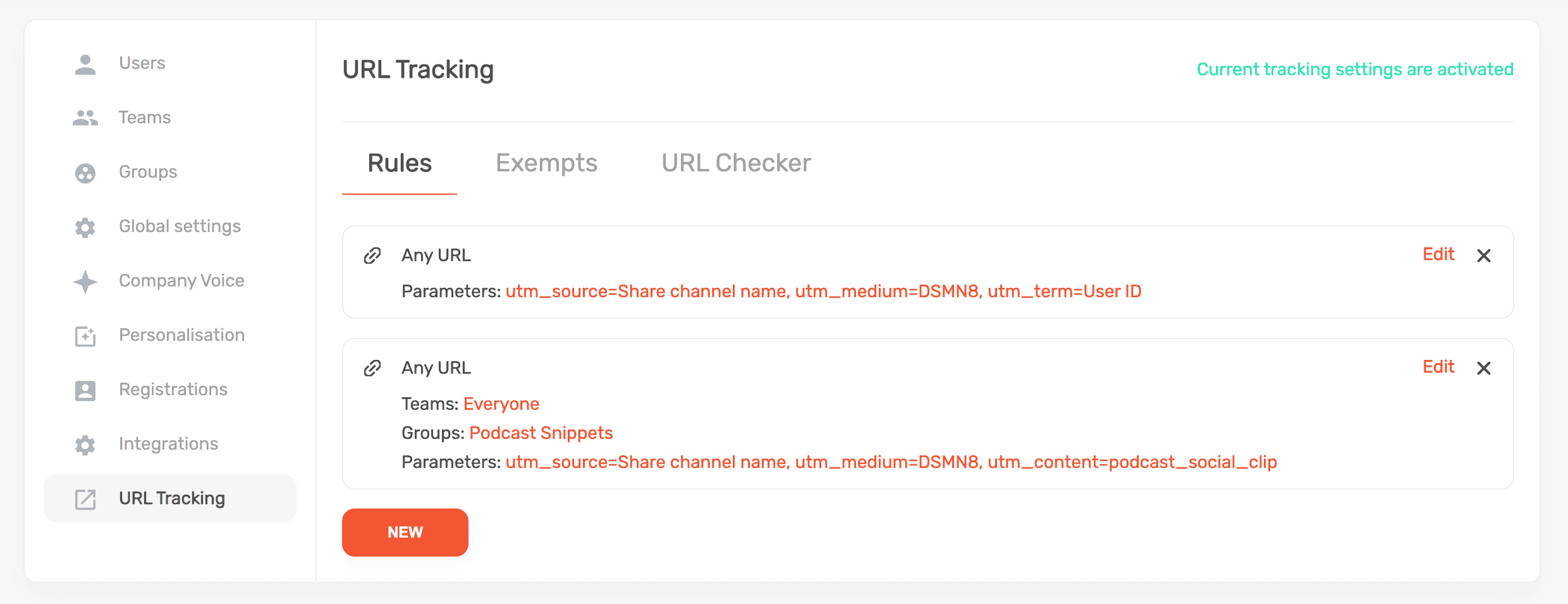
Every link shared through the platform should be automatically tagged with UTM parameters, and those parameters need to flow cleanly into the analytics tools you already use, like Google Analytics or Adobe Analytics.
This is the backbone of ROI reporting for any advocacy program: without consistent UTM tagging, you lose visibility into which content, which employees, and which channels are actually driving traffic back to owned properties.
When evaluating this feature, ask specifically how the platform handles UTM tagging at scale: by campaign, by team, by content source, and whether those rules can be customized rather than applied as one-size-fits-all.
6. Content Source Integrations
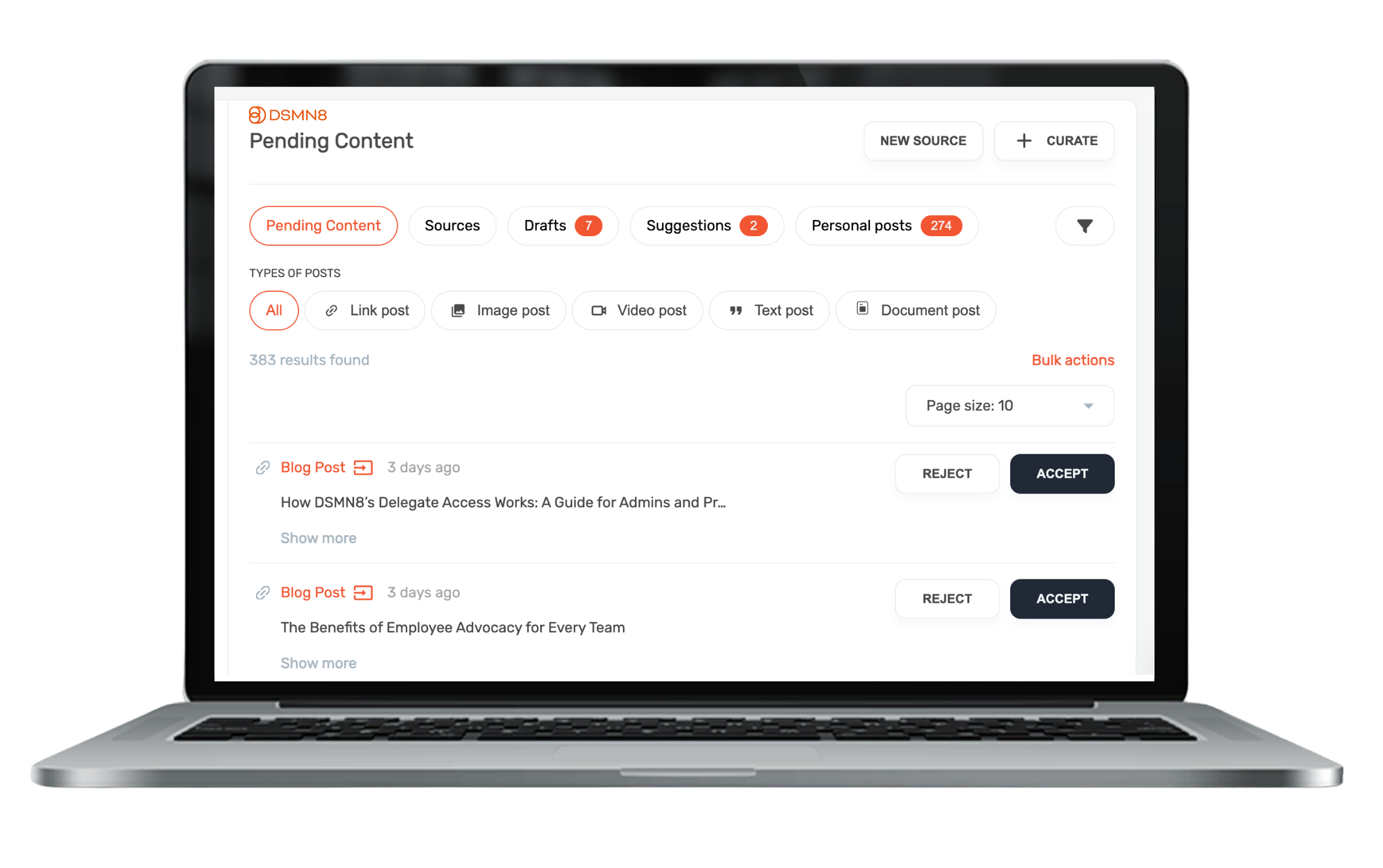
Curators shouldn’t have to manually find and upload every piece of content.
Look for platforms that automatically pull in content from RSS feeds, company social channels, and YouTube, so new blog posts, announcements, and videos flow into the platform, ready for curation, as soon as they’re published.
This keeps the content stream fresh with minimal admin overhead.
7. Mobile-First Sharing
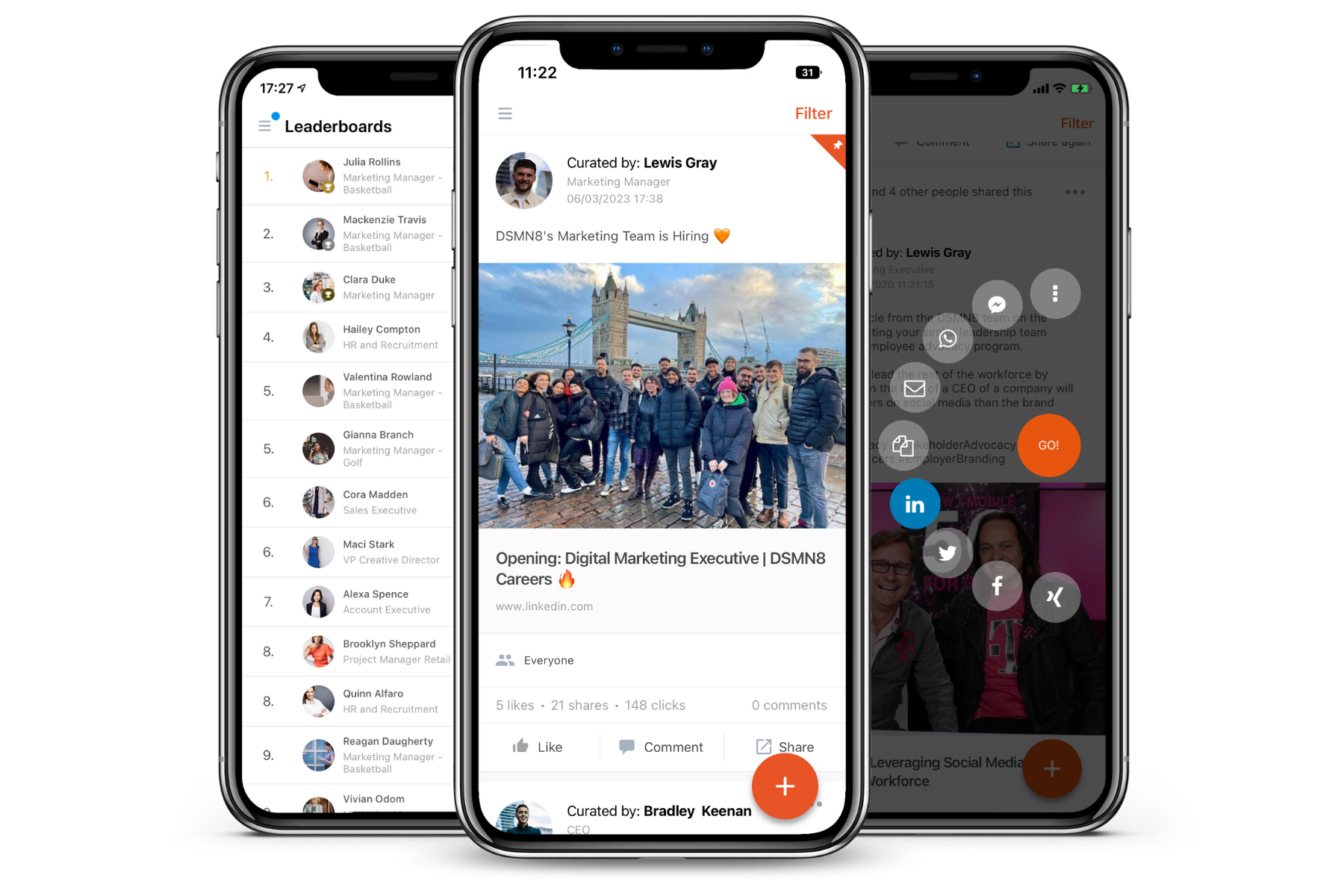
A meaningful share of employees engage with advocacy content primarily on mobile, often outside core working hours. If you’re looking to include employees who aren’t desk-based, this is an essential.
Look for mobile apps that make sharing genuinely frictionless: push notifications for new content and an interface that doesn’t require employees to manually copy-paste links or captions.
This is part of social media content distribution that’s easy to overlook in a desktop demo but has an outsized effect on day-to-day participation rates.
With DSMN8, your mobile app will be customized to your own brand identity, ensuring familiarity for users.
8. Executive LinkedIn Management with Delegate Access
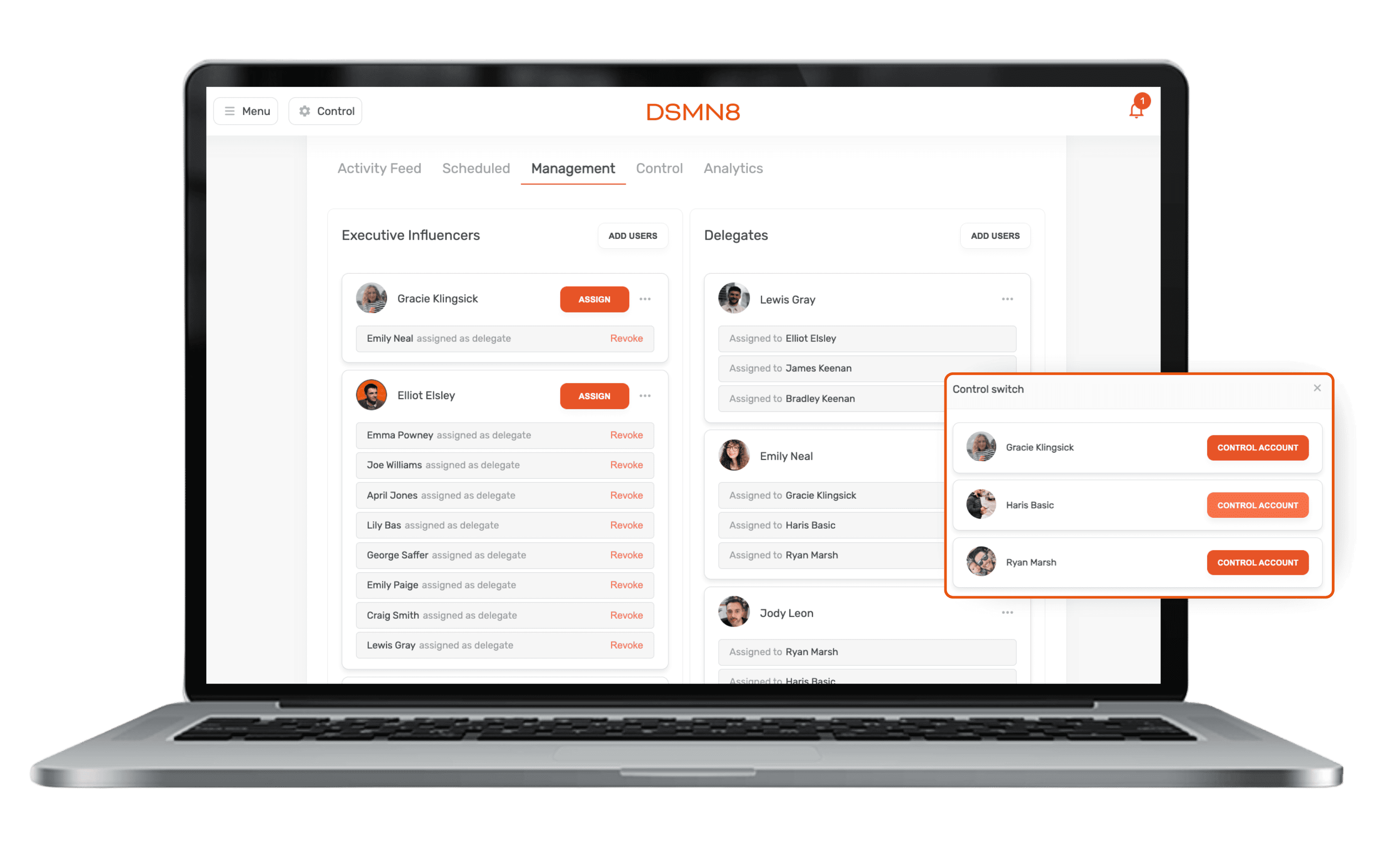
For executive advocacy and thought leadership programs, integrating with individual executives’ LinkedIn accounts to manage content on their behalf should be a priority.
Look for platforms that support delegate access, allowing an executive assistant, comms team member, or marketing manager to draft, schedule, and queue posts for an executive’s review and approval without ever needing the executive’s own login credentials.
This is where compliance and governance meet integration: the platform needs a secure, auditable connection to LinkedIn that respects who can draft versus who can publish, with clear approval steps before anything goes out under an executive’s name.
This is especially important for regulated industries, as controlled, permissioned access prevents password sharing and offboarding issues when employees who have access to accounts leave the organization.
9. AI Integration for Personalized Caption Generation
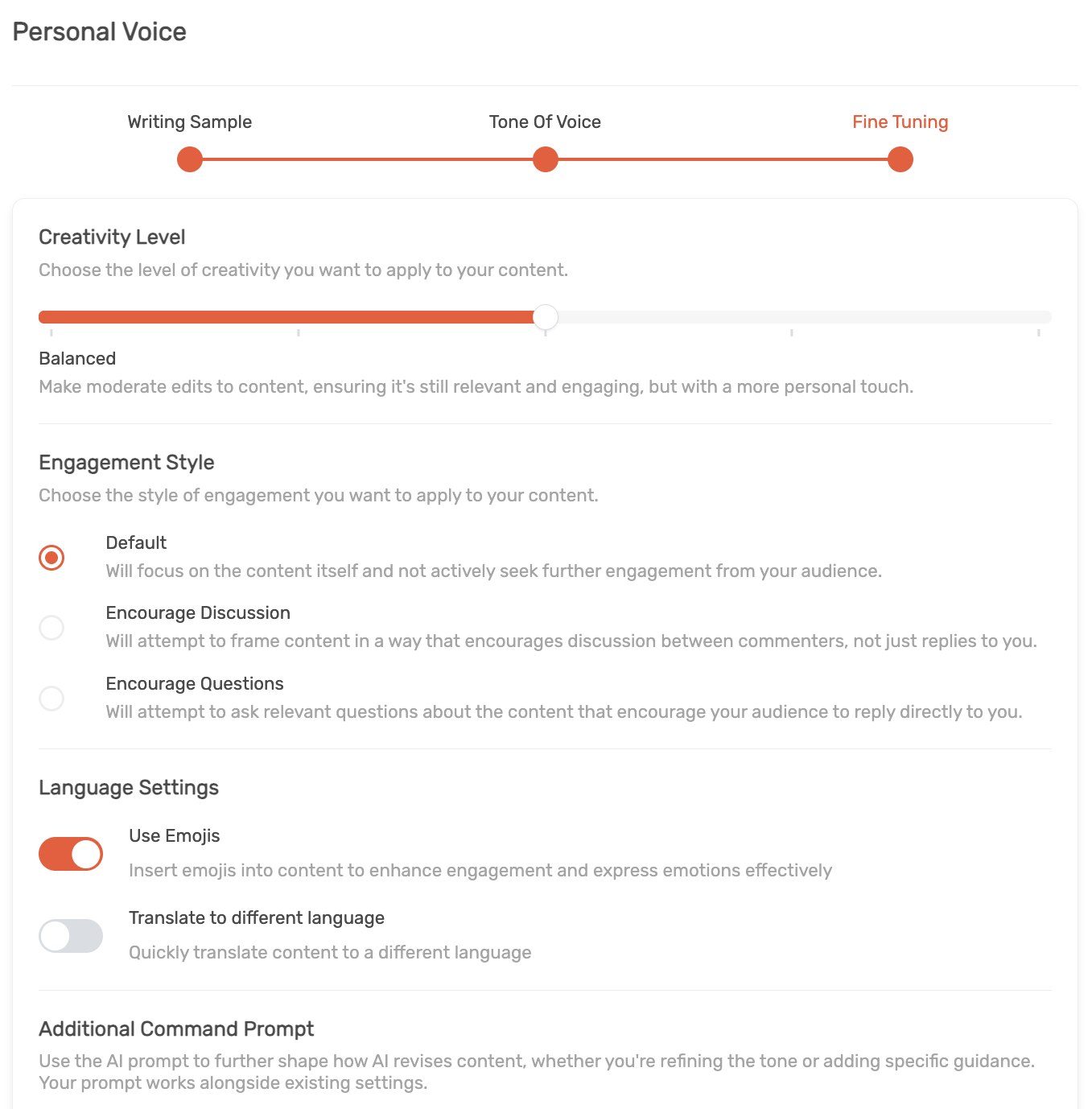
A number of employee advocacy platforms like DSMN8 now integrate with AI models (such as OpenAI’s GPT) to help content curators and employee advocates generate post captions.
To take this even further, an AI-powered Personal Voice can tailor curated captions to an individual’s tone of voice, drawing from their preferences and previous content, while retaining the core brand guidelines and message.
This solves a real adoption problem at the heart of brand advocacy program management: employees are often hesitant to share content because they don’t know what to say, or feel uncomfortable using copy that obviously wasn’t written by them.
AI-assisted captions give employees a starting point they can edit or post as-is, speeding up sharing without sacrificing the authenticity that makes employee-generated content outperform brand posts.
Why Integration Depth Matters More Than Integration Breadth
As Bradley points out in the podcast episode above, the question you should ask when looking at employee advocacy integrations is: What will we use this integration for? Is it necessary, and will it be used?
A long list of logos on an integrations page doesn’t guarantee a platform will fit your use case. What matters is whether the integrations that matter most to your organization are supported. When comparing employee social sharing platforms, ask vendors for specifics. This will reveal a platform’s enterprise readiness more than any feature list. Grab our RFP template to help in this process.
Additional Resources
Ready to get started with the #1 employee advocacy platform?
Wondering how active your team already is, and how this compares with your competitors?
Get a free competitor analysis review.
More helpful employee advocacy guides:

Emily Neal
Emily is SEO Lead at DSMN8. She focuses on organic growth strategy across search and AI search and co-authors DSMN8's original research, including the Employee Advocacy Benchmark Report and edited CEO Bradley Keenan's book. Her background spans SEO strategy, technical web, long-form content, digital PR, and marketing automation.