
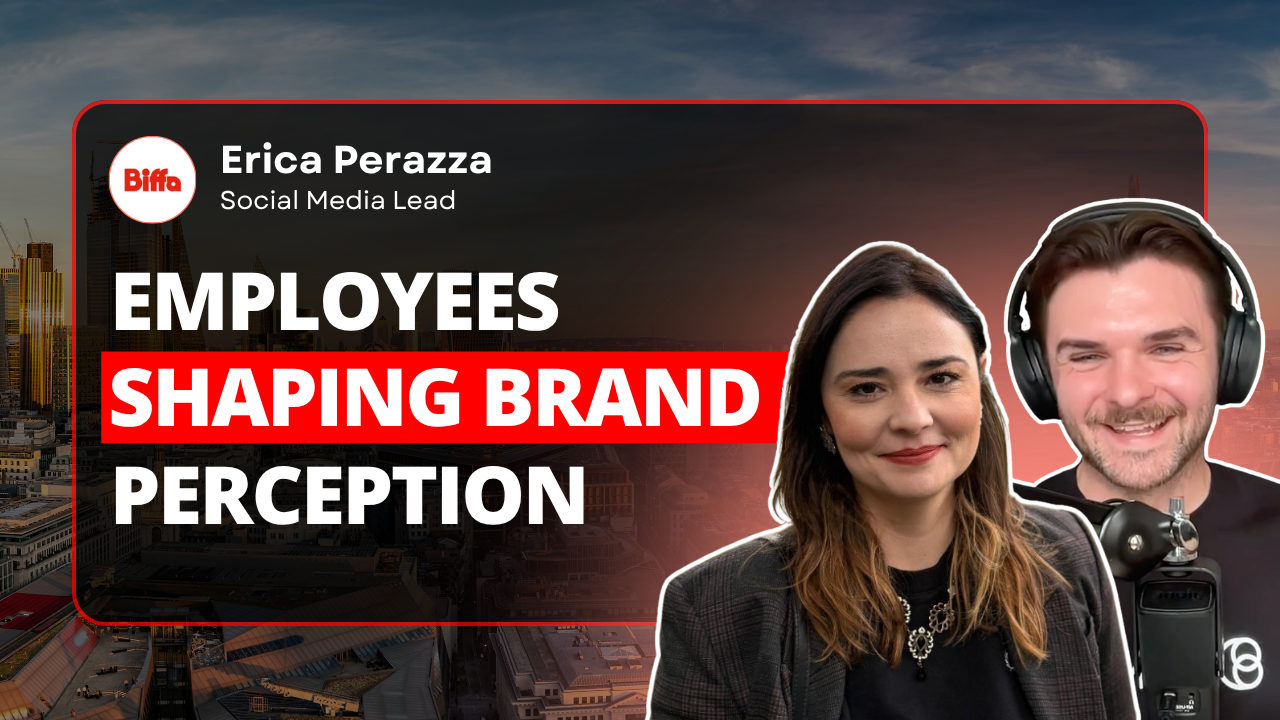
Most brands struggle to get a single colleague to share a post. Biffa built a program that people now ask to join.
Erica Perazza is Social Media Lead at Biffa, the UK waste management and sustainability business, where she owns everything from LinkedIn and TikTok to community management and employee advocacy. In under four years, she has taken a fragmented social presence, including more than 200 unofficial employee-created pages, and turned it into a structured advocacy program built around one goal: changing the perception that Biffa is just bins and trucks.
In this episode, Erica explains why she treats employee advocacy as part of Biffa’s wider social media strategy rather than a separate channel, and why the employee is the channel. She walks through organizing advocates by UK region instead of by department, the social masterclasses that took colleagues from never having used social media to posting with confidence, and the gamification and recognition that keep momentum going.


3 Key Takeaways
When the Goal is Brand Perception, Measure Perception First
Biffa’s advocacy program exists to shift how the company is understood, so Erica leads with active participation, visibility, brand perception, and sentiment, and treats reach, impressions, and engagement as evidence that feeds into those. She believes that impressions and engagement must be read together, because a million people seeing content means little if none of them interacted with it.
Her team also benchmarks advocacy performance against Biffa’s corporate channel, and the gap is often stark, with employee shares multiplying the reach of a single brand post many times over. Erica highlights Carla Bryan, Biffa’s Director of Public Affairs and Partnerships, whose personal posts frequently outperform anything from the brand page.
Copy-Paste Advocacy is the Fastest Way to Kill Authenticity
Erica describes the biggest misconception about employee advocacy as the idea that it is simply sharing a post. Lewis expanded on this with DSMN8’s own frustration around copy-paste advocacy, where hundreds of employees push out identical wording and strip the content of everything that made it credible.
The tension is real, because blank page syndrome affects employees just as much as marketers, and most people need a starting point. Biffa’s answer is education rather than control: a clear social media policy, an understanding of the company’s positions on live issues, and enough knowledge of the business that going off brand becomes unlikely. As Erica puts it, if people genuinely understand the business, they will not go off brand, because they know what they are talking about.
Organise Advocates By Region, Not By Department
Most programs group employees by function, splitting sales from HR and operations. Biffa took this a step further, organizing its advocates by region, and Erica credits that decision with a noticeable lift in engagement. Regions that had never felt visible on Biffa’s social channels suddenly had a spotlight, and content that named their city or their local authority landed far harder than generic national posts.
Elliot drew the parallel with DSMN8 client OUTFRONT Media, which splits its advocates by US states and coasts so that people share the billboard inventory relevant to their own market. The lesson is that localization is not only about countries and languages. Relevance to someone’s actual patch is what drives them to click share.
Ready to start your own employee advocacy program?
Whether you’re exploring employee advocacy or considering DSMN8 as your platform, we can help you get started with confidence.
Learn More About Employee Advocacy:

Lewis Gray
Senior Marketing Manager at DSMN8. Lewis runs DSMN8's own employee advocacy program, putting the platform into practice from the inside, hosts The Employee Advocacy Podcast, and launched the Employee Advocacy Certification Course. His background in sales informs his approach to demand generation and B2B content strategy.