

Last updated: 9th June 2026.
So, you’re looking to launch an employee influencer program in your organization, and you want to know how you’ll measure its effectiveness.
We’ve got you 🙌
In our experience supporting hundreds of employee advocacy programs from SMBs to global enterprises, these are the metrics we consider essential in understanding how successful your program is:
- Adoption Rates.
- Active Users.
- Share Rates.
- Content Uploads.
Let’s dive into each one to better understand why they’re important in measuring employee advocacy and employee influencer program success.
1. Adoption Rates
One of the most effective ways to measure success across your organization is to monitor the percentage of your employees who sign up for the platform.
Having supported programs in companies of all sizes, we see an average adoption rate of 20-30% of a company’s total employee count.
A percentage on the higher side will have a significant impact on your share and engagement rates, not to mention the volume of original employee-generated content.
DSMN8 has seen adoption rates as high as 65% of a company’s total employee count.
Your percentage, of course, depends on whether your company is encouraging all employees to join the program or whether you’re limiting participation to a select group.
Chinese tech titan Huawei onboarded 20% of its employees in Europe when launching an employee influencer program with DSMN8 back in 2018. Check out the case study to find out more.
It’s not always necessary for companies to see high adoption rates, so don’t become disheartened if you don’t see the 20-30% average.
After all, getting just one C-Suite executive involved could have just as much impact as a handful of less-senior staff.
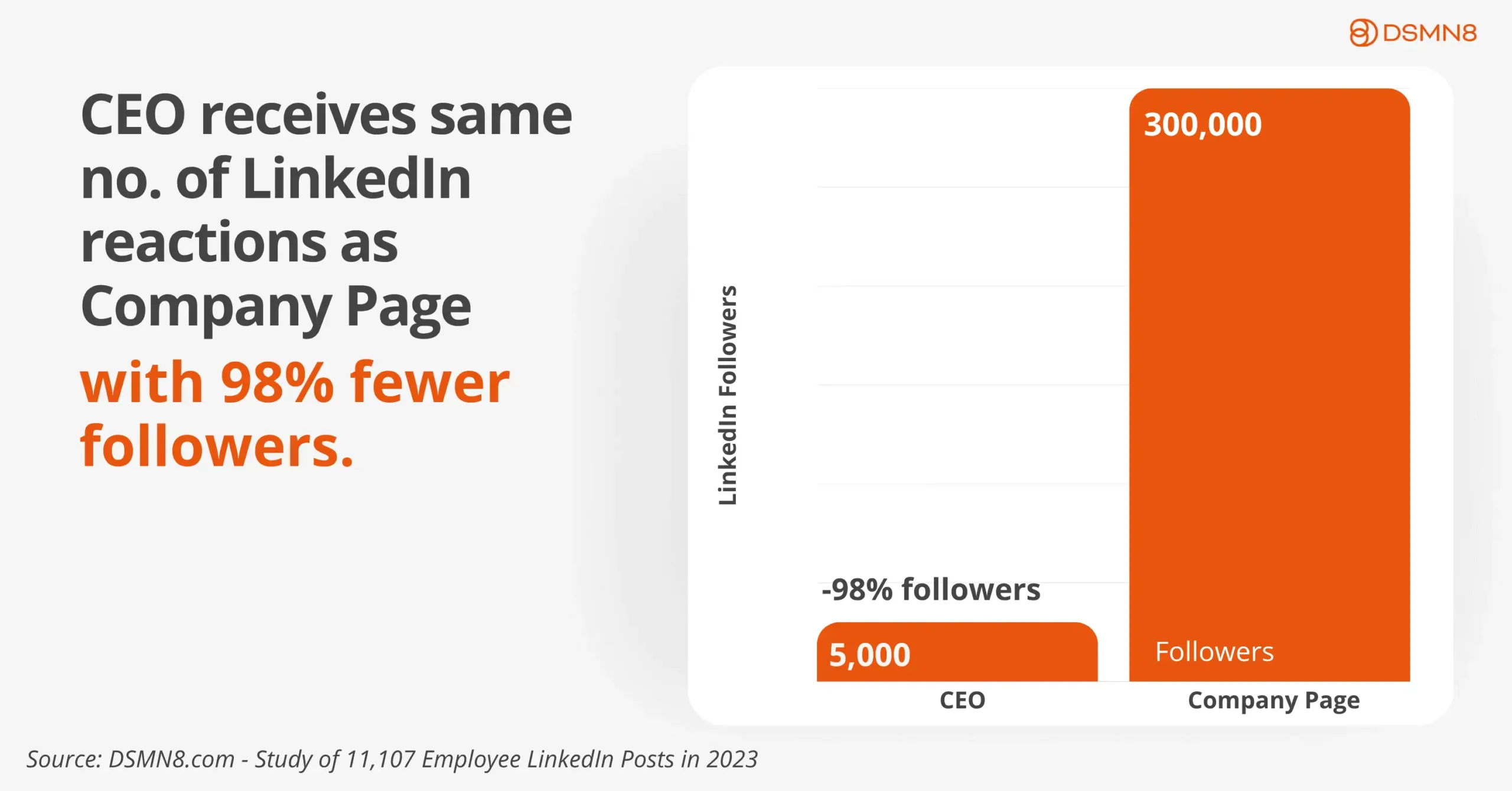
Your senior leaders are more likely to have larger networks on LinkedIn and, naturally, wield more influence. In fact, DSMN8’s study of 11,107 employee LinkedIn posts revealed that a CEO can achieve the same level of engagement as company pages, even with 98% fewer followers.
2. Active Users
Adoption rates are the first step, but what’s more important is ensuring that employees who have signed up to the platform remain active after the initial launch.
First, consider how many active users you’d like to see.
This target should be slightly lower than your initial adoption rate, keeping in mind that not everyone who signs up will remain active.
3. Share Rates
The primary metric that demonstrates the impact of your advocacy program will vary depending on your organization’s objectives.
For example, your main focus might be to improve your employer brand. To measure the effectiveness of employee social media posts on this, you could use UTM tracking to monitor how many job applications you receive from clicks on their posts. For a complete walkthrough of connecting UTM data through GA4 and into HubSpot pipeline reporting, see our employee advocacy attribution guide.
Regardless of your program’s goals, there are a couple of universal metrics you should keep an eye on, such as reach, engagement, and share rates.
Monitoring reach and engagement over time will reveal how effective employee networks are for content distribution, especially compared with company channels. You’ll also want to see which individual pieces of content are resonating most with audiences.
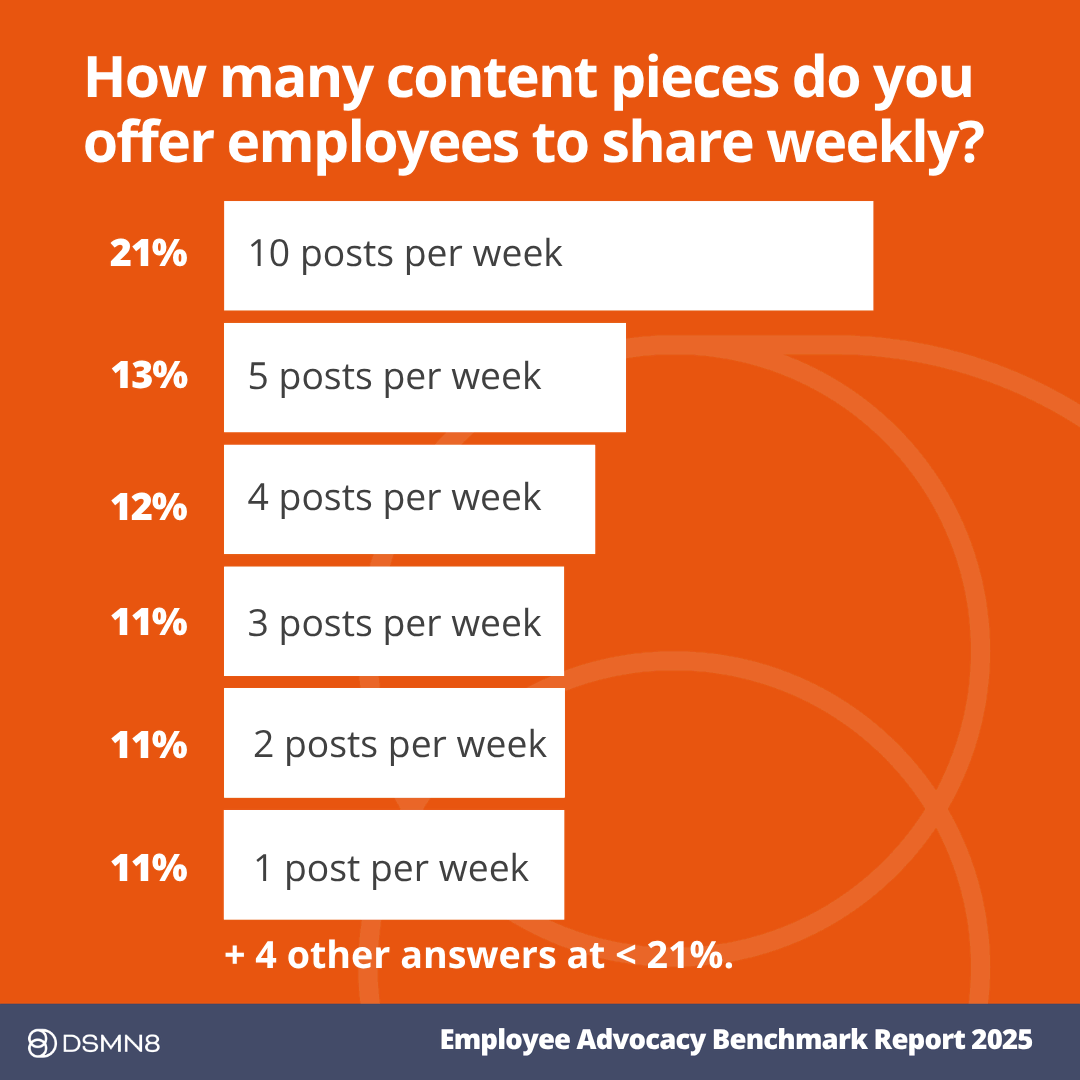
You should also keep track of share rates, meaning how many posts your employees are sharing, on average, per week.
It’s crucial to ensure that employees aren’t spamming their networks with posts, especially if gamification or rewards are involved.
The DSMN8 platform has “anti-cheat” technology built in to counter this, but it’s also worth reminding your team that sharing more than once per day will actually make their content less visible in the LinkedIn algorithm.
The average number of posts each week from DSMN8 platform users is 2.2 per employee.
Remember that the more content available, the more shares you’re likely to see.
When employees see a variety of posts to choose from, especially if they’re tailored to their region or department, they’ll feel more comfortable sharing.
The 2025 employee advocacy benchmark report revealed that 21% of program managers provide 10 or more pieces of content for employees to share weekly.
This is especially important for those in global enterprises: the last thing you want is hundreds of employees all sharing the same post simply because there’s a target to reach.
4. Content Uploads
Before rolling out an employee influencer program, check your company blog and social media channels to gauge how much content is currently being produced.
Knowing your current output will give you a number to work towards increasing and supplementing with employee-generated content.
It would also be useful to compare the number of employee-generated posts your team currently produces.
The demand for user and employee-generated content is higher than ever, as the rise of AI-generated content leaves social media users seeking authenticity and decision-makers wanting to see the real talent behind an organization’s promises.
Additional Resources
More content you’ll find helpful for setting goals and measuring impact from your employee advocacy program:
Ready to get started with the #1 employee advocacy platform?
Wondering how active your team already is, and how this compares with your competitors?

Lewis Gray
Senior Marketing Manager at DSMN8. Lewis runs DSMN8's own employee advocacy program, putting the platform into practice from the inside, hosts The Employee Advocacy Podcast, and launched the Employee Advocacy Certification Course. His background in sales informs his approach to demand generation and B2B content strategy.