

Last updated: 4th September 2026.
When launching an employee advocacy program, many organizations consider starting with a small group of employees.
Run a pilot with 100 people, test the waters, prove the concept, then scale. It sounds sensible and feels low risk.
But in practice, employee advocacy pilots often do the opposite of what they intend.
Instead of demonstrating success, they limit it.
When we polled 100+ CMOs on this, 72.7% said their organization has no program running today, and many of the ones that do exist are stuck exactly at that small-scale, pilot-shaped stage.
In our experience working with hundreds of advocacy programs, a consistent pattern emerged:
The companies that achieve strong, sustained adoption rarely begin with pilots. Instead, they begin with deliberate, organization-wide launches.
Let’s explore why.

Why Starting With a Pilot Feels Like the Safe Choice
The instinct to run a pilot is understandable.
Enterprise initiatives are expected to prove ROI, minimise disruption, and secure internal buy-in before expanding.
Employee advocacy, however, behaves differently from most software or process rollouts.
It is not a marketing tool. It is a visible, social behavior shaped by company culture, leadership, and peer influence.
As a result, how a program starts has a significant impact on its success.
The Problem: Pilots Change How Advocacy Is Perceived
Inside large organizations, scale communicates meaning.
A small employee advocacy pilot program often signals experimentation.
The message sent to the organization is clear: “Marketing is testing another tool.”
It feels optional, and frankly, skippable. Employees see it as just another initiative that may or may not stick around.
The problem is simple: small pilots can’t create the momentum that makes advocacy feel important. You’re fighting an uphill battle from day one.
Let’s go deeper into the reasons for this:

1. The Network Effect
Advocacy is inherently social.
The 2026 employee advocacy benchmark data showed that 94% of employee advocates report that posting on LinkedIn benefits their careers.
When employees see their colleagues sharing content, receiving engagement and reaping the benefits from doing so, participation spreads naturally.
This momentum compounds, and your program will grow through internal influence. This is the position you want to be in down the line, because enforcing advocacy won’t make you very popular.
A pilot group of 50 or 100 people will deliver results, but it rarely generates enough internal visibility to spark widespread interest.
It’s a similar dynamic to relying on company page reshares alone: the activity is real, but it’s capped well below what a fuller rollout can achieve.
A launch involving hundreds or thousands of employees signals strategic priority.
2. Leadership Signals Determine Whether Employees Participate
Employees watch what leaders do more closely than any of their colleagues.
But pilots often exclude senior leadership because the initiative is still “being tested.”
This unintentionally weakens credibility before adoption even begins.
Strategic launches work differently.
Executives participate visibly from day one.
This sends an unmistakable message to the wider team: this is a priority.
That top-down validation is what transforms employee advocacy from a nice-to-have into a cultural shift.

3. Adoption Comes From Setup
One of the most common misconceptions is that pilots are needed to measure user adoption.
In reality, adoption is largely determined before launch.
It’s the outcome of company culture, internal communications, and setting up your program for success.
Successful programs launch with:
- High-quality, ready-to-share content.
- Relevance across roles, regions, and interests.
- Clear program management structure – assigned roles and responsibilities.
- Visible leadership participation.
- Organizational communication and support.
Pilots rarely invest deeply in these foundations. And as a result, they do not truly test advocacy. Instead, they’re testing an under-resourced version of it.
The responsibility is often isolated within a single team (usually marketing or employer brand), trying to prove value. The wider organization waits for results before getting involved.
What Successful Employee Advocacy Launches Do Differently
The companies that succeed with employee advocacy make a different choice. They recognize that advocacy isn’t a marketing tactic to test, it’s a long-term project.
They invest in the setup: developing content strategies, securing executive sponsorship, creating clear communication plans, and building the infrastructure needed for success. Then they launch at scale, with leadership participation and organizational buy-in.
The results speak for themselves. These organizations see sustained employee engagement, measurable business impact, and programs that become embedded in their culture.
When they launch, adoption follows naturally because the foundation is solid.
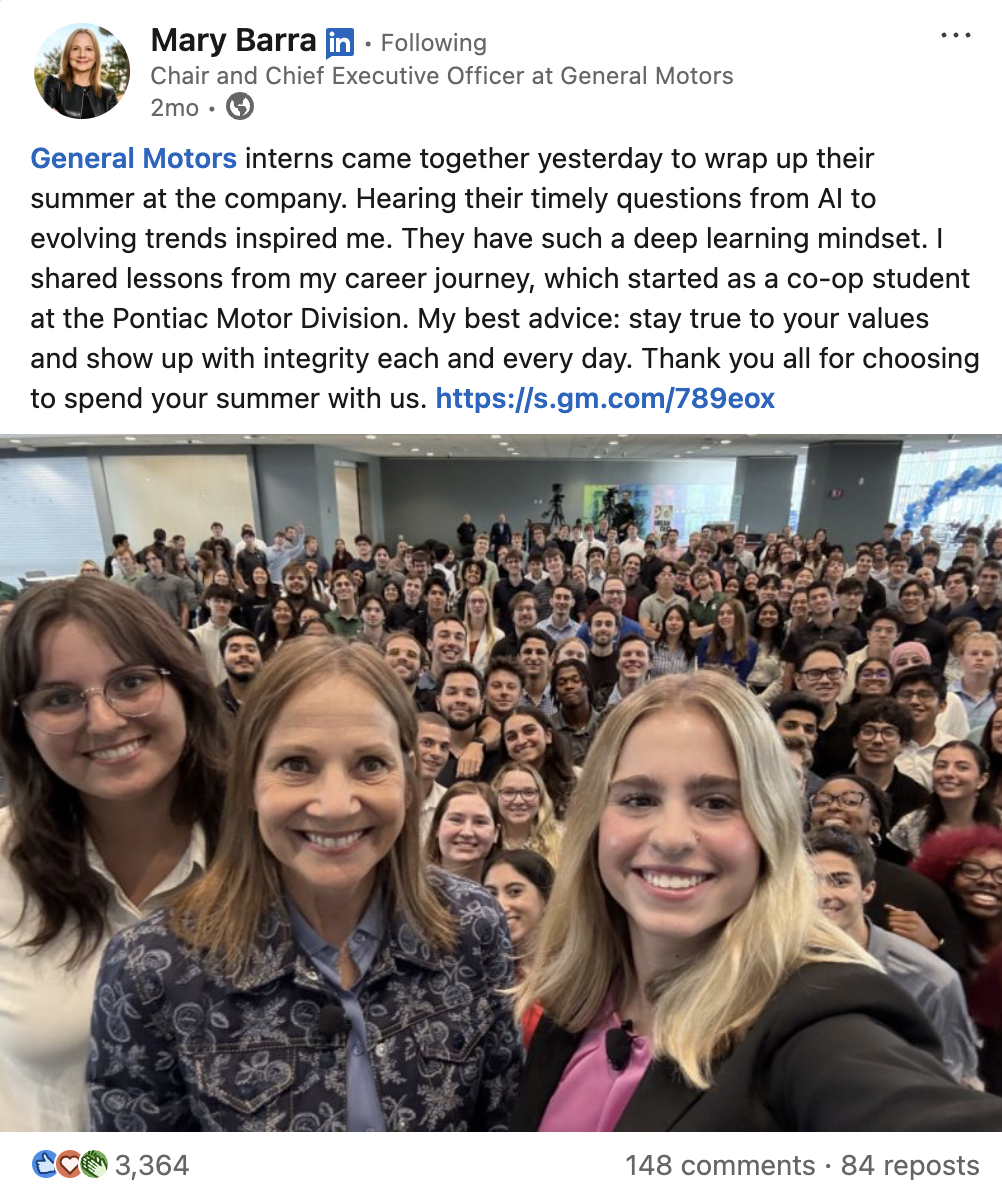
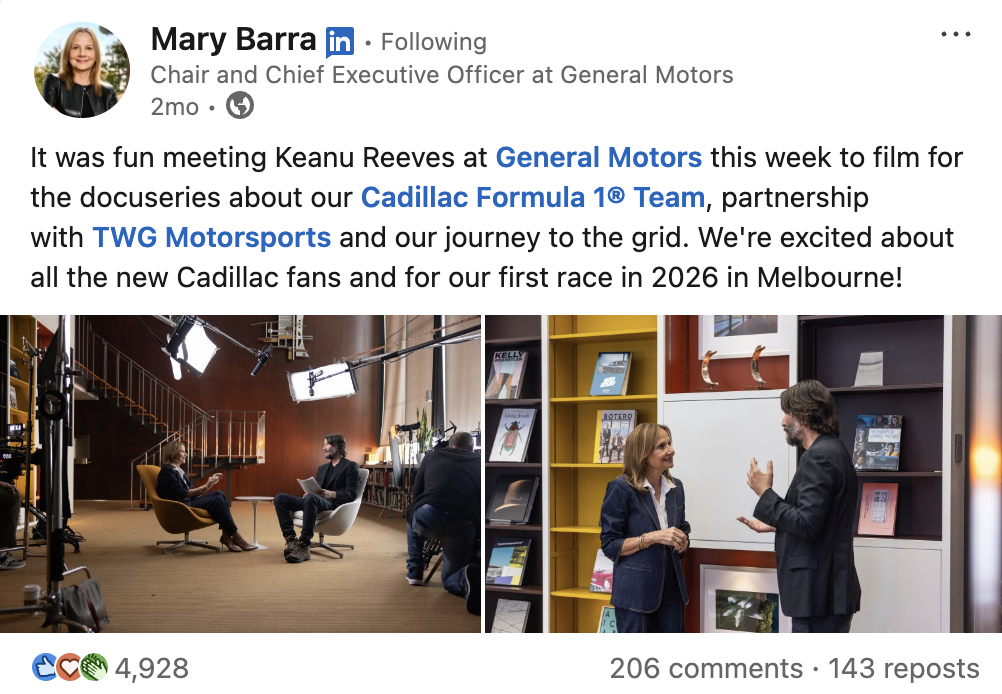
General Motors is a great example of this. After a previous employee advocacy effort didn’t resonate with employees, they started from scratch with DSMN8.
GM provided its team with technology that makes advocacy easier, strategic content tailored to each team, and support from President Mark Reuss. Their program quickly became part of the company culture and reached 20 million impressions in 6 months.
Sarah Holm, Director of Corporate Digital and Social Channel Communications, explains:
“Mark’s endorsement was crucial. We initially brought him in just to send the launch email, but he went beyond that. He’s actively using the platform, sharing content before his team even suggests it. When employees see leadership involved, it sends a powerful message.”
The difference between organizations that succeed and those that struggle isn’t their industry or company size. It’s whether they launch with conviction: executive buy-in, technology, and a strong content strategy.
If your organization has thousands of employees but you’re considering a pilot with 50, ask yourself: are you really testing the concept or setting yourself up for failure?
Additional Resources
Ready to launch employee advocacy with confidence?
Wondering how active your team already is, and how this compares with your competitors?
Get a free competitor analysis review.
More on getting started with employee advocacy:

Emily Neal
Emily is SEO Lead at DSMN8. She focuses on organic growth strategy across search and AI search and co-authors DSMN8's original research, including the Employee Advocacy Benchmark Report and edited CEO Bradley Keenan's book. Her background spans SEO strategy, technical web, long-form content, digital PR, and marketing automation.