
Ninety-four percent. That’s how many employee advocates say posting on LinkedIn benefits their careers, according to DSMN8’s 2026 Employee Advocacy Benchmark Report.
The finding confirmed what many professionals already know: sharing your expertise publicly builds your career as much as it builds your company’s brand.
But what does that actually look like in practice?
We reached out to professionals across industries who actively post on LinkedIn to share their real experiences.
From founders who turned LinkedIn into their primary sales channel to career coaches who’ve 50x’d their audience in just over a year, these stories reveal the tangible ROI of employee advocacy.
1. The Inbound Sales Effect
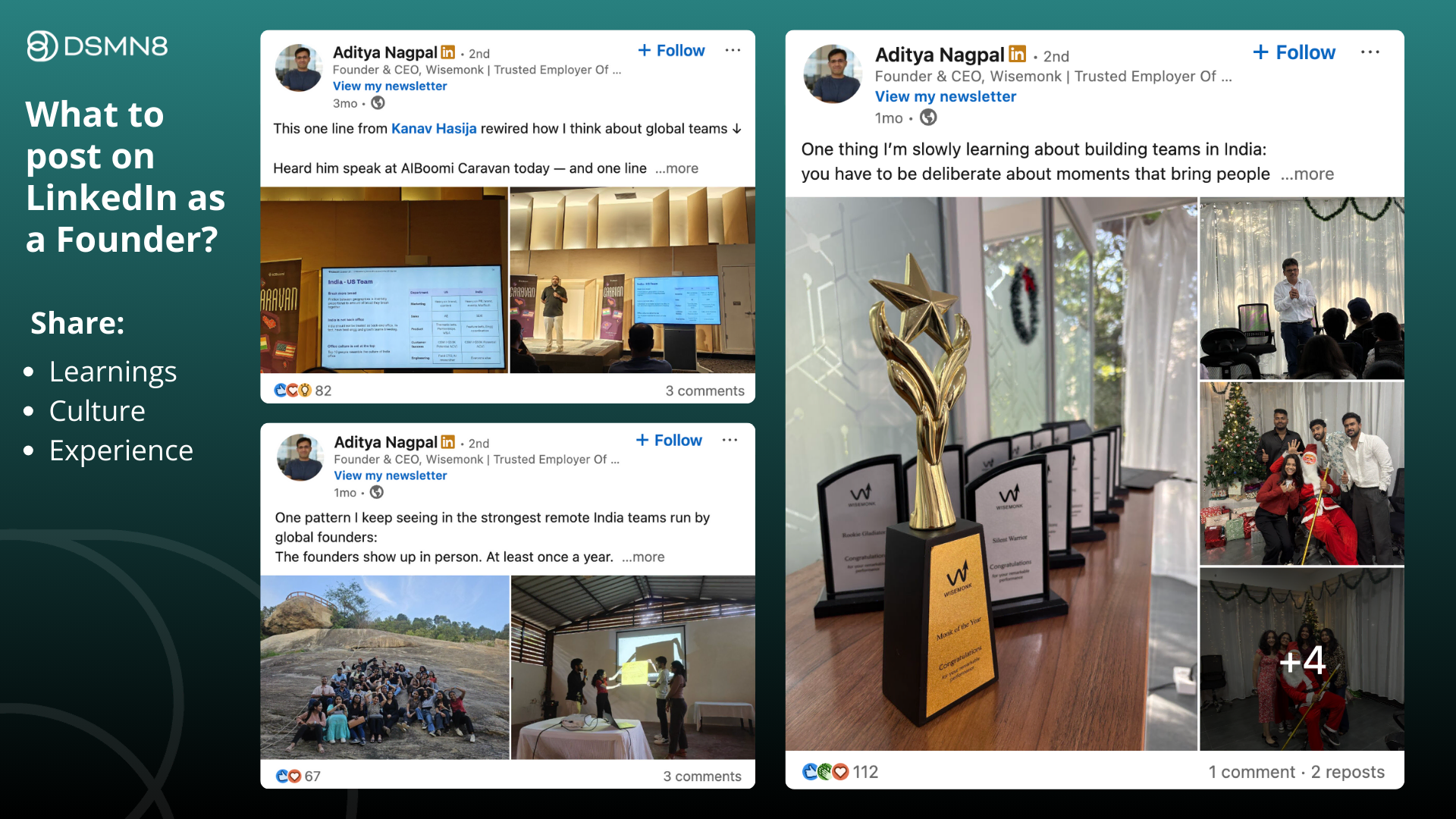
Aditya Nagpal, founder of Wisemonk, has experienced something most B2B founders dream about: sales conversations that skip the entire “getting to know you” phase and jump straight into strategic problem-solving. He says:
I’ve seen a very clear positive impact from consistently sharing content on LinkedIn, both personally and for Wisemonk.
On the sales side, LinkedIn has become our most reliable inbound channel. Many first conversations with founders and HR leaders now start with “I’ve been following your posts” rather than a cold intro. Posts where I break down India hiring costs, compliance mistakes, or real expansion lessons regularly lead to qualified inbound leads, often from decision makers who already trust our perspective before the first call.
It has also helped materially with partnerships and hiring. Several senior hires and advisors reached out after engaging with my content over time. Internally, it has aligned the team around our narrative. When leadership shares transparently about market realities, customer wins, or even lessons learned the hard way, it gives employees confidence and talking points they can stand behind.
Personally, LinkedIn visibility has opened doors I wouldn’t have expected. I’ve been invited to podcasts, founder roundtables, and closed door investor discussions purely because someone resonated with a post. These were not viral posts, just consistent, specific insights from operating in the trenches.
The key for me has been staying practical and experience driven. I avoid motivational content and focus on real data, real mistakes, and real outcomes from building and scaling a cross border company. That consistency has compounded over time and turned LinkedIn from a content platform into a genuine business and relationship engine.”

Aditya Nagpal, Founder & CEO, Wisemonk.
What makes this work:
Nagpal’s approach explains another key finding from the 2026 benchmark report – salespeople are the most active in employee advocacy programs.
Sharing content directly improves sales performance by sparking high-quality conversations and building trust. When prospects have already consumed your thinking, sales cycles compress, and objections diminish.
2. Building Credibility & Authority
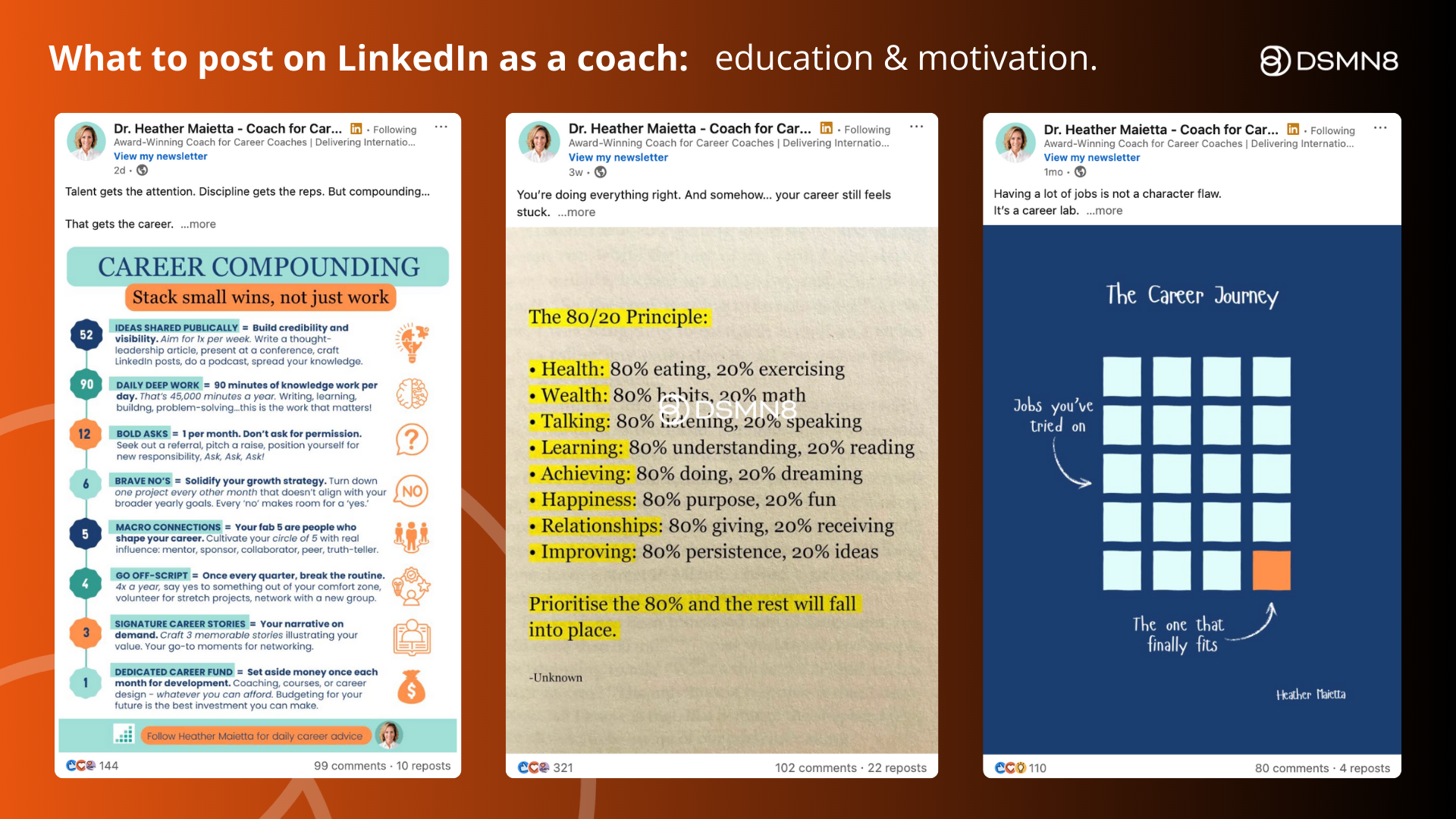
Dr. Heather Maietta’s transformation illustrates the compound effect of consistency better than almost any example we encountered.
An award-winning expert in career and workforce development, Dr. Maietta made a decision at the start of 2025 that changed everything: she committed to posting daily on LinkedIn. Prior to that, though her activity was sparse, her follower count hovered around 6,000, which was already an excellent foundation.
Today, 426 consecutive days later, she has just under 53,000 followers and regularly reaches over 1 million impressions on individual posts.
It’s the power of executive influence in action. DSMN8 research revealed that senior leaders can generate the same level of engagement on LinkedIn as company pages, even with 98% fewer followers.
The 2026 benchmark report confirms that engaging leadership is a strategic priority for employee advocacy programs, with 79.5% currently participating (a 40% increase since last year). When asked how they plan to increase participation this year, 75% said that involving executives is the top priority.
I am an award-winning expert in the career and workforce development space, spending the past 20 years educating career professional and supporting individuals in all stages of career change. Posting on LinkedIn has 1000% impacted my career. Prior to 2025, my LinkedIn activity was sparce. As of today, I have posted daily for the past 426 days.
My LinkedIn follower growth has increased from under 6K in Dec. 2024 to just under 53k today. More importantly, I have been able to reach a global audience, sharing career change and growth best-practices and thought leadership, educating professionals in the career space, and connecting with people across the globe. Many of my posts reach 1M or more impressions – proof that people are learning and benefitting from the content I’m delivering daily.
In terms of sales, yes, there has been an increase in career professionals participating in the career coaching credential I offer, which is tremendous because it increases the baseline of career coaches/HR/talent professionals with recognized credentials in the field, elevating the credibility of the career coaching industry as a whole. I’ve been invited to keynote national conferences, develop trainings for global companies, and write thought leadership pieces in this space – all because of my LinkedIn activity.”

Dr Heather Maietta, Coach for Career Professionals, Career in Progress.
What makes this work:
Dr. Maietta’s story dispels the myth that LinkedIn success requires virality or algorithmic hacks. Her growth came from showing up daily with valuable insights for a specific audience.
Sustained contributions are more valuable than sporadic posting, as they build trust over time.
Wondering how your employee advocacy efforts stack up?
DSMN8’s free Competitor Analysis Review shows how active your team is on LinkedIn, and how that compares with others in your industry.
3. The Unexpected Opportunities
When 94% of employee advocates say LinkedIn benefits their careers, they’re not just talking about sales leads or follower counts.
Opportunities can appear from unexpected places: podcast invitations from hosts who’ve been quietly following their posts, speaking opportunities that materialize from a single tactical breakdown, or partnership conversations sparked by recommendations in comment threads.
I’ve seen firsthand that regularly sharing content on LinkedIn can directly support career growth, which aligns with the idea behind DSMN8’s finding that employee advocacy benefits professionals.
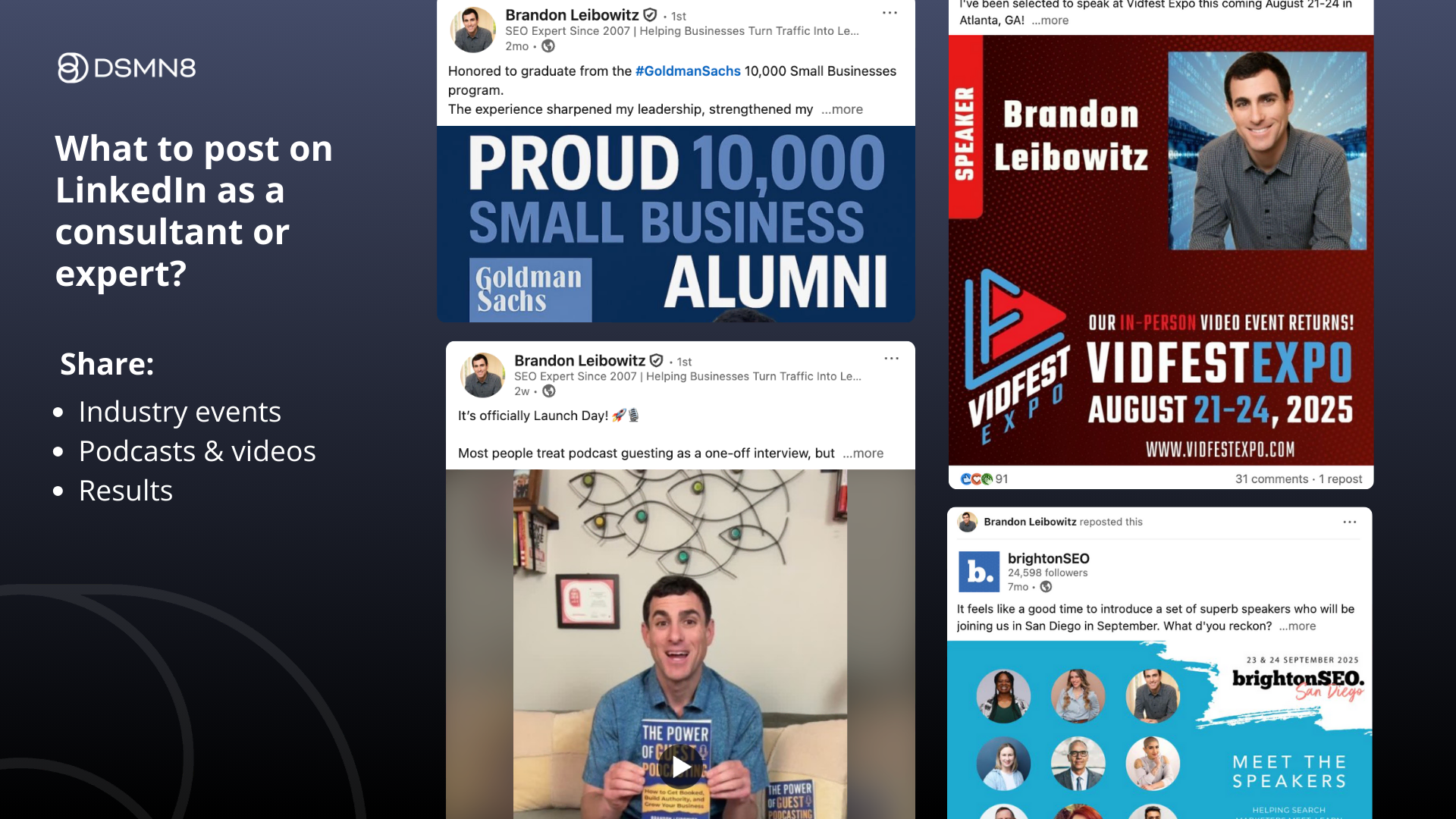
By consistently posting short insights about SEO tests we were running or algorithm shifts I was observing, I noticed more inbound conversations from founders and marketing managers who already trusted my thinking before ever speaking to me. One post breaking down a real ranking drop and recovery led to a sales call the same week, simply because it showed how I problem-solve in real situations rather than talking in theory.
Beyond sales, LinkedIn sharing has helped me build stronger industry relationships and open unexpected doors. After commenting on and posting about technical SEO mistakes I see frequently, I was invited onto podcasts and virtual panels by people who had been quietly following my posts for months. The biggest takeaway is that consistency matters more than polish—short, honest posts explaining what worked, what failed, and why tend to resonate most.
For anyone actively posting, my advice is to focus on documenting real experiences instead of trying to sound authoritative; credibility compounds when people can see your thinking over time.

Brandon Leibowitz, Owner, SEO Optimizers.
What makes this work:
The pattern is clear across Leibowitz’s content: documenting real experiences builds credibility. Whether through video content, in-depth LinkedIn articles, or by sharing his speaking appearances, he focuses on demonstrating his problem-solving process in real-world situations. That authenticity is what turns quiet followers into qualified sales leads.
Ready to empower your employees to share authentic, high-impact content?
4. The Internal Advantage
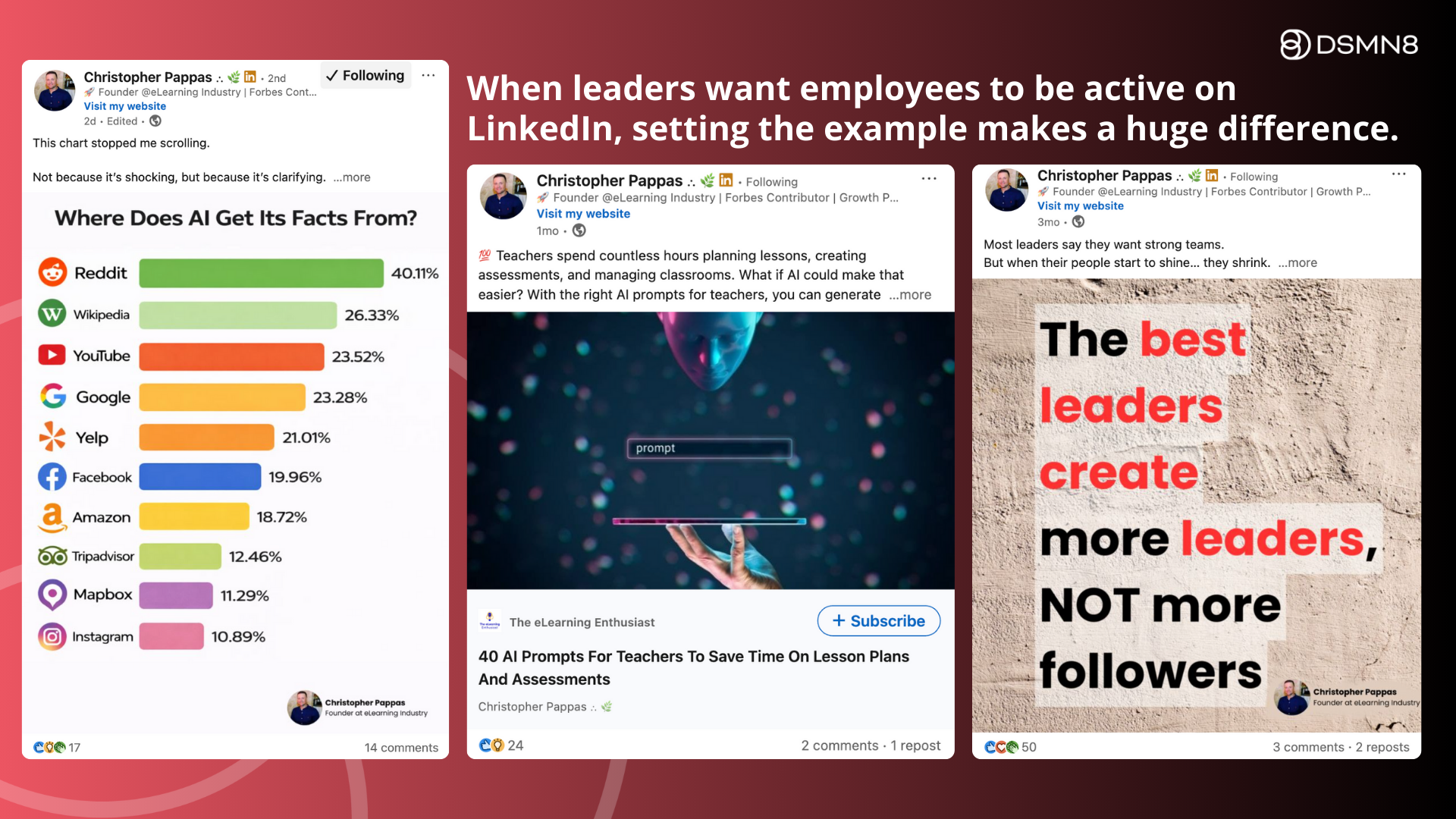
While most discussions about LinkedIn advocacy focus on external benefits like leads, visibility, and opportunities, Christopher Pappas, founder of eLearning Industry Inc, highlights an often-overlooked advantage: the internal impact on company culture.
We see LinkedIn as a long game that delivers real value over time. Sharing ideas consistently builds familiarity with the right audience. Familiarity slowly turns into trust. Trust then opens the door to meaningful opportunities. Over time, people reach out already aligned with how we think and work. That reduces friction and leads to stronger outcomes. Instead of chasing attention, we focus on being helpful and clear.
The internal impact is just as meaningful. When employees share lessons or opinions, others feel encouraged to speak up. This builds confidence and supports a culture of learning. Externally, results often appear in unexpected ways. Speaking requests, partnerships, and thoughtful discussions can begin with a single post. LinkedIn works best when people stop selling and start sharing value.”

Christopher Pappas, Founder, eLearning Industry Inc.
What makes this work:
When leadership shares transparently, it gives employees confidence and talking points they can stand behind. The advocacy becomes bidirectional: external audiences see authentic voices, while internal teams feel empowered to contribute.
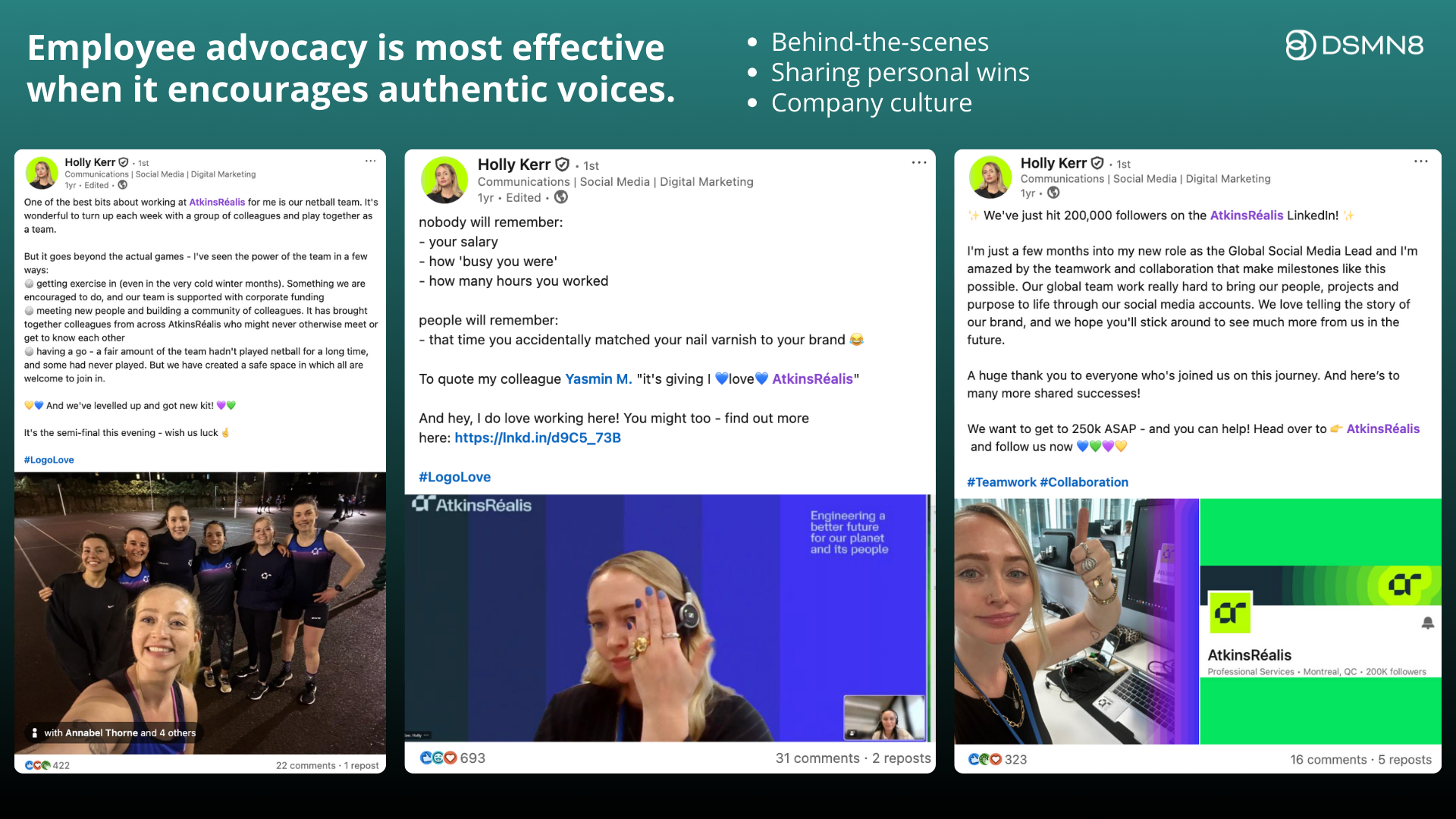
This aligns with Holly Kerr’s observations in the 2026 benchmark report:
I believe employee advocacy in 2026 is all about trust and authenticity. When people share their own perspectives and experiences on social media, it creates a connection that no brand channel can match. It’s not just amplifying content – it’s empowering voices that make our brand feel real and relatable.”

Holly Kerr, Global Social Media Lead, AtkinsRéalis.
What makes this work:
When leadership shares transparently, it gives employees confidence and talking points they can stand behind. The advocacy becomes bidirectional: external audiences see authentic voices, while internal teams feel empowered to contribute.
5. What Actually Works: Patterns Across All Success Stories
These professionals represent just a fraction of the 94% who report career benefits from LinkedIn posting.
But their stories reveal something the benchmark data alone cannot: the how behind the numbers.
What they share is consistency, specificity, and a willingness to document their work to share expertise and experiences.
This builds the kind of credibility that creates opportunities, from business results for their organization to personal career moves like being invited to speak at industry events.
Additional Resources
Explore the full report to discover:
- How 200 top-performing organizations manage their advocacy programs, from training to leadership.
- What types of content employees are sharing, and how they’re using AI.
- ROI benchmarks to measure your own program against.
More resources for starting your employee advocacy program:
- Get a free Competitor Analysis Review to find out how active your team is vs. your competitors.
- Request a copy of Employee Advocacy: 101 Cheat Codes by DSMN8 CEO Bradley Keenan for bite-sized expert tips on program management.
- Download the User Adoption Playbook for a step-by-step strategy to make advocacy part of your company culture.

Emily Neal
SEO and Content Specialist at DSMN8. Emily has 10 years experience blogging, and is a pro at Pinterest Marketing, reaching 1 million monthly views. She’s all about empowering employees to grow their personal brands and become influencers.