
What's on this page:
- Why Employee Personal Branding Is No Longer Optional.
- The Real Concerns Companies Have.
- The Pre-Approved Content Problem.
- Reframing the Goal.
- The Role of Company Voice AI in Brand Integrity.
- How Personal Voice AI Bridges the Gap.
- Creating Your Framework.
- Best Practices for Managing Alignment at Scale.
- Common Pitfalls to Avoid.
- Real Success Stories.
- Measuring the Impact.
- Additional Resources.
Employees are building personal brands on LinkedIn, whether companies like it or not.
This is not a social media phase. It is a shift in how trust works.
On social media, people follow individuals who share experiences, opinions, and valuable insights. Logos don’t build belief alone. As companies aim to amplify their reach, employees are increasingly becoming the faces and voices of the brand.
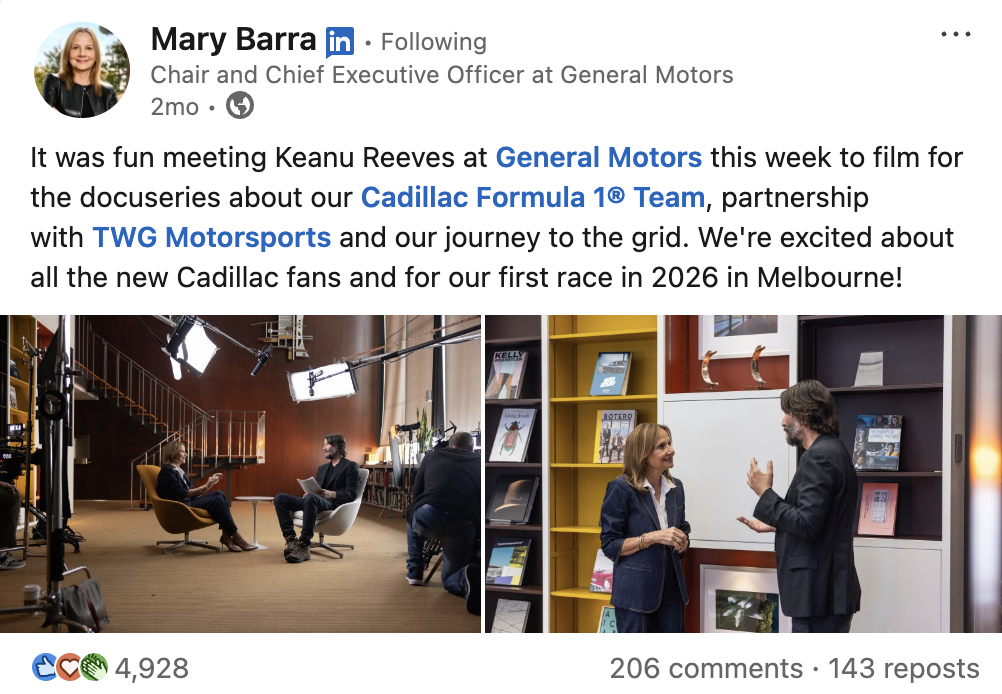
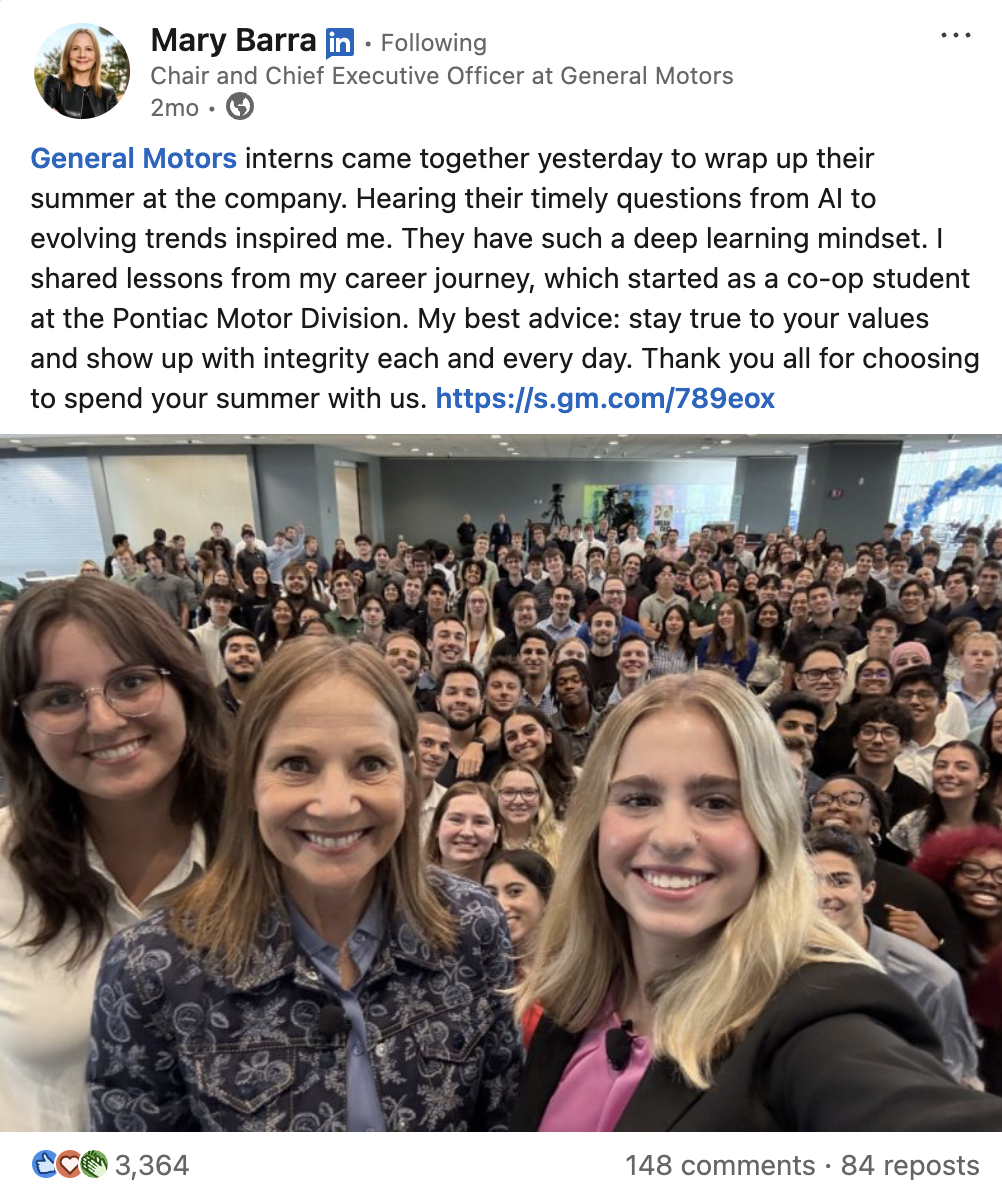
From General Motors to Barclays, this shift is showing no signs of slowing down.
Yet, this opportunity creates anxiety for many organizations at the leadership level.
The real risk isn’t employees speaking on social media. It’s when employees stay silent, disengaged, or sound so scripted that they lose all credibility.
How do you strike a balance between maintaining corporate messaging and allowing individual expression?
Why Employee Personal Branding Is No Longer Optional
In a world where differentiation is key, employee personal branding has become a crucial factor for career growth.
Employees are no longer content with being mere cogs in the corporate wheel.
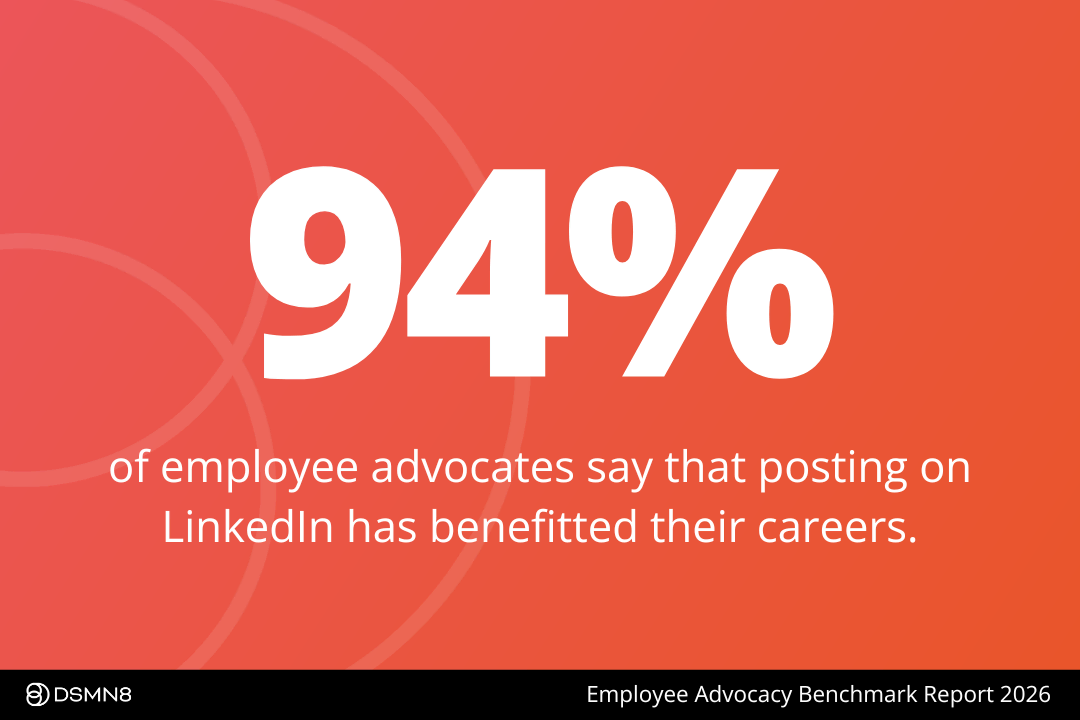
They seek to express their unique perspectives and showcase their professional stories through their digital presence on platforms like LinkedIn. This creates tangible opportunities, as 94% of employee advocates said posting on LinkedIn benefited their careers in the 2026 Employee Advocacy Benchmark Report.
For companies, employees with strong personal brands become valuable assets. These individuals often enhance the company’s reach and influence, acting as advocates or brand ambassadors. Organizations are now creating dedicated roles for this across all sectors, from the ‘Corporate Influencer’ job at Deloitte to Employee Content Creators at Starbucks.
And when employee-generated content gets 9x the engagement of corporate posts, it makes sense for marketing and employer branding teams to prioritize it.
The Real Concerns Companies Have
For communications, legal, and leadership teams, hesitation around employee personal branding is understandable.
The fear of inconsistent messaging looms large.
Discrepancies between personal and corporate messages can confuse audiences and dilute the brand’s integrity. In a world where brand reputation is paramount, employees’ online activities can significantly impact public perception.
Of course, legal implications add another layer of complexity, especially in regulated industries. Missteps on social media could lead to potential legal challenges, making corporate leaders wary of giving employees too much freedom.
The crux of the issue lies in the dilemma between employee autonomy and controlled messaging. Companies are caught between empowering their employees and ensuring their brand message remains intact.
The Pre-Approved Content Problem
The traditional solution here was to provide pre-approved content for employees to share, designed to protect the brand.
While this approach mitigates the risk of inconsistent messaging or legal issues, it presents other challenges.
Employees can struggle to express themselves authentically within the confines of pre-approved content. This lack of personal investment in content creation can lead to disconnection and disengagement. They don’t want to sound like bots on social media.
Besides, audiences today are quick to recognize inauthentic messages.
And social media algorithms tend to reduce the reach of duplicate content.
Rigid approved content can feel too restrictive for employees wanting to build a personal brand, limiting their ability to connect meaningfully with their networks.
This is a missed opportunity for both the employee and the company to engage and inspire.
Reframing the Goal: Alignment, Not Control
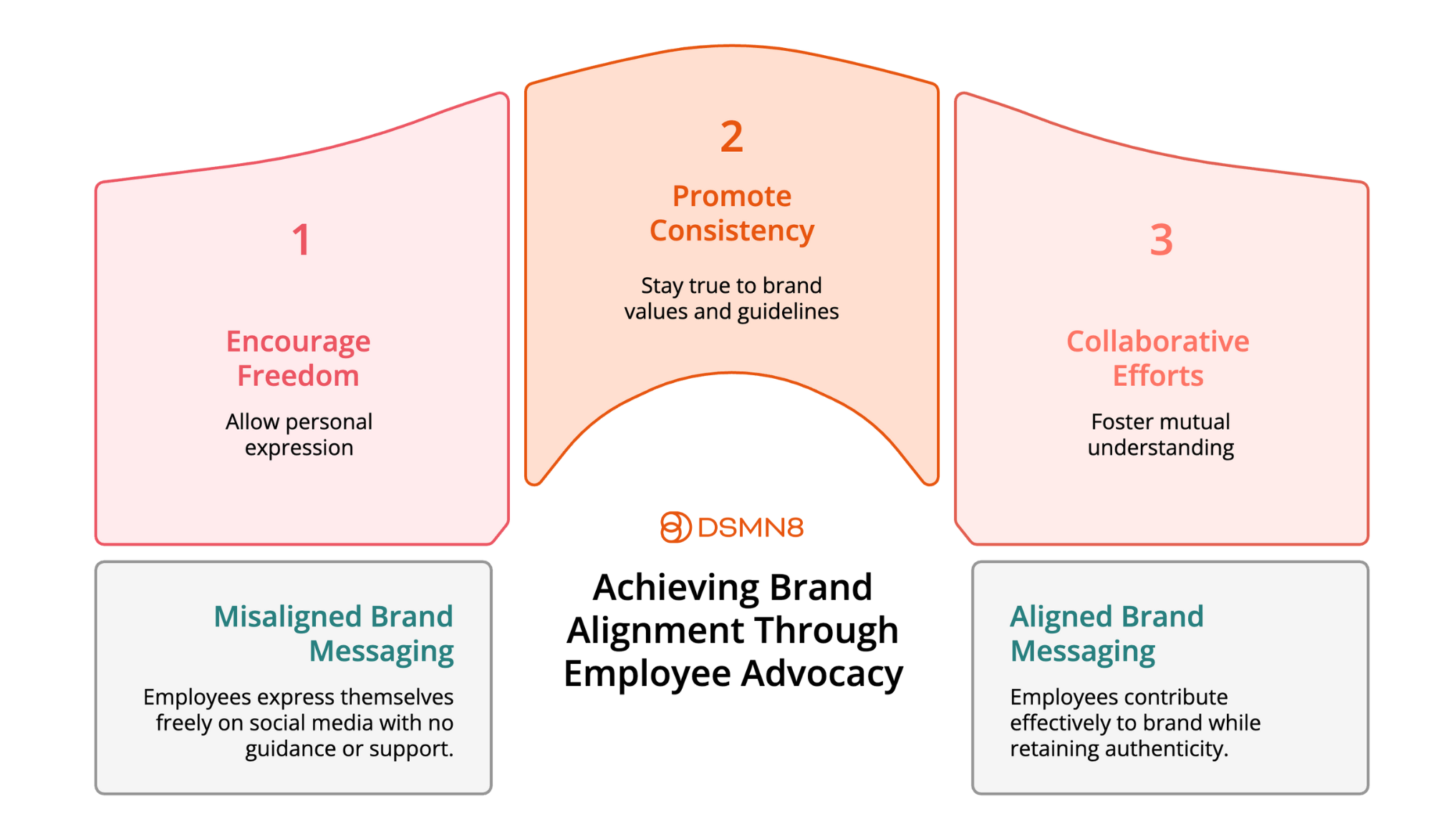
The solution lies in alignment, not control 🤝
By encouraging both freedom and consistency, companies can allow employees to express themselves while staying true to brand values. Collaborative efforts between employees and organizations foster mutual understanding and enhance messaging.
When employees feel heard and valued, trust grows. Empowered employees are more likely to contribute effectively to brand initiatives.
Aligned employee branding looks like:
- Direction: Knowing which messages matter right now.
- Context: Understanding why the message is important.
- Flexibility: Having the freedom to express it in a personal style.
The most effective employee advocacy strategies don’t aim for identical content, they aim for aligned intent.
This is the Goldilocks Zone: where personal values meet company values, and individual expertise supports organizational credibility.
The Role of Company Voice AI in Brand Integrity
Traditional control restricts what people can say. Modern enablement trusts people to say the right things, their way.
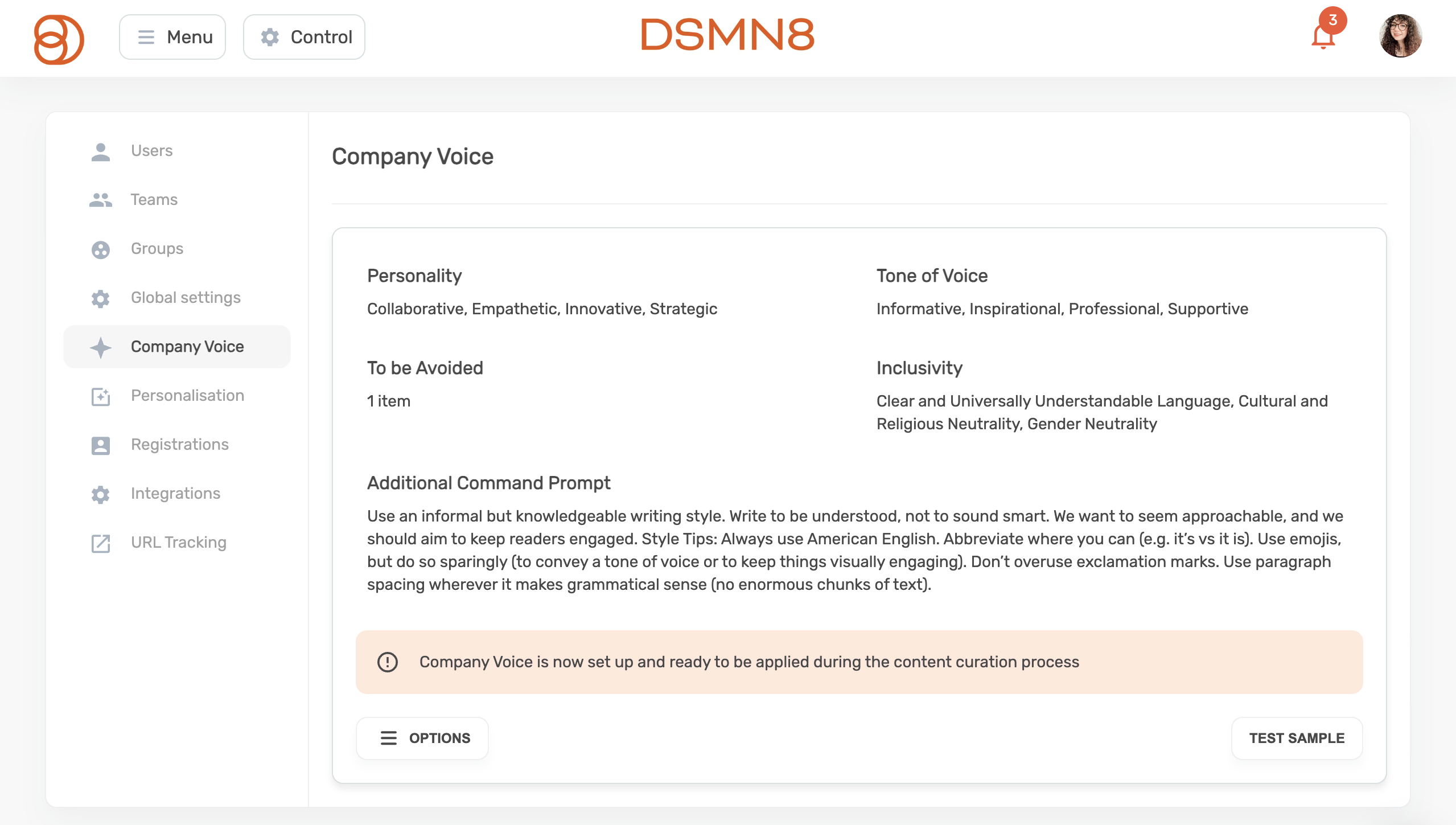
DSMN8’s Company Voice AI helps employee advocacy program managers and content curators maintain brand integrity.
Once set up, the technology will ensure tone, positioning, and language standards for content shared through the DSMN8 platform. You can also restrict particular words, such as curse words or competitor names.
Think of Company Voice AI as your guardrail for brand messaging within your employee advocacy program.

How Personal Voice AI Bridges the Gap
While Company Voice AI provides the alignment, Personal Voice AI adds the authenticity layer.
This technology tailors content to individual styles, allowing your team to create messages that resonate with their audiences. Employees can set up their Personal Voice based on previous LinkedIn posts, other writing samples, or custom prompts.
Personal Voice AI seamlessly bridges the gap between personal and company voices. The posts feel authentic and original while maintaining the core message of the content curated by program admins.
What this looks like in practice:
| Traditional Approach | Personal Voice AI Approach |
| Marketing sends “approved copy” via email. | Marketing adds content to the DSMN8 feed. |
| Employees copy-paste the exact text. | Employees click “Apply Personal Voice.” |
| Reach tanks due to duplicate content. | Content feels personal; engagement soars. |
| Employees feel like corporate mouthpieces. | Employees feel like thought leaders. |
Under a traditional model, marketing sends approved copy by email or Slack. Employees post it verbatim. Algorithms detect duplication. Reach drops. Participation fades.
With Personal Voice AI, the workflow shifts. Marketing defines key messages within DSMN8 and uses Company Voice to ensure it’s aligned with brand goals. Employees apply their personal voice, review the content, and share something that genuinely sounds like them.
Content feels personal. Engagement increases. Employees feel like thought leaders, not mouthpieces.
Creating Your Framework for Company x Employee Personal Brands
To make the most of employee personal branding, companies need a well-defined framework.
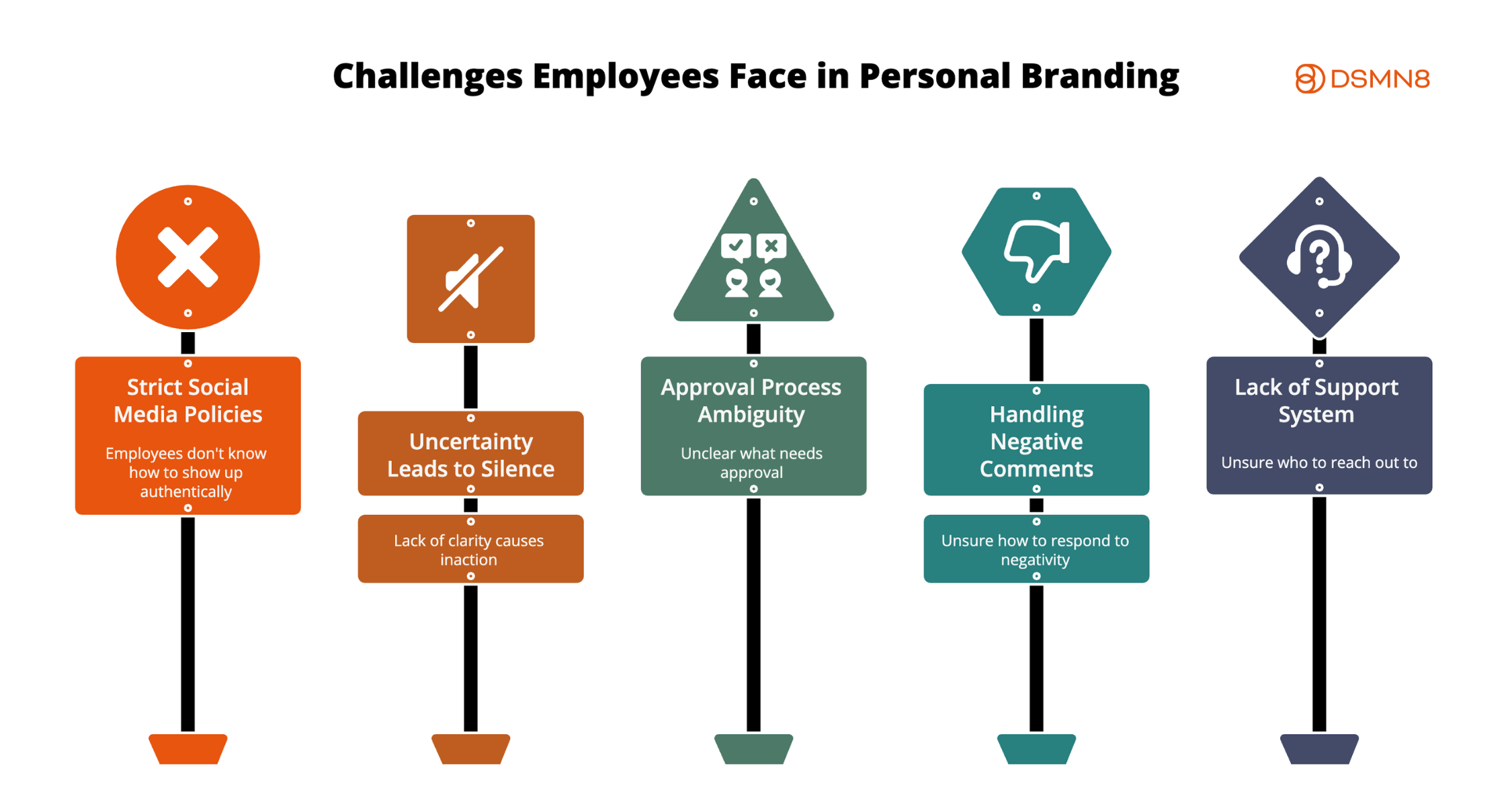
Employees need guidance that focuses on how they are encouraged to show up, not just what they should avoid.
Clarity matters most because uncertainty leads to silence.
People need to know what requires approval, what sits with individual judgment, and how personal opinions should be framed. How should they handle negative comments? Who should they reach out to for support?
Best Practices for Managing Alignment at Scale
Managing alignment at scale requires consistent communication. Regular updates reinforce alignment, and cross-departmental collaboration enhances cohesion.
Feedback loops enhance continuous improvement and ensure employees feel their voices are heard. Your goal is to foster a supportive environment where employees feel empowered to express themselves authentically.
Provide social media training to equip employees with the skills needed to feel confident online. You can take this even further with content creation workshops or ‘lunch and learn’ sessions with your marketing department.
Recognition programs are also great for boosting morale and encouraging best practices.
And the key element that ties this all together?
Leadership endorsement. When senior leaders are active in your program, they’re setting the example. They’re showing your team that this initiative matters and that posting on social media is encouraged.
The 2026 Employee Advocacy Benchmark Report revealed that 79.5% of programs now include senior leadership, and for those that don’t, getting them on board is the top priority for the year ahead.
Common Pitfalls to Avoid
Real Success Stories: What Great Looks Like
Successful programs lead with trust.
Executive visibility sets the tone, giving permission for others to participate. Content is thoughtfully segmented, ensuring employees receive what’s relevant to their role and expertise.
Take General Motors, for example. By reaching over 20 million people in six months, their success didn’t come from forcing employees to post. It stemmed from executive buy-in, clear guidelines, and technology that made sharing easier than not sharing.
Barclays launched an ‘Employee Creator Club’ that empowers team members to build personal brands with the organization’s support.
The pattern is consistent: trust, structure, and enablement.
Measuring the Impact of Aligned Personal and Company Branding
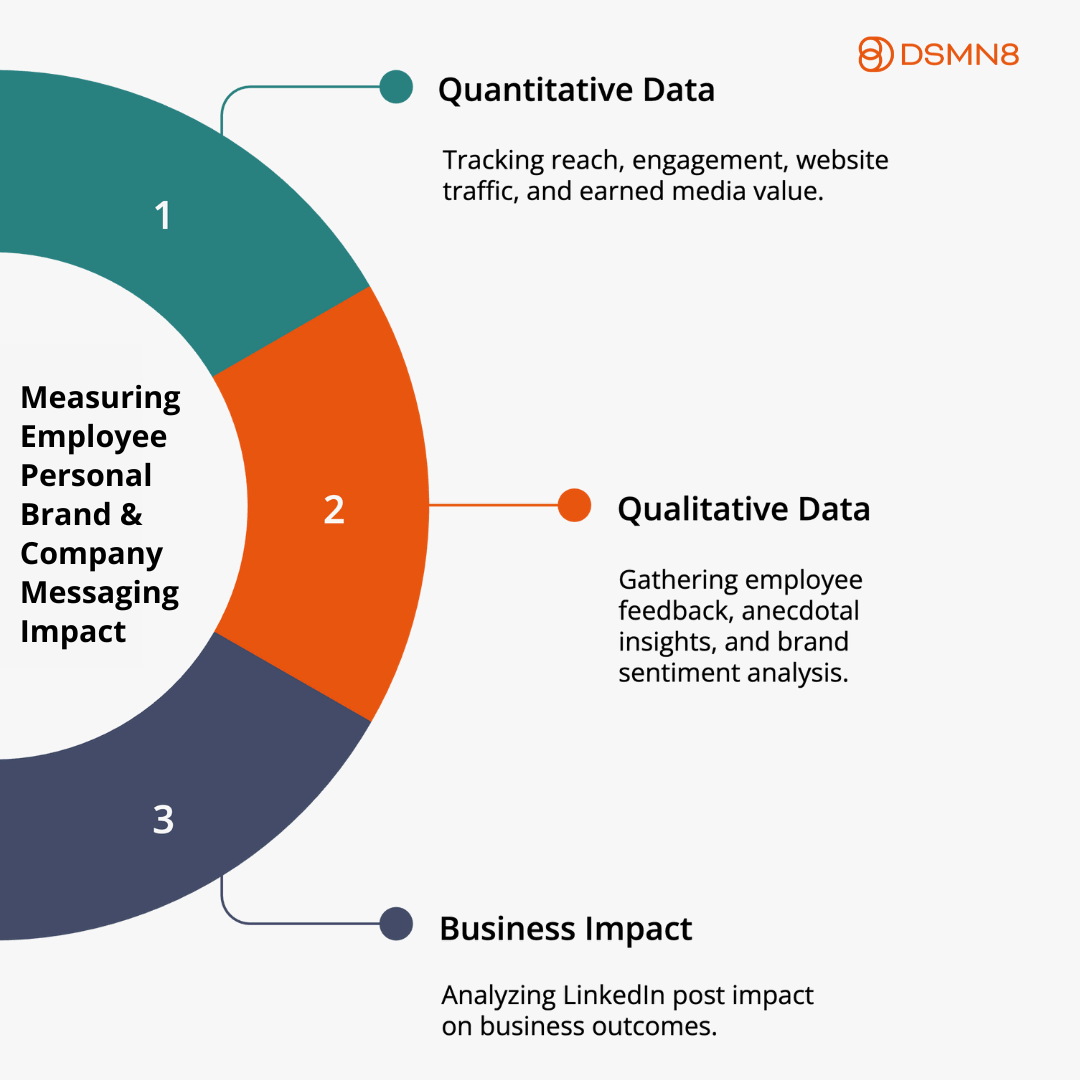
To understand success, you’ll need to consider both quantitative and qualitative data.
Use your platform’s analytics to track reach, engagement, website traffic, and earned media value. Take this further by using Google Analytics and your CRM to see the business impact of employee LinkedIn posts.
Then add the qualitative layer with employee feedback, anecdotal insights, and brand sentiment analysis.
By measuring these elements, you can make informed decisions moving forward to drive continuous success and strengthen your brand reputation. It’s all about finding the right balance between corporate messaging and employee perspectives.
Final Thoughts & Additional Resources
Ready to get started with the #1 employee advocacy platform?
Wondering how active your team already is, and how this compares with your competitors?
Resources You’ll Find Helpful:
- Social Media Policy Template.
- Employee Advocacy Training Plan.
- Free Employee Advocacy Certification Course.
Learn More About Personal Branding:

Emily Neal
SEO and Content Specialist at DSMN8. Emily has 10 years experience blogging, and is a pro at Pinterest Marketing, reaching 1 million monthly views. She’s all about empowering employees to grow their personal brands and become influencers.