


What's on this page:
- Why Social Media Customer Service Matters More Than Ever.
- How Social Media Elevates the Customer Experience.
- How to Build a High-Performing Social Customer Care Strategy.
- How Employee Advocacy Supercharges Social Customer Service.
- Best Practices for Outstanding Social Media Customer Service.
- Final Thoughts & Additional Resources.
- FAQs.
Social media has rewritten the rules of customer service.
Today, customers don’t want to wait on hold or track an email ticket for days.
They expect fast, human, public support right where they already spend their time.
In fact, most customers now turn to social platforms before any other channel when they need help.
This guide explores:
-
why social media customer service is essential,
-
how to structure a high-performing operation, and
-
how employee advocacy platforms like DSMN8 play a surprising and powerful role in building trust and loyalty through authentic employee voices.
Why Social Media Customer Service Matters More Than Ever
The customer journey has shifted.
Social platforms have become the quickest and most convenient place for customers to ask questions, share feedback, and voice concerns.
And because these conversations are visible to anyone, the stakes are much higher.
Edelman reported in 2025 that 88% of respondents said trust is as important as price and quality. In a world of “broadcast social,” that trust is built through transparent, human interactions.
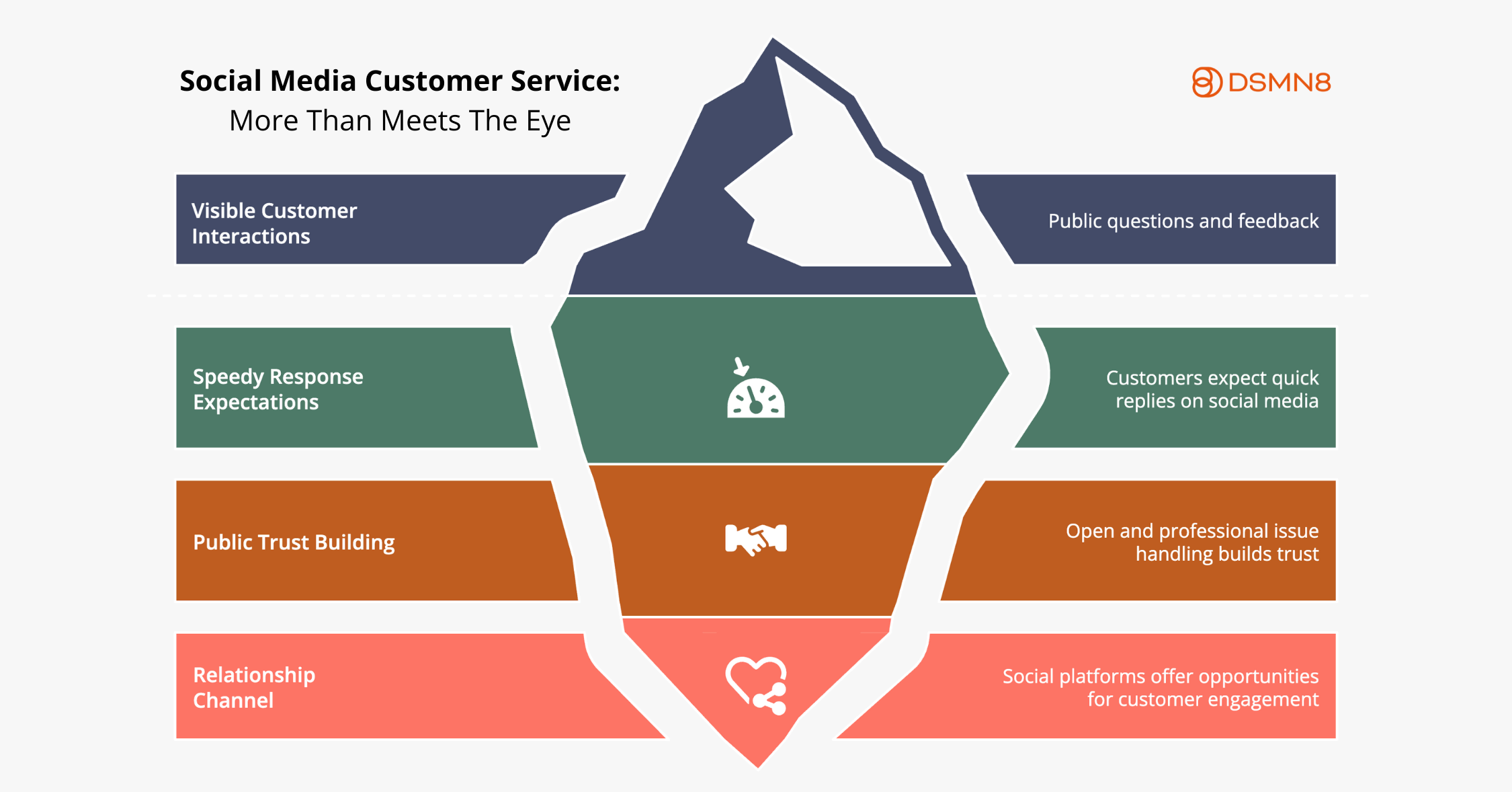
1. Customers Expect Speedy Responses
Most customers expect a reply on social media within an hour. For platforms like X (formerly Twitter), expectations are even more immediate.
A fast, empathetic response shows customers your brand cares. A slow or dismissive one can go viral for the wrong reasons.
2. Public Interactions Build (or Break) Trust
Every message you send is a micro-moment of transparency.
When customers see issues handled openly and professionally, trust grows. And this isn’t just with the individual, but with the entire audience watching.
3. Social Media Is a Relationship Channel
Beyond resolving issues, social platforms offer a unique opportunity to:
-
listen to your customers,
-
understand sentiment in real time, and
-
build genuine, human relationships.
Handled well, a frustrated customer can become a loyal advocate. A casual follower can become a fan of your brand.
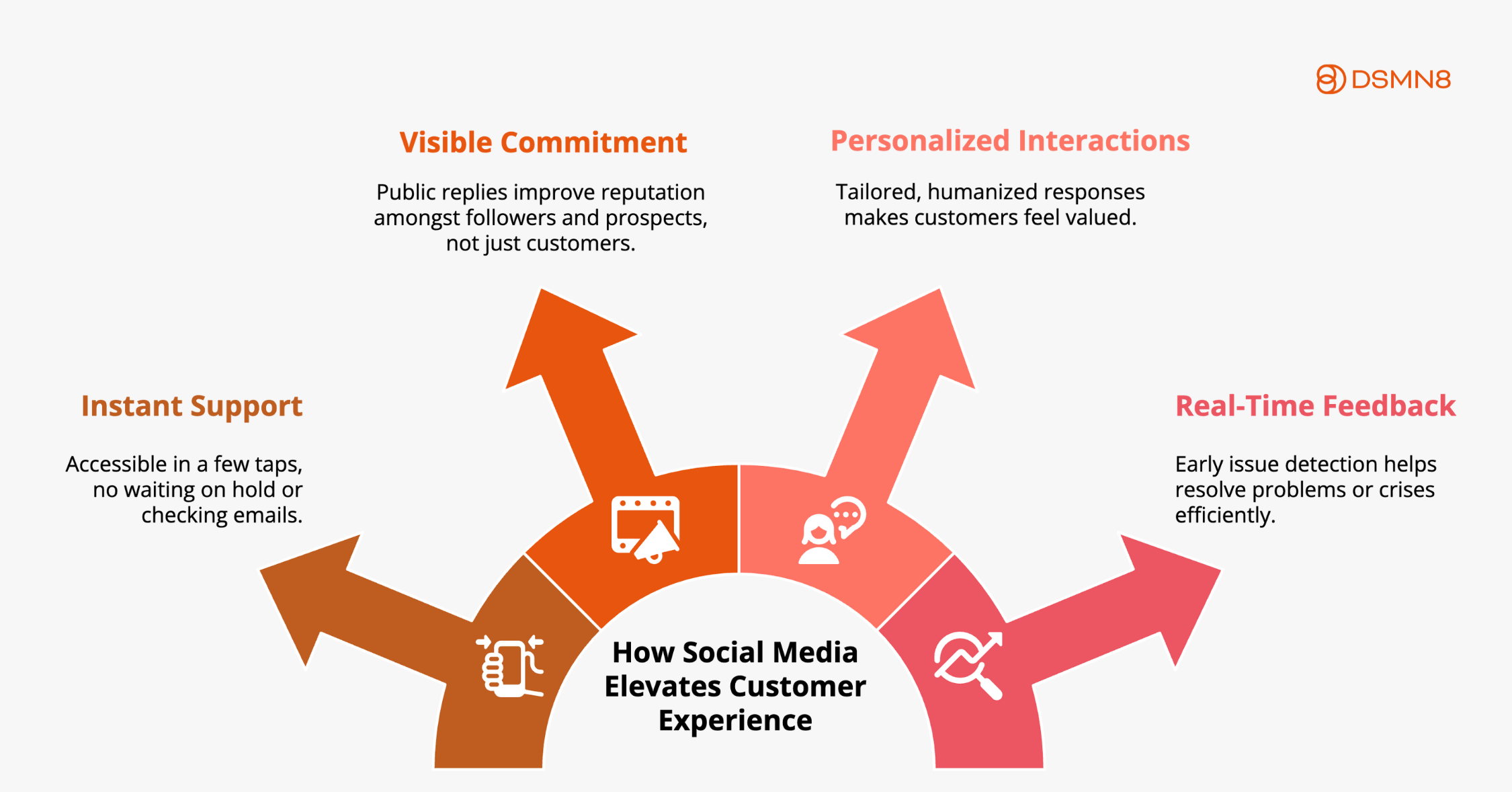
How Social Media Elevates the Customer Experience
Brands that integrate social media into their customer service strategy unlock significant benefits.
How to Build a High-Performing Social Customer Care Strategy
Exceptional social customer service requires clarity, alignment, and the right tools.
1. Choose the Right Platforms
Focus on where your customers genuinely ask for help, for example:
-
LinkedIn for B2B
-
Instagram or TikTok for younger audiences
-
X for real-time support
-
Facebook for community-driven interactions
Meet customers where they already are.
2. Define Clear Guidelines
Set clear expectations for your team around response times, tone of voice, escalation pathways, and when to move a conversation into private channels.
Keeping things consistent helps your brand sound unified and ensures every customer gets the same high-quality experience, no matter who they speak to.
Some resources you’ll find helpful here:
3. Empower Your Agents
Your team needs the right foundation to deliver great social care: proper training, the autonomy to resolve common issues, easy access to customer information, and tools for routing, monitoring, and triaging conversations.
When employees are truly empowered, resolutions are faster, interactions are more meaningful, and your customer experience becomes a genuine competitive advantage.

4. Leverage Customer Service and Social Listening Tools
Specialised tools help you:
-
track mentions,
-
manage high volumes of messages,
-
tag and assign conversations,
-
centralise customer history,
-
analyse sentiment and peak times.
Pair these with CRM integrations for a complete customer view.
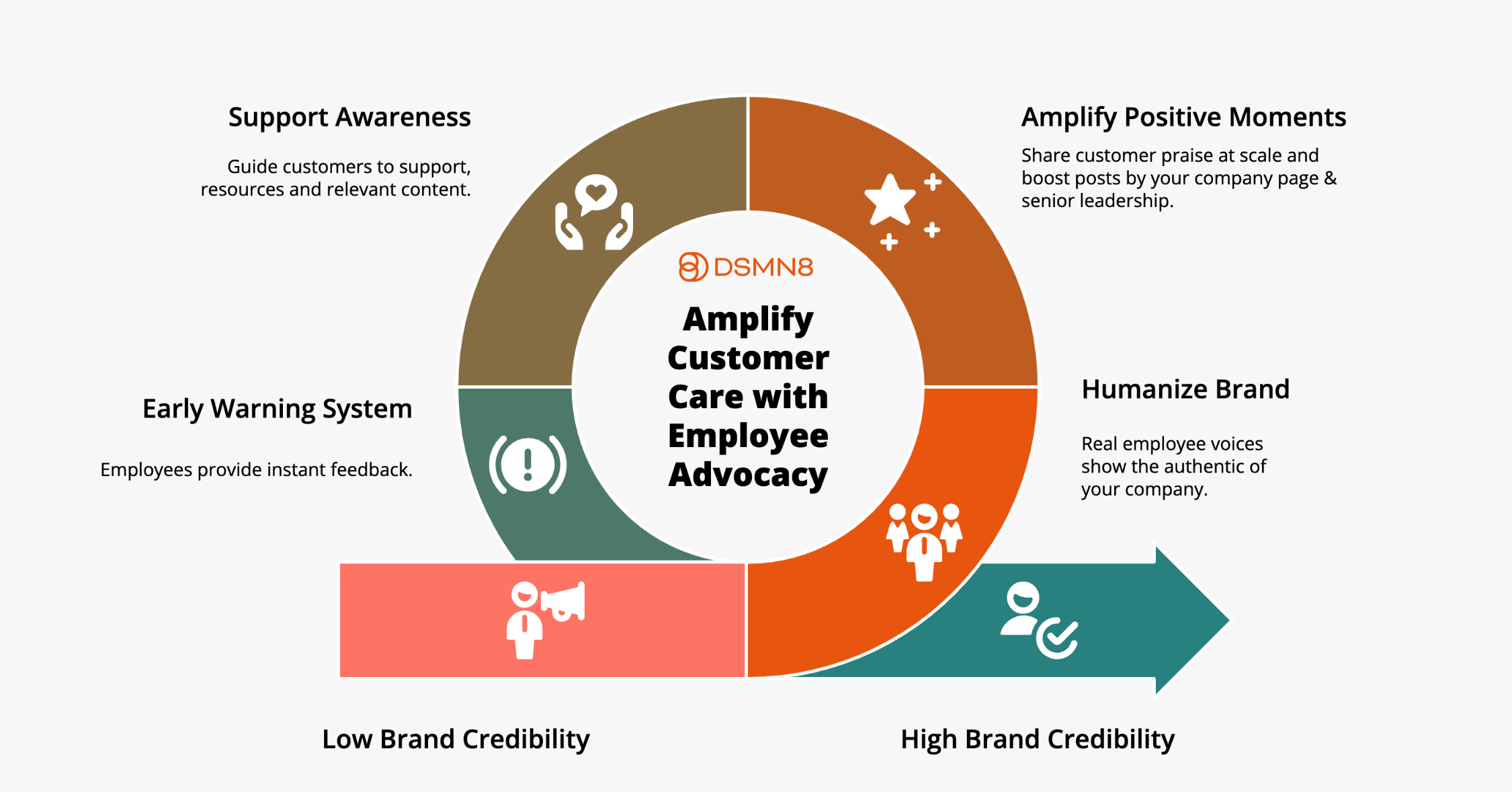
The Missing Piece: How Employee Advocacy Supercharges Social Customer Service
Most brands focus exclusively on their own social media, but your employees already have something your brand channels don’t: built-in trust.
According to Edelman, employee voices are 3x more credible than brands on social media.
This is where DSMN8 amplifies your entire customer care strategy.
Humanize Your Brand Through Real Employee Voices
People trust people, not logos.
When employees share helpful content, answer questions, or point customers toward the right support channels, your brand becomes more approachable and credible.
DSMN8 empowers employees to share curated, compliant content without risk, keeping your messaging consistent while still feeling human. With our custom Personal Voice AI feature, your team can ensure content sounds like them while remaining on-brand.
📊 Wondering how active your team already is on social, and how this compares with your competitors? Get a free competitor analysis review to find out.
Amplify Positive Customer Moments
When a customer shares something positive about your team, DSMN8 makes it simple for employees to amplify those moments.
Simply curate content for employees to share, or use our Boost Post feature to get your team to amplify posts from your company page or executive leaders.
It expands your reach, strengthens your reputation, and shines a light on the quality of your support culture.
Support Awareness: Employees as Guides
Employees often see customer questions before the brand account does.
With the right advocacy strategy, they can gently guide customers to official support, highlight self-serve resources, and drive faster resolutions.
💡 Expert insight: In a recent episode of The Employee Advocacy & Influence Podcast, Andy Lambert from Adobe argues that “broadcast social is broken” and predicts companies must shift toward a trust-led, decentralised social model where employees become brand ambassadors.
Listening to his take reinforces why social customer service and employee advocacy are not just nice-to-haves; they’re the future of brand-customer interaction.
The episode is worth a listen:
A Built-In Early Warning System During Crises
Employees are your first line of insight.
DSMN8 gives them approved messaging, streamlined access to company content, and a safe way to communicate externally.
This keeps messaging aligned and prevents misinformation during sensitive moments.
Best Practices for Outstanding Social Media Customer Service
To deliver consistently excellent social support, follow these best practices:
Final Thoughts & Additional Resources
Social media customer service is no longer a nice-to-have.
It’s a key driver of trust, loyalty, and brand reputation.
By combining a thoughtful social support operation, transparent and proactive communication, and the power of employee advocacy through DSMN8, you create a customer experience that feels fast, human, and authentic.
Employees become amplifiers.
Customers feel valued.
And your brand becomes a trusted presence in an increasingly noisy digital world.
Ready to get started with the #1 employee advocacy platform?
Wondering how active your team already is, and how this stacks up against your competitors? Get a free competitor analysis review.
More guides you’ll find helpful:
Frequently Asked Questions
What is social media customer service?
Social media customer service uses platforms like LinkedIn, X, Facebook, Instagram, and TikTok to answer customer questions, resolve issues, and communicate publicly and privately with your audience. It blends support, community management, and brand reputation work.
How does social media improve customer service?
Social media customer service offers:
-
faster responses,
-
more accessible communication,
-
greater transparency,
-
opportunities for personalised engagement, and
-
real-time insights from customer behaviour and sentiment.
Why is employee advocacy important for social customer care?
Employees add a human, trusted voice to your brand presence on social media.
Employee advocacy helps amplify positive experiences, reinforce brand values, and guide customers to the right support channels.
What are the benefits of integrating customer support with social media?
Brands gain faster resolutions, stronger public trust, real-time feedback loops, and the ability to transform negative experiences into positive interactions and resolutions.
What tools are used for social media customer service?
Popular tools for supporting social media customer service include:
-
social media management platforms,
-
social listening platforms,
-
CRM integrations e.g., Hubspot, and
-
employee advocacy platforms like DSMN8 to amplify positive interactions and provide aligned external communication.


Emily Neal
SEO and Content Specialist at DSMN8. Emily has 10 years experience blogging, and is a pro at Pinterest Marketing, reaching 1 million monthly views. She’s all about empowering employees to grow their personal brands and become influencers.