
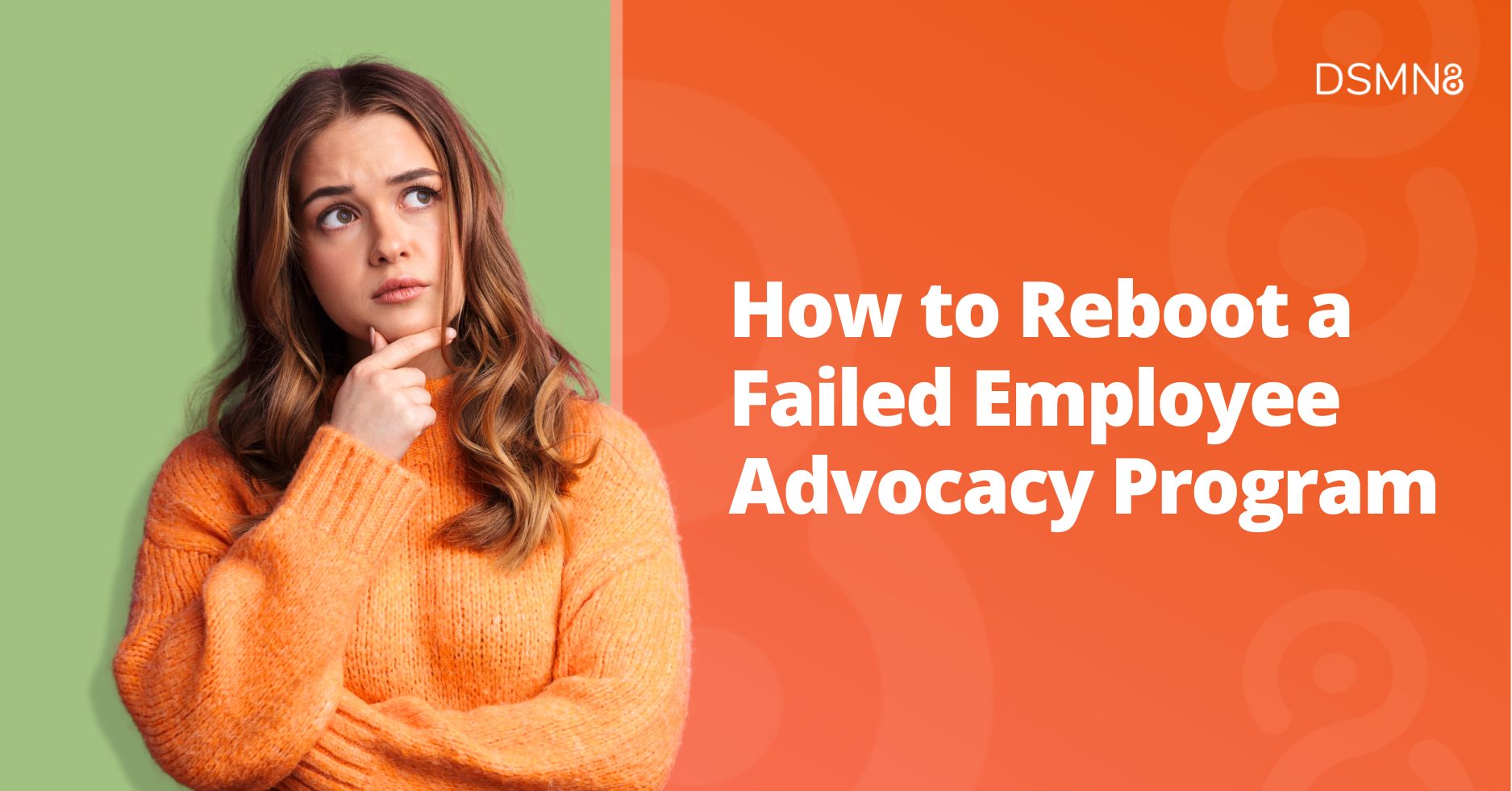
Is your employee advocacy program failing?
Are you not generating the results you’d hoped for, or worse, finding that your employees simply aren’t interested in joining? 😫
In this article, inspired by the Employee Advocacy and Influence Podcast episode below, we’ll provide a step-by-step guide to help reboot your employee advocacy program.
Keep reading or listen to the podcast episode:


Reasons To Reboot Your Employee Advocacy Program
There are a number of reasons you might consider rebooting your employee advocacy program.
It could be that you’re new to your organization and have just inherited a program from someone else.
Or perhaps you’ve been running your program for a number of years, and it’s falling flat.
You’re not seeing the desired results, so maybe it’s time to consider almost going back to the start and building it again.
Or maybe the technology you’re using hasn’t provided the necessary features and tools for managing your program, causing frustration among program admins and users.
In this case, migrating your program to a new platform is a great opportunity to refresh and relaunch the initiative.
Establish Why Your Employee Advocacy Program Isn’t Working
If your program has become stale and you’re considering rebooting it, it’s essential to gain first-hand feedback by surveying the people who originally participated.
It’s easy to ask people what they love about it and to talk to those who actively share content. But really, what you want to get from this is what made the program go stale in the first place.
You need to identify employees who originally participated but later stopped. Maybe they used it for a decent period of time before disengaging.
It’s easy to find people who tried the platform once and said, “Hey, it’s not for me”, but you want to look for employees who used it for, let’s say, six months or so, and find out why they stopped.
It could be a technology issue. Maybe it’s the platform you used.
Or maybe you didn’t use a platform at all, and employees found it too time-consuming to find and share content.
But it could also be that the content wasn’t strong enough and didn’t resonate with them, so they didn’t feel comfortable sharing it.
Perhaps your content was too sales and marketing-focused, with a lack of third-party industry news or thought leadership.
Or perhaps it was simply a lack of frequency, with your advocates not finding enough content to share regularly.
It could even be the way you or your predecessor managed the program.
It’s crucial to collect that data to identify what went wrong the first time so you can prevent it from happening again.
Use our Employee Feedback Survey template to help.
Create Your Game Plan
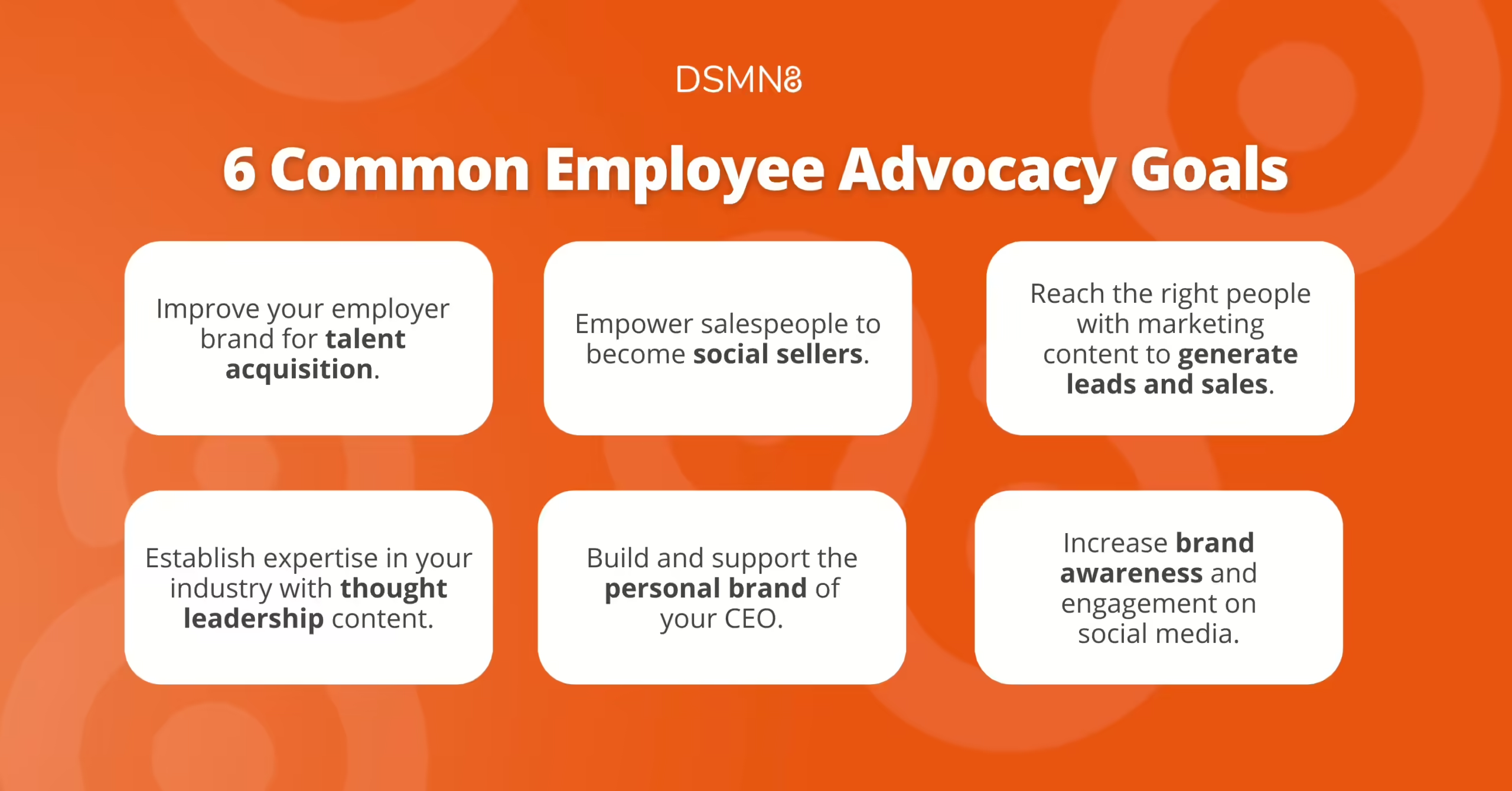
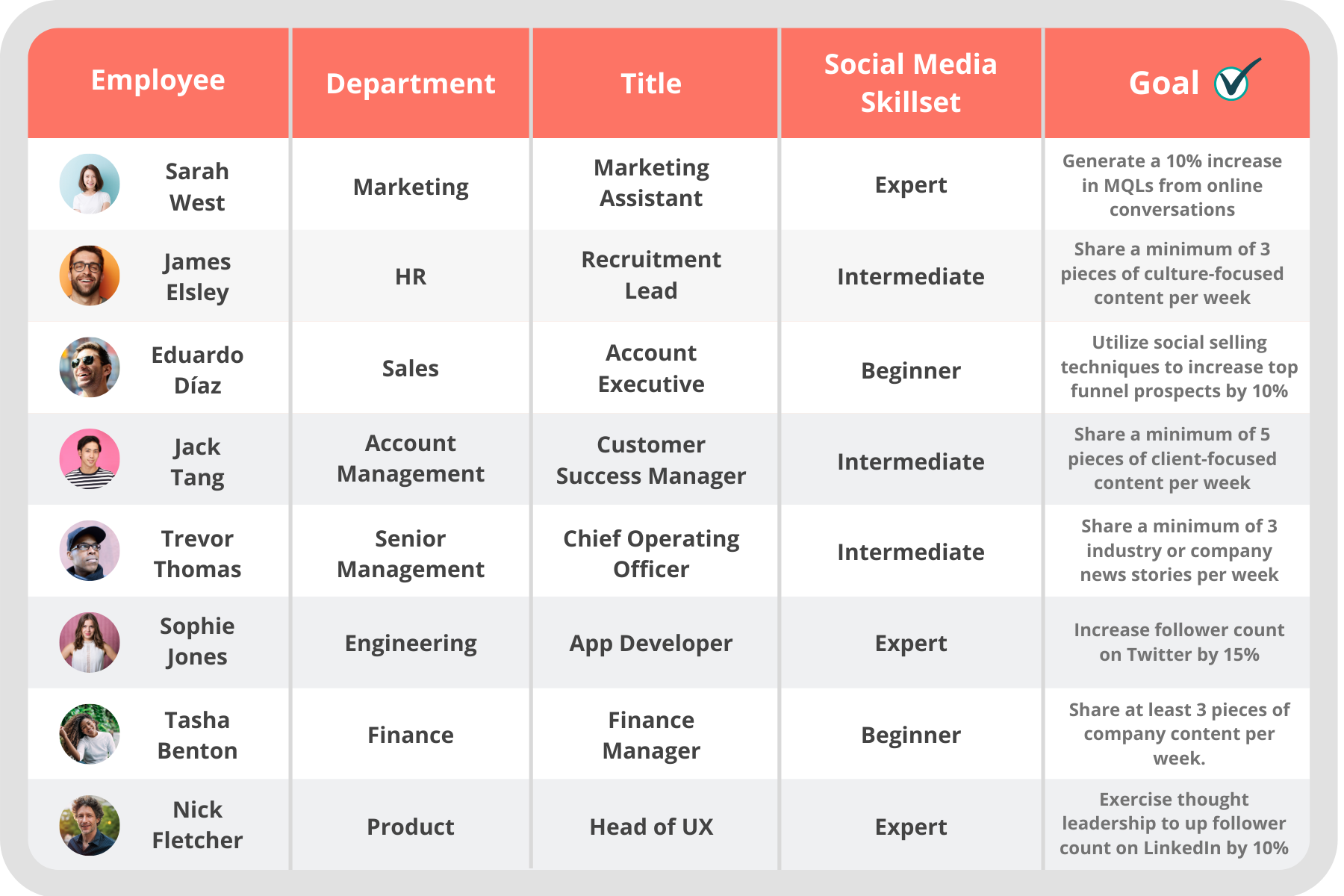
Almost as if you were starting from scratch, you need to create a game plan and a set of objectives.
Why are you running an employee advocacy program in the first place?
It’s easy to just say, “We want our employees to be external ambassadors for the company.”
But to what end?
What are you looking to do?
Are you looking for your salespeople to be more active on social media so they can close more deals?
Is it because you want to attract more talent? Do you want to share more content about why somebody would work in your organization and the things that go on inside your business?
Start by creating that game plan. What content would serve these goals? How often would you provide content? Who will create that content?
Then, select a group of your previous advocates and get feedback from them.
Say, “Hey, this is what we’re thinking about doing. How would this have impacted you, and would this have kept you inside the program?”
By doing this, you’re able to build a much better program by using the learnings from your previous attempt.
The Sales Pivot! Why Motivation Is Now Different
The biggest challenge you’ll face is that, when employee advocacy hasn’t worked for you in the past, there’s often a preconception that your new program won’t work either.
However, the past few years have seen a significant increase in social media use among professionals (especially LinkedIn), coinciding with the rise of remote and hybrid work.
The majority of C-suite executives are active on LinkedIn, with CEOs, in particular, generating huge engagement and reach.
And let’s not forget about salespeople:
In the past, salespeople would have more face-to-face contact than they do now. The shift brought about by the pandemic required salespeople to differentiate themselves online.
They’re building personal brands on platforms like LinkedIn to be remembered by customers and internal stakeholders.
Someone who may not have been motivated to join an employee advocacy program in 2019 could be highly motivated to do so now.
It’s all about Training and Planning
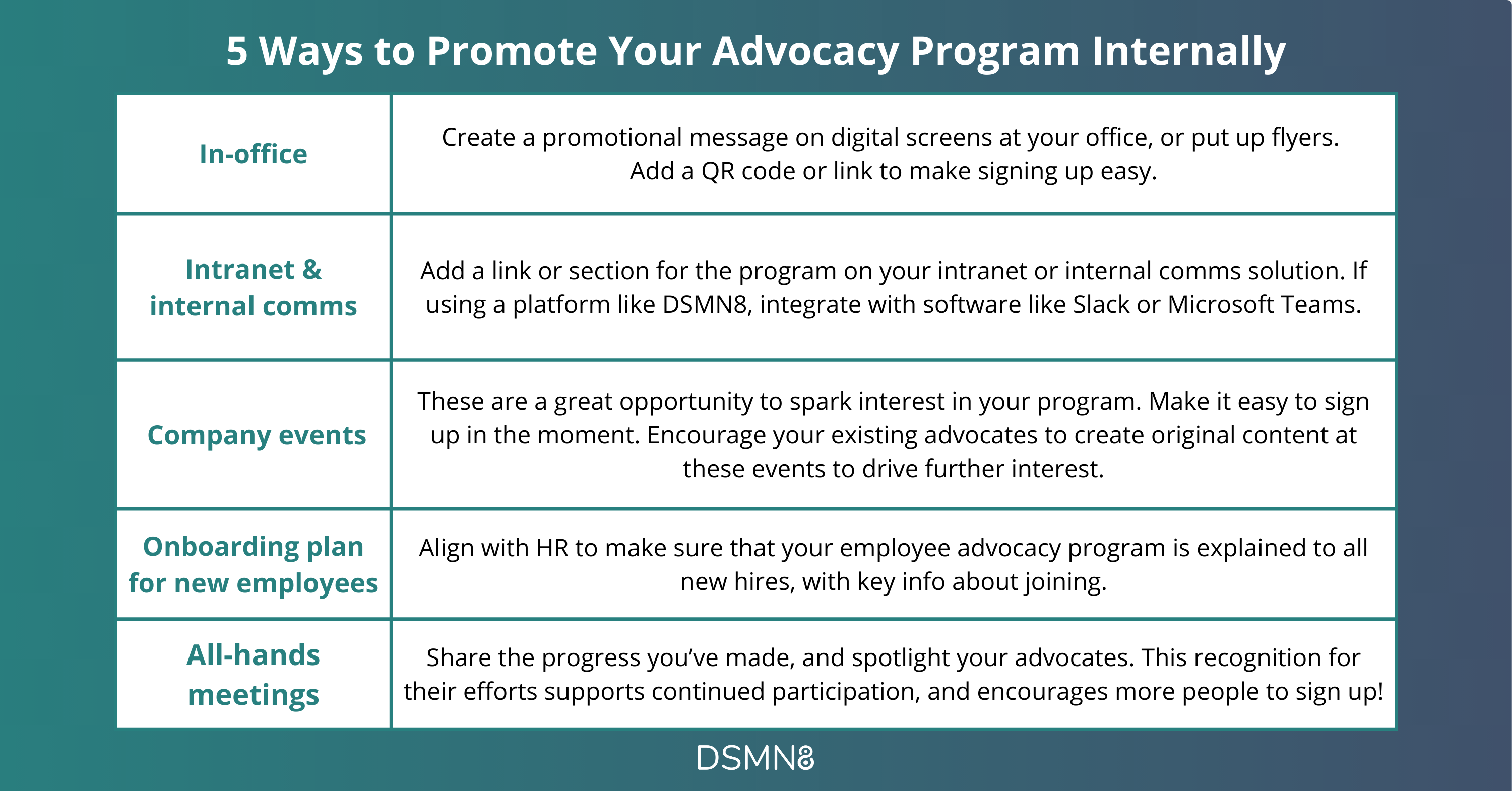
The next step is to build a communications plan.
Spreading the word internally is crucial to get colleagues on board and to address any lingering negative perceptions from your previous attempt.
Your goal here is to show everyone what your new employee advocacy program is all about:
- The objectives.
- What’s changed, e.g., content, management, platform.
- Address the things that went wrong last time.
Most importantly, emphasize the benefits employees will experience from joining. People want to know what’s in it for them!
Follow the tactics in our User Adoption Playbook for the best results. Hundreds of successful programs use this strategy to scale advocacy throughout their organizations.
Then, it’s a matter of providing the appropriate training and resources to support your employee advocates.
One of the biggest reasons employees don’t share content is a fear of getting in trouble at work.
So, you’ll need to update your social media policy to clearly state that your organization encourages social media activity. Align with HR to ensure this new policy is available to existing employees and new starters.
You can also provide social media guidelines to help employees feel at ease and ensure that any employee-generated content meets your expectations, such as proper use of your brand logo.
Finally, consider conducting training sessions for employees, focusing on using your platform (if applicable), optimizing their LinkedIn profiles, and content-creation best practices.
Use our employee advocacy training plan for ideas, and check whether your platform provider offers training. We do!
Identify Your Employee Value Proposition
Not everything has to be about selling your product and closing deals.
What we know is that it’s okay to do that maybe 20-30% of the time, but the rest of your content should focus on establishing thought leadership, educating people, and even entertaining them.
You could build a content framework so employees know what content will be in the program for them to share.
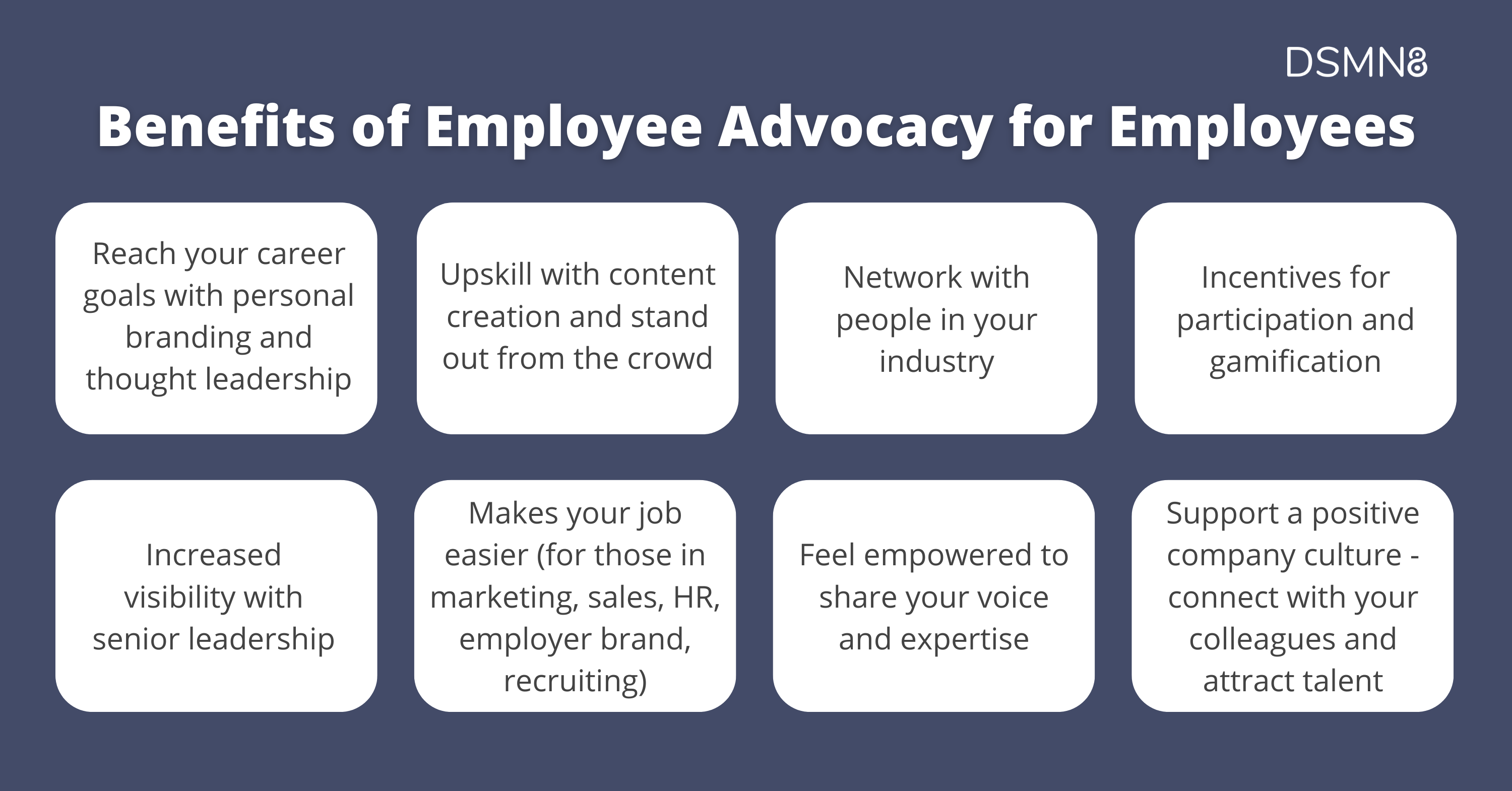
Finally, make sure you have established your value proposition for the program participants.
So, why share content? What value is it to the employee?
Don’t focus on the value to your organization.
Really focus on them as individuals and talk to them about how being an employee advocate will help them develop in their careers, both internally and externally. They’ll build their own social media community that they can leverage for years to come.
If you want to know how effective your current social media efforts are, request a free employee advocacy health check.
We can show you how many of your employees are currently sharing, and, more interestingly, how that breaks down by seniority in your organization.
A blanket statement like “only 3% of people are sharing” is impactful, but many of those people may be very junior and may not be client-facing.
Whereas you’ve only got, say, 5% of your senior leadership and C-suite sharing, that’s definitely something I would consider needing to be addressed.
Ready to get started with the #1 employee advocacy platform?
More ways to level up your employee advocacy program:


Emily Neal
SEO and Content Specialist at DSMN8. Emily has 10 years experience blogging, and is a pro at Pinterest Marketing, reaching 1 million monthly views. She’s all about empowering employees to grow their personal brands and become influencers.