

Last Updated: 1st December 2025.
Social media has become an essential tool for consultants to demonstrate expertise and attract clients.
By leveraging social media, particularly LinkedIn, consultants can showcase their skills, share their insights, and connect with an audience beyond traditional networking events.
However, not all consultants are taking advantage of this opportunity.
In this article, we’ll explore why it’s crucial for consultants to demonstrate expertise on social media and provide practical tips for doing so effectively.
Whether you’re just starting or looking to improve your existing LinkedIn presence, this post will help you establish yourself as a thought leader in your industry.
Why Thought Leadership Is Essential For Consultants
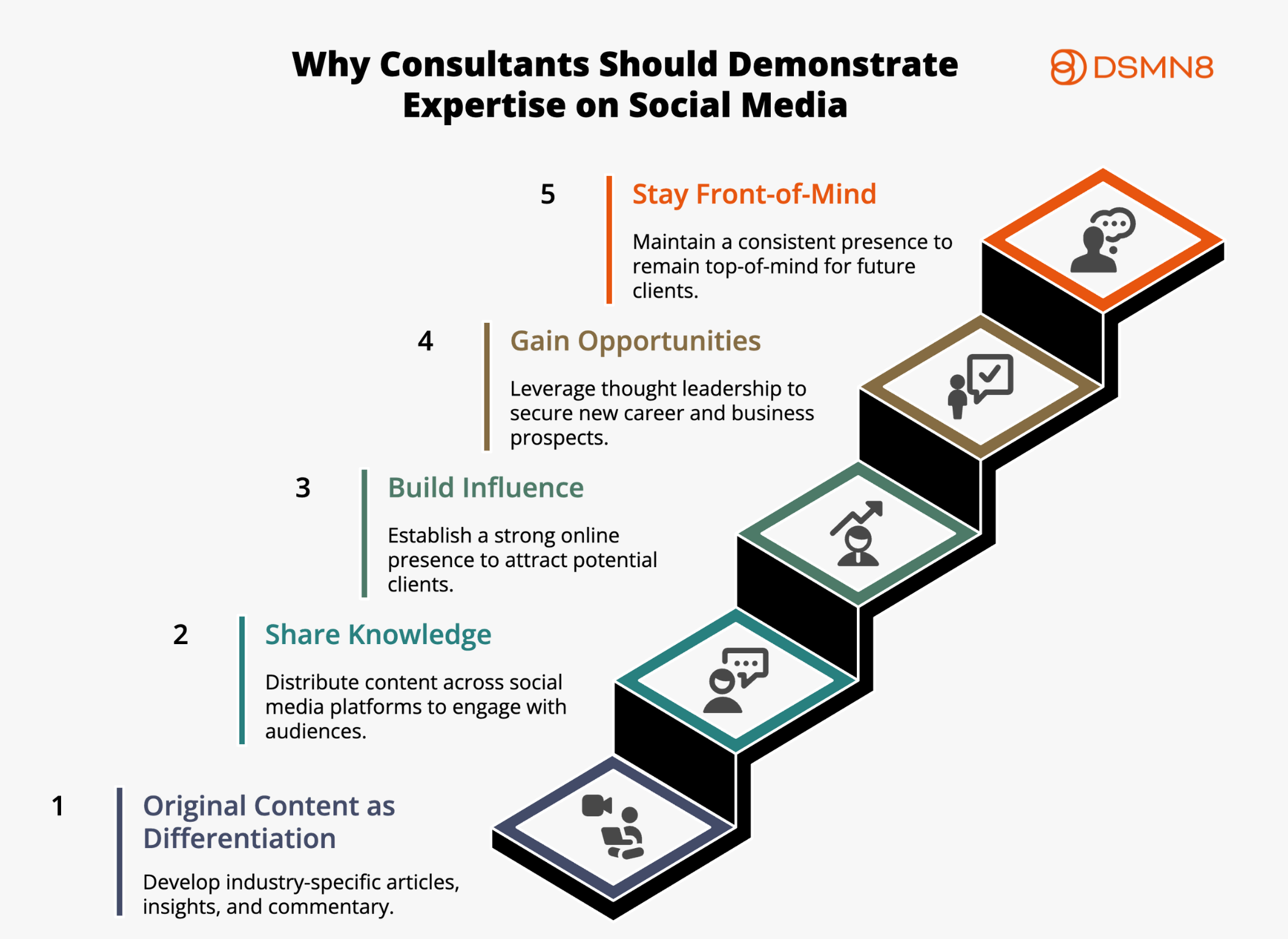
Put simply, thought leadership is a way to position yourself as an expert.
You can achieve this by creating original content. Cover industry topics, share your knowledge, and provide commentary on the latest industry news and trends.
It’s an excellent marketing strategy for anyone looking to grow their influence, gain career opportunities, and build up their networks.
So why is it especially important for consultants?
Clients are paying specifically for your expert opinion.
Whether you’re a lawyer, a management consultant, or a recruiter…
Your potential clients want to know why they should hire you over someone else. So demonstrate your expertise!
Thought leadership on social media is the best way to become known as the authority in your niche 🏆
Consultants often cannot share their actual work or client names on social media due to client privacy and the nature of their work.
This makes building a social presence a bit more challenging than, for example, creative professionals.
A graphic designer can share examples of their work to demonstrate their skills and provide social proof.
If I were looking for a photographer, the first thing I’d do is look at their portfolio or Instagram profile.
But if I were looking for a recruiter, I’d want to see that they have a deep knowledge of my specific industry, B2B SaaS Marketing.
This is where thought leadership content becomes essential.
And the benefits aren’t just immediate, e.g., getting more inbound leads.
Thought leadership enables you to play the long game.
Building your professional social media presence helps you stay front-of-mind with future clients.
A prospect may not be looking for a consultant right now, but when they are, you’ll be the first name that springs to mind.
The Role of Social Media in the Consulting Industry
It’s no secret that the world is becoming increasingly online.
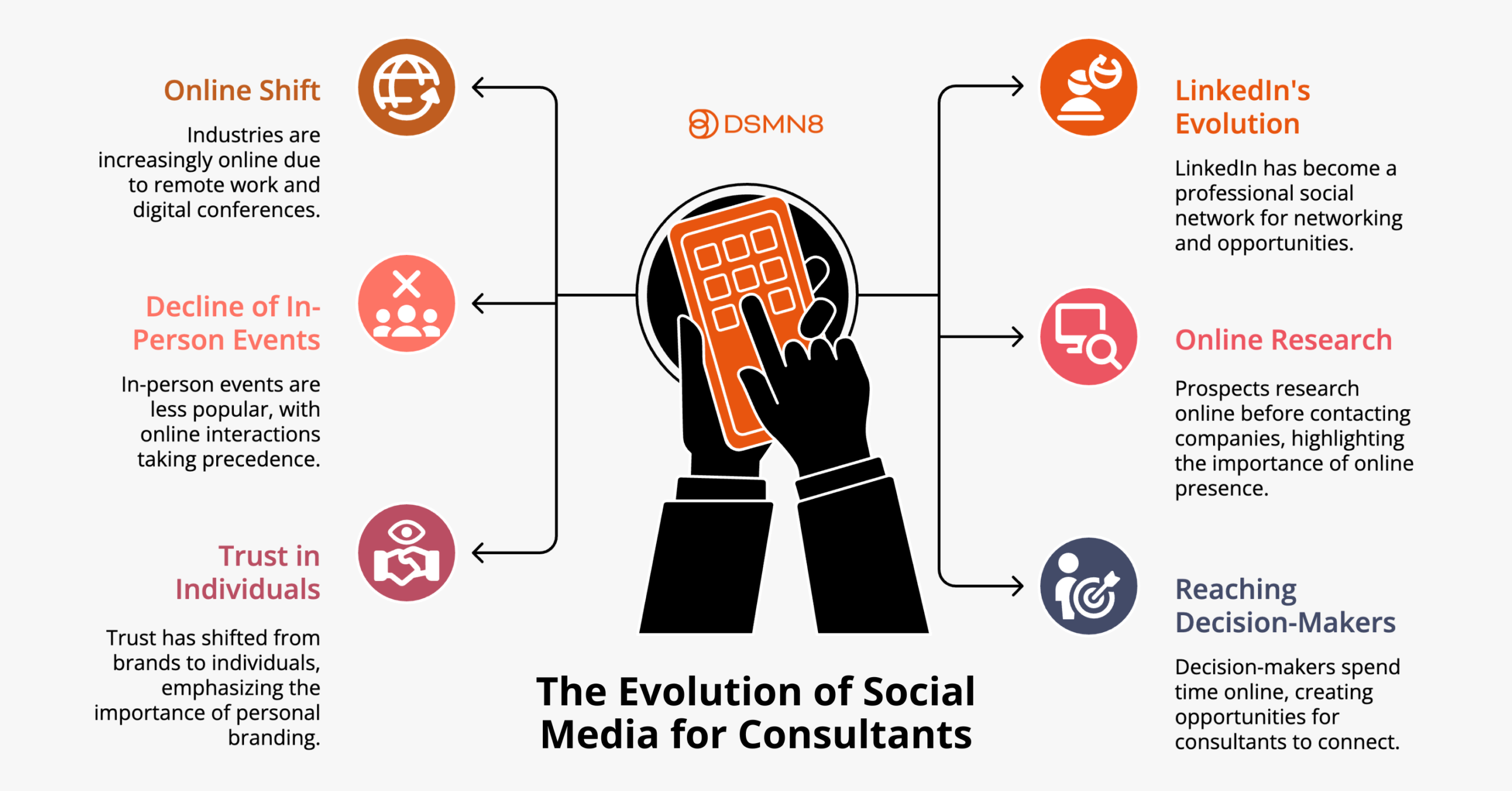
From remote working to digital conferences, there has been a shift in almost all industries in recent years.
LinkedIn has evolved from a job-finding website to a complete professional social network. It’s the place to network, find opportunities, and even become an influencer.
While many in-person events and conferences have returned, they’re less popular than before the pandemic.
Consultants used to build relationships at conferences and demonstrate expertise by giving keynote speeches.
These days, it all takes place online.
Even if you do give a presentation in person, you can bet they’ll be recorded or live-streamed. If you’re not active on LinkedIn, you won’t see the benefits if online viewers can’t easily tag or connect with you 😫
Prospects do their research online before reaching out to you or your company.
Edelman research revealed that 83% of B2B purchase decisions happen before ever engaging with brands or salespeople.
What will they see when looking at your consulting firm’s LinkedIn page or your own LinkedIn profile?
Trust has shifted from brands to individuals.
What I mean by this is that the public now expects a company’s CEO to have an active social media presence.
They want insights from individuals, rather than faceless corporations.
As a consultant, this benefits you 💪
You’re much more likely to be trusted on social media than your company.
Plus, as people spend more time online for work, it’s easier than ever to reach decision-makers.
In fact, 54% of decision-makers and 48% of C-Suite executives say they spend over an hour per day consuming thought leadership content.
That’s an opportunity you don’t want to miss!
Ready to scale your thought leadership? See how DSMN8 helps your consultants create and share content efficiently. Book a Demo.
How To Demonstrate Expertise on Social Media
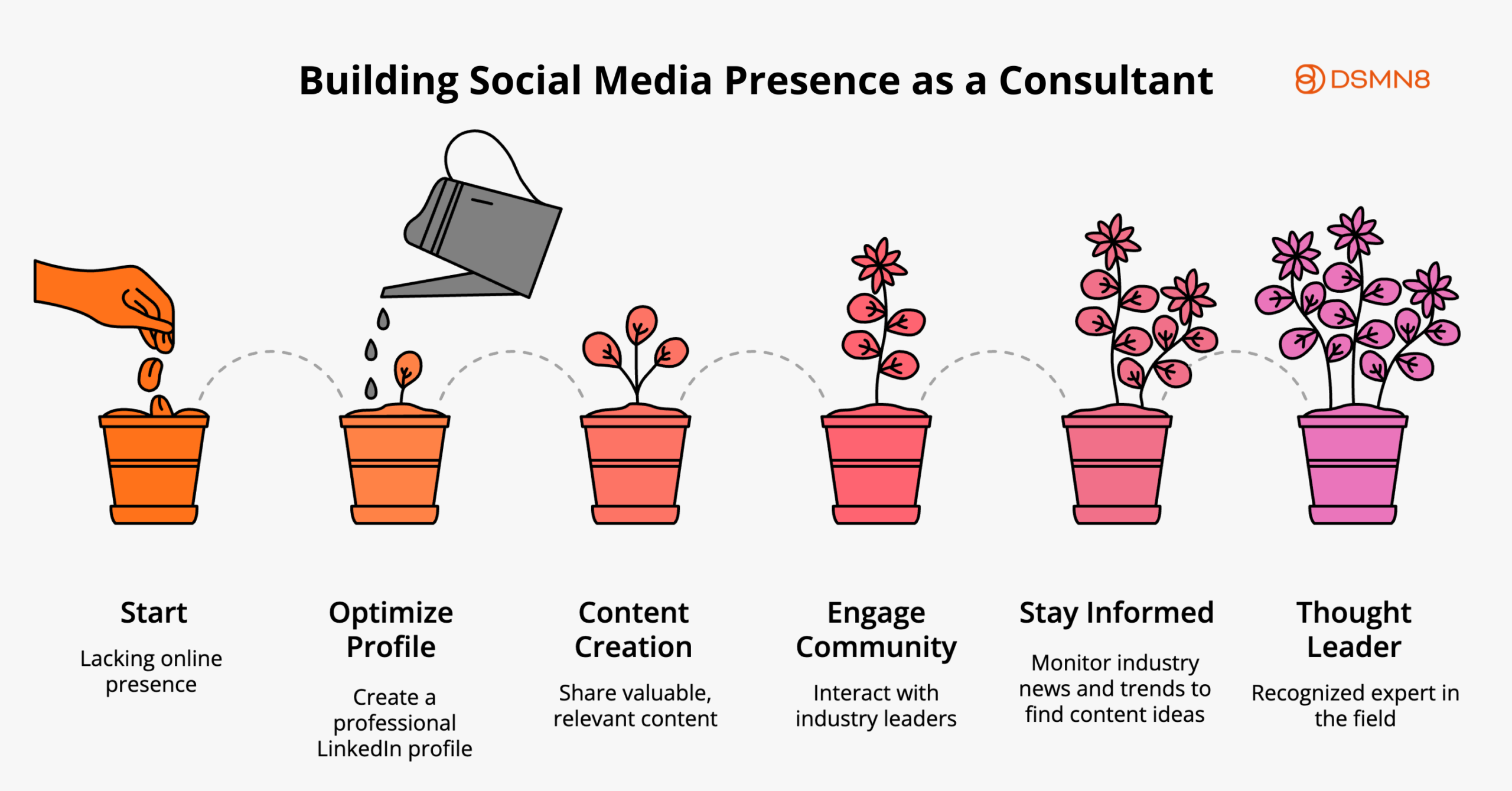
If you’re a consultant looking to establish yourself as an expert in your field, maintaining an active professional social media presence is crucial.
The goal is to build a personal brand that highlights your unique skills and knowledge. Focus on creating content in your area of expertise to reach the right people.
This will result in potential clients reaching out to you directly or coming to your consultancy company looking to work with you specifically 👏
The social media platforms you choose depend on your niche. For example, many doctors are seeing success on TikTok, as people are searching for health guidance there.
The key part is that all consultants should have an active presence on LinkedIn. Start by optimizing your LinkedIn profile, and then you’re ready to get started!
Share these three types of content to build trust with your audience:
- Company Content
- Industry News / Third-Party Content
- Personal Branding / Employer Branding Content
Don’t just post about yourself or your company; share your commentary on the latest industry developments and valuable third-party content that can benefit your audience.
It’s all about showing up and adding value!
It’s not about writing one post or article and then leaving 🙅♂️
You need to consistently create content, whether daily or weekly.
Follow and engage with other industry thought leaders to build a community of like-minded professionals. Comment on their content with your insights.
Set up Google Alerts to stay up-to-date with industry news and trends. It’s an easy way to source third-party articles to share with your audience.
By consistently sharing high-quality content that demonstrates your expertise, you can build a loyal following on social media and position yourself as a thought leader in your industry.
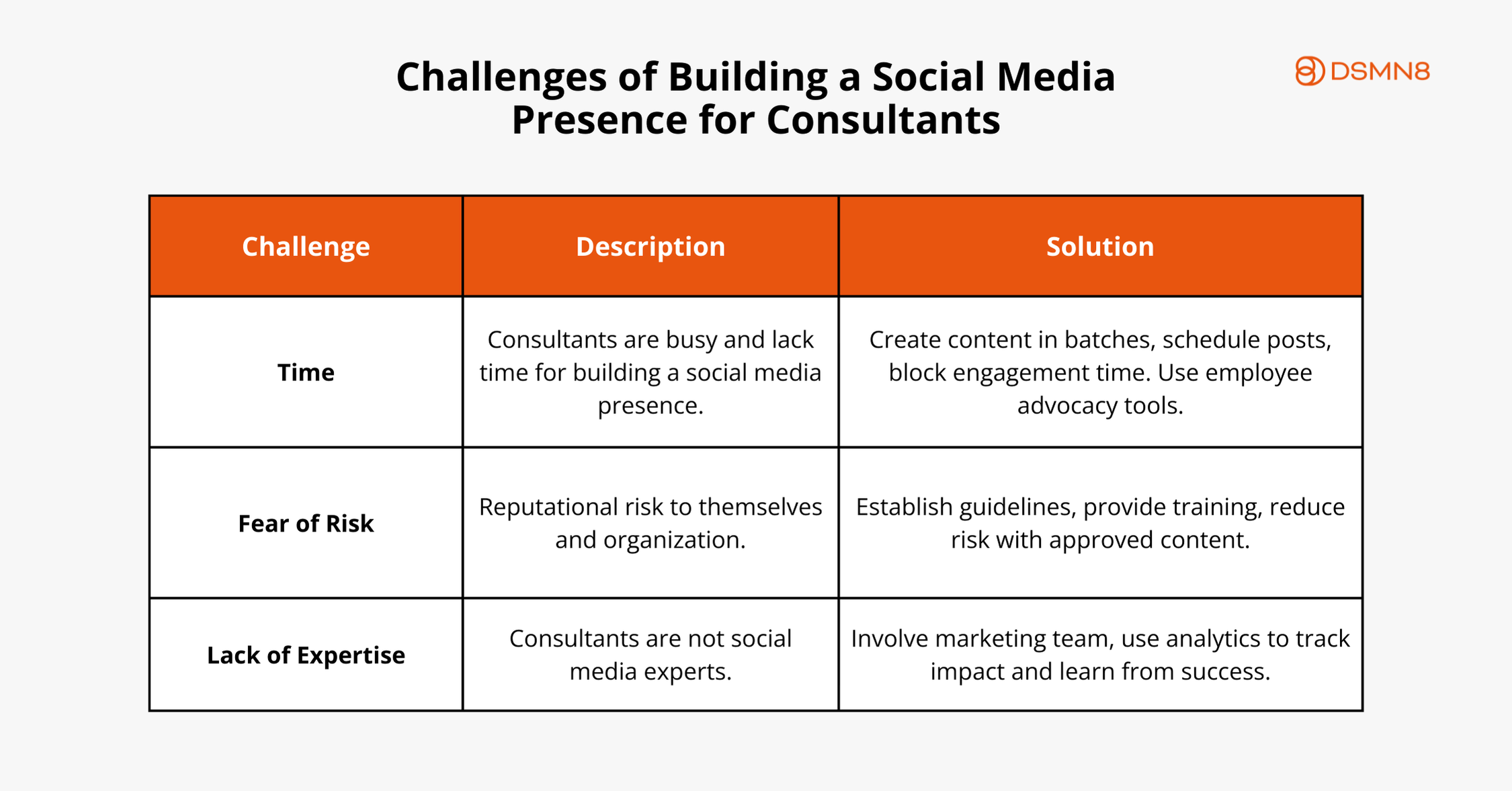
The Challenges & Pitfalls of Building a LinkedIn Presence as a Consultant
The importance and impact is clear.
But what are the challenges?
1. Time
Here at DSMN8, many of our clients are within the consulting sector.
The biggest challenge they face on social media is simple: time.
Consultants are busy! ⏰
While getting your name out there on social can sound like a daunting task, there are ways to make the journey easier:
- Create content in batches when you’ve got time.
- Schedule content to go out in advance.
- Block out 15-30 mins per day in your calendar to engage with your comments and other creators’ content.
If you want to make it even easier, consider DSMN8’s employee advocacy platform.
DSMN8 enables you and your colleagues to create, share, and engage with content efficiently.
Features like Auto-Scheduling and our AI Content Assistant help time-poor professionals maintain an active social media presence.
Frank Recruitment Group, a global leader in resourcing IT professionals, uses DSMN8 to amplify its experts’ content at scale.
Here’s what their Chief Marketing Officer, Kashif Naqshbandi, has to say:
“By automating the sharing of both our own content and interesting and relevant external content, DSMN8 has helped drive engagement and conversations while building our brands, and empowering our employees to become thought-leaders in the ecosystems they recruit for.”
2. Fear of Risk
Another major issue faced by consultants on social media is the fear of reputational risk to themselves and their organization.
Many consultants don’t post on social because:
- They fear accidentally going against their company’s social media policy and risking their job.
- They fear getting into conflicts online or dealing with trolls.
- They fear unintentionally violating strict industry regulations, particularly in healthcare and financial services.
Here’s a 3-step solution to alleviate their concerns:
Step 1: Establish new social media guidelines for your company that encourage your professionals to create and share content. We’ve got a social media policy template to help you get started.
Step 2: Provide social media training for all employees. Dealing with a troll? Block them, don’t engage.
Step 3: Reduce the risk. To make sure everyone sticks to industry regulations, it’s best to work with your marketing team to create a set of content guidelines.
To take this further, DSMN8 makes it easy for marketing to create company-approved content for employees to share. You can even create multiple captions for each post, so everyone isn’t sharing the same content.
This also provides your consultants with a starting point for creating thought leadership commentary that remains on-brand and within regulations.
3. They're Not Social Media Experts
Finally, the third main challenge of building a social media presence for consultants is that they’re not social media experts… unless they’re social media consultants.
Whether you’re starting a fully scaled employee advocacy program or dipping your toes in, it’s worth getting your marketing department involved.
They know what kinds of content to create for different channels, how to increase followers and engagement, and the stats you’ll want to track 📈
DSMN8’s analytics suite is industry-leading, making it easy to monitor all key metrics for impact. If you’re managing a team of consultants, you’ll be able to see and track what’s working on social at the company, team, and individual levels.
Plus, you’ll be able to see how the impact compares to paid social, enabling you to demonstrate ROI to leadership.
Final Thoughts & Additional Resources
Leveraging the power of social media has never been more important for consultants.
And the best way to grow your network and attract clients is to demonstrate expertise through educational and insightful content.
However, there are challenges. Building a strong social media presence as a consultant requires consistent effort and adherence to company and legal regulations.
By following the tips and best practices outlined in this post, you can effectively establish yourself as a thought leader in your industry.
If you create and share high-quality content and engage with other experts, you’ll be winning at social in no time!
More Thought Leadership Tips 👇


Emily Neal
Emily is SEO Lead at DSMN8. She focuses on organic growth strategy across search and AI search and co-authors DSMN8's original research, including the Employee Advocacy Benchmark Report and edited CEO Bradley Keenan's book. Her background spans SEO strategy, technical web, long-form content, digital PR, and marketing automation.