

What's on this page:
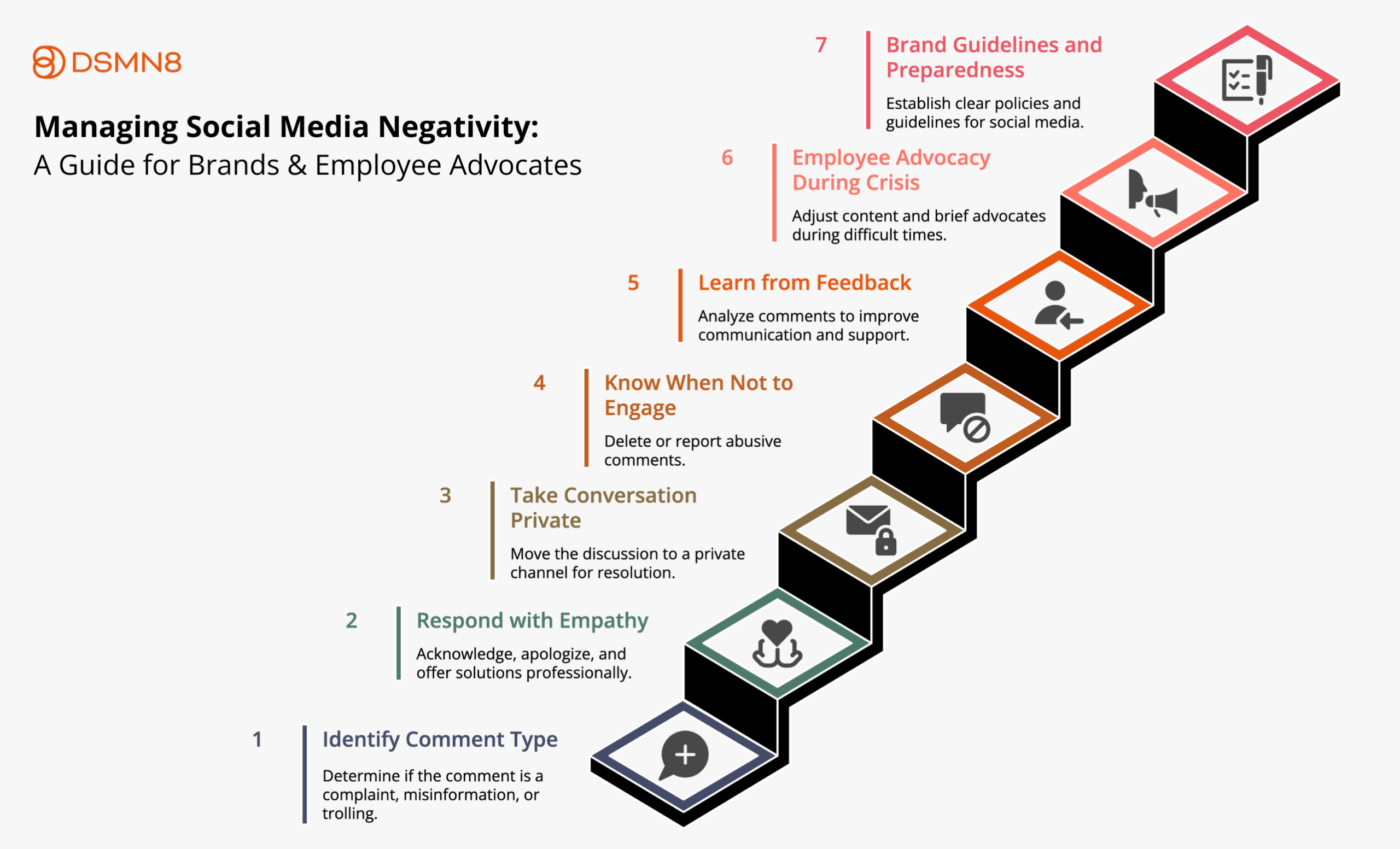
- 1. Identify the Type of Comment.
- 2. Respond with Empathy and Professionalism.
- 3. Take the Conversation Private (When Appropriate).
- 4. Know When Not to Engage.
- 5. Learn from the Feedback.
- 6. Employee Advocacy During a Crisis.
- 7. Brand Guidelines and Preparedness.
- Final Thoughts & Additional Resources.
In a world where every comment can be amplified, brands need to be prepared for more than just likes and shares.
The reality is, negative feedback happens, whether it’s a dissatisfied customer, a misunderstanding, or a troll looking for attention.
When employees become active advocates for your brand, this dynamic becomes even more complex.
A single comment on a LinkedIn post can quickly evolve into a wider conversation. But when handled well, it can also be an opportunity to strengthen trust and demonstrate transparency 💪
So, how can brands (and their employee advocates) respond constructively when social media turns sour?
Here’s our step-by-step guide to managing social media negativity for organizations running employee advocacy programs.
1. Identify the Type of Comment
Not all negative feedback is created equal. Before responding, take a moment to understand what you’re dealing with:
-
A genuine complaint: A valid concern or poor experience. Respond promptly and professionally.
-
Misinformation or misunderstanding: Clarify with facts, but avoid a defensive tone.
-
Trolling or abuse: These aren’t worth your time or energy. It’s best to ignore, delete, or report.
Correctly identifying the type of comment helps your team and advocates respond appropriately, protecting both your reputation and your people. If you manage high comment volume, CommentGuard can help you filter spam and abusive replies while prioritizing genuine complaints so your team can respond thoughtfully.
2. Respond with Empathy and Professionalism
When a response is needed, keep it human.
Empathy goes further than defensiveness ever could 🤝
Here are some best practices for responding to critical comments or reviews:
-
Acknowledge the issue. Show that you’ve read and understood their concern.
-
Apologize sincerely when the situation calls for it, even if the issue wasn’t intentional.
-
Offer a solution or next step. Whether it’s directing them to customer support or escalating internally, show initiative.
-
Keep your tone calm and factual. This builds credibility and trust, even in difficult moments.
If you’re an employee advocate and unsure how to respond, don’t guess.
Flag the comment internally, e.g., to your social or communications team, so the right people can step in.
3. Take the Conversation Private (When Appropriate)
A good rule of thumb: acknowledge publicly, resolve privately.
A short, polite response such as “I’m really sorry to hear this — our team will be in touch directly to help” lets others see you’re responsive, while preventing the issue from escalating in public.
Private channels (such as direct messages, email, Zoom calls) allow for a more personal and effective resolution without inviting further negative attention to the original post.
4. Know When Not to Engage
If you’re an employee advocacy program manager, this is really important to convey to your advocates:
Sometimes the best response is no response.
If a comment is clearly designed to provoke (such as profanity or abusive language), it’s best to delete, hide, or report the comment.
It’s also worth remembering the Streisand effect: in some cases, responding publicly to minor criticism can unintentionally amplify it.
Train your team to spot these moments and choose silence when it protects your brand’s integrity.
5. Learn from the Feedback
Negative comments can sting, but they’re often a free source of valuable insight.
Recurring themes in customer complaints or reviews might highlight issues with communication, product experience, or support.
Tracking these patterns and feeding them back to the right teams helps brands make data-driven improvements.
It also shows audiences that feedback is taken seriously, not ignored 🙌

6. Employee Advocacy During a Crisis
If your organization is facing a difficult moment, from negative press to product recalls or layoffs, your employee advocacy strategy needs extra care.
Here’s what to do:
Remember, employee advocacy can help balance negative narratives by sharing positive stories and genuine experiences, but advocates are not crisis managers.
Their role is to represent the brand authentically, not to defend it under pressure.

7. Brand Guidelines and Preparedness
Proactive preparation prevents reactive mistakes.
Establish clear social media policies and guidelines that cover:
-
What employees should do if they receive or spot negative comments.
-
Who to contact internally (e.g., marketing, PR, or legal).
-
What kinds of responses are appropriate.
-
When to hide, report, or delete comments.
When employees feel supported and guided, they’re far less likely to panic or make missteps in public forums.
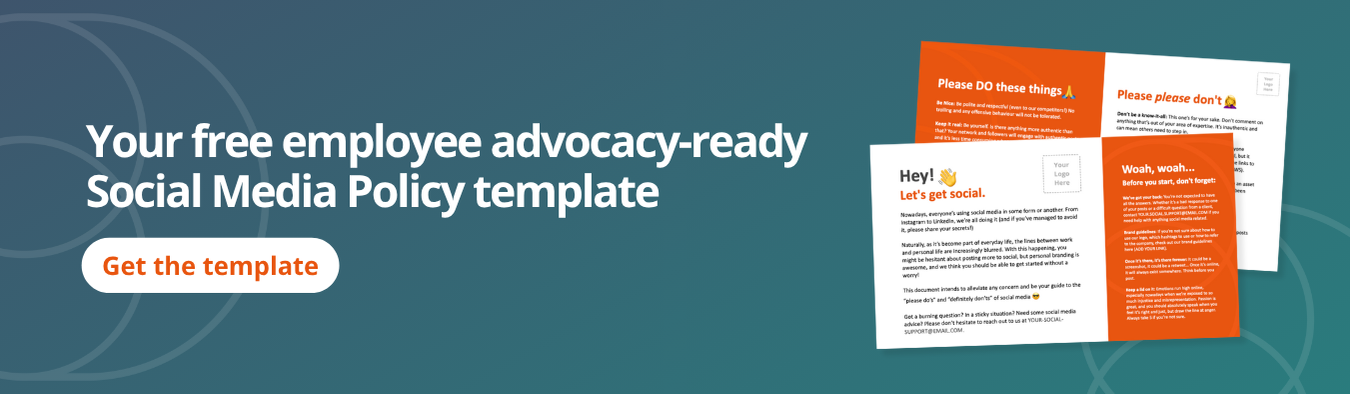
💡 Our free social media policy template is a great place to start.
You’ll also find our ‘dos and don’ts’ social media guidelines cheatsheet helpful.
Final Thoughts & Additional Resources
No brand is immune to negativity online.
But by empowering employees with the right tools, training, and support, you can ensure that every response reflects your values.
Employee advocacy works best when employees feel confident, informed, and safe to represent your brand authentically.
With a clear strategy for handling negative comments, you can protect both your people and your reputation while turning difficult moments into opportunities for trust and growth.
Ready to empower employees to share confidently on social media?
Discover how DSMN8 helps organizations scale authentic advocacy while protecting brand reputation.
More resources you’ll find helpful:


Emily Neal
Emily is SEO Lead at DSMN8. She focuses on organic growth strategy across search and AI search and co-authors DSMN8's original research, including the Employee Advocacy Benchmark Report and edited CEO Bradley Keenan's book. Her background spans SEO strategy, technical web, long-form content, digital PR, and marketing automation.