

Last Updated: November 27th, 2026
Employee advocacy program managers, this one’s for you.
When I joined DSMN8 as a Content Marketing Executive, I knew posting on LinkedIn would be part of the job. (We’re an employee advocacy company, after all.)
What I didn’t expect was how hard it would be to actually start. Turns out, I wasn’t the only one who found it daunting.
When I spoke to other recent joiners on our team, we’d all hit the same walls, just in slightly different ways.
Your new joiners probably won’t tell you they’re scared of LinkedIn, so we will. Here’s what we struggled with, and what helped.
1. The Fear of Suddenly Being Seen
It wasn’t until I sat down to write my first post that I pictured the faces of past colleagues and old connections, each one asking who on earth I thought I was, trying to enter my new corporate influencer era?!
And it wasn’t just them. Posting on LinkedIn would (ideally) make me visible to people outside my network, too.
“My mind went into overdrive. People on the internet are scary, and they love to argue. What if I get a barrage of negative comments on my very first post?” – Beth Lorenzini, Content Marketing Executive
How to Fix: Help New Joiners Point the Spotlight Elsewhere
What finally helped my teammates and me wasn’t building more confidence in ourselves: it was taking the focus off ourselves entirely.
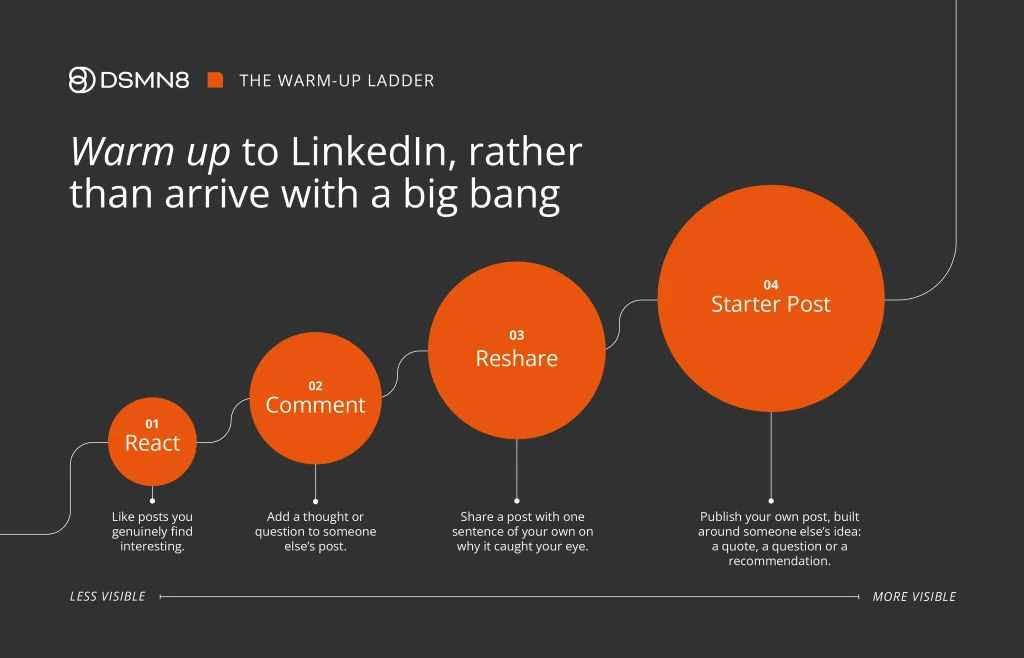
Liking, sharing, and commenting on posts is familiar advice, but it’s familiar because it works, especially for people who’ve spent years hiding in the LinkedIn shadows.
It lets them warm up to the platform rather than arrive with a big bang. Plus, they might even find posts that genuinely inspire them.
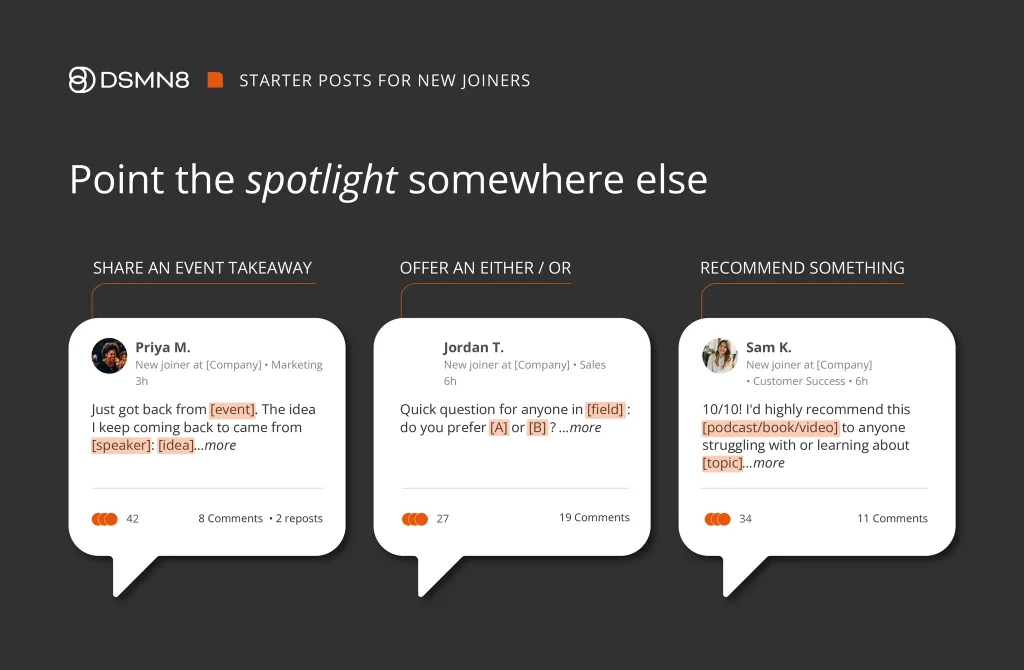
When they’re ready to publish, give them starter posts built around someone else’s idea, so the content takes the spotlight instead of them.
That barrage of negative comments I was so worried about? It never came. I was genuinely touched by the people who took the time to react to my post or leave a supportive comment, and I doubt I’m an outlier.
Key takeaway: Tell your new joiners about your own first steps on LinkedIn, awkward bits included.

Getting new joiners started is just the first step.
Our Employee Advocacy User Adoption Playbook covers how to build momentum, from training and launch to re-engaging employees who’ve gone quiet.
2. The Fear of Being ‘Wrong’
For many people, the bigger fear isn’t being seen. It’s being called out for having an opinion that’s “wrong.” This came up again and again in conversations with team members, unfortunately with female colleagues in particular.
“Early in my career, I’d second-guess everything I wrote, worried someone more senior would correct me publicly. What changed things was realizing how much of what I was afraid to say was actually just subjective. Once I let go of needing to be ‘right,’ sharing got a lot easier.” – Emily Neal, Lead SEO, GEO & Content Strategist
How to Fix: Give New Joiners Ground They Can’t Be Wrong On
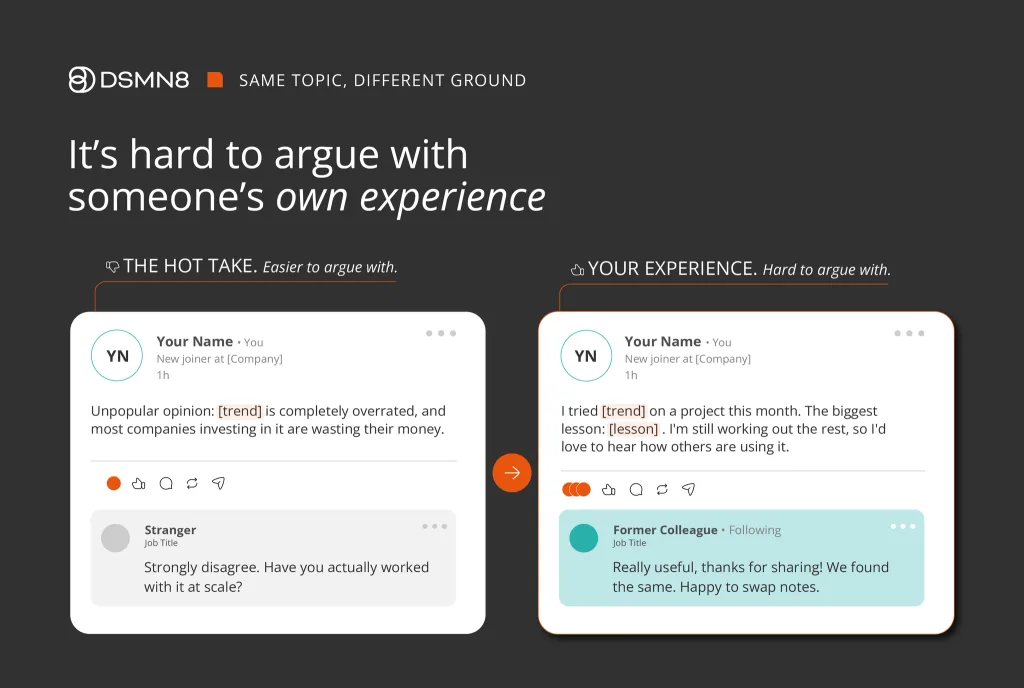
It’s hard to argue with someone’s own experience. So rather than encouraging new joiners to share hot takes on industry trends, nudge them towards posts rooted in what they’ve seen, done, or learned.
Key takeaway: “I’m still learning” is a perfectly good stance on LinkedIn.
Some of the more relatable posts come from people working things out in public, not from those claiming to have all the answers.
Finally, make sure new joiners know you’ve got their back (e.g., they can flag it to you, you’ll help them decide whether it needs a response, and they’re never expected to get into an argument with a stranger).
Knowing there’s support behind them takes a lot of the fear out of hitting “post.”

Read DSMN8’s full guide on dealing with negative comments.
3. The Fear of Boring Their Network
When I started looking at what to share, a new worry crept in: why would any of those people in my network care about employee advocacy?
It’s a common problem for new joiners. Our networks reflect where we’ve been, not where we are now (especially a month into a new role!).
For me, sharing my new company’s content off the bat felt like walking into a room of old friends and starting a conversation about something none of them cared about.
Luckily, DSMN8’s internal program manager, Lewis Gray, had seen this before:
“The content you’re asking employees to share has to be relevant to their role, their career, and their network. Nobody wants to feel like a talking billboard!” – Lewis Gray, Program Manager for DSMN8’s internal program
How to Fix: Help New Joiners Find the Overlap
Key takeaway: The trick is finding where what their network cares about overlaps with what your company talks about.
Start by making sure the content you curate for them is actually relevant to their role and network. For example, a salesperson and an engineer shouldn’t be getting the same suggested posts.
Then help them build a bridge from their old world to their new one. Their background is what makes their perspective interesting, so encourage them to lead with it.
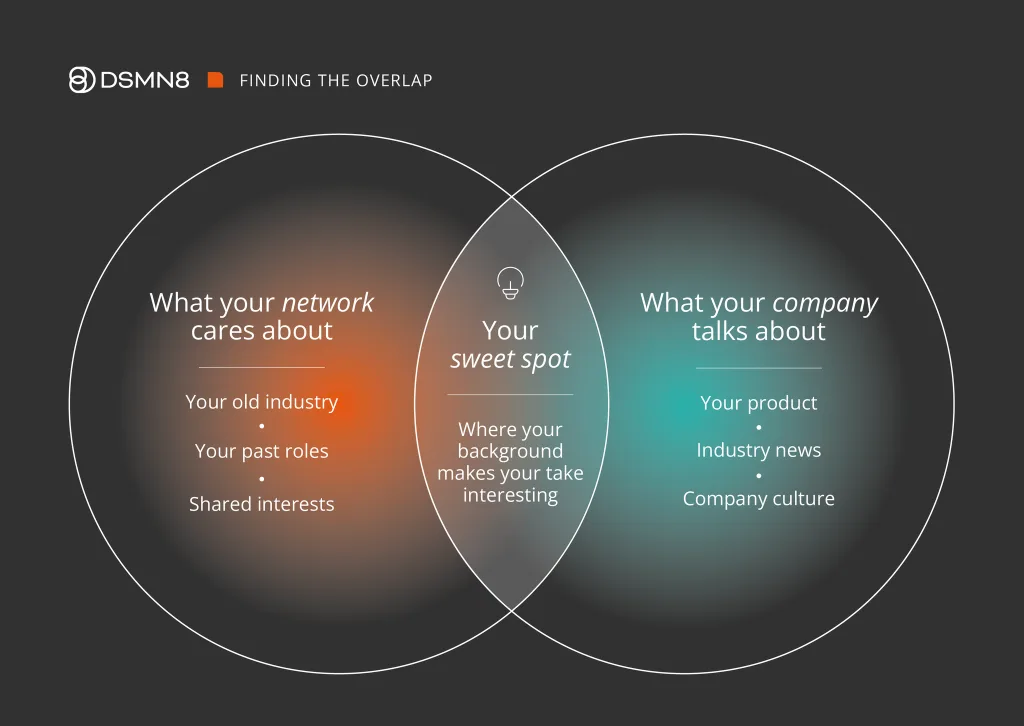
It also helps to remind them that their network will change over time. Posting about their new field gradually draws in people from it, and people they haven’t heard from in years will often surprise them by engaging.
4. The Fear of Selling to Your Network
I knew that employee advocacy worked because it’s more authentic than branded content coming from a company page.
But in my first week, the potential whiplash of going from not regularly posting on LinkedIn to posting all about my new company’s product and gated content felt too inauthentic to be valuable.
“The idea of suddenly being active on LinkedIn after a career of silence felt false. But I was encouraged to just talk about my work in any form, rather than pretend I was an employee advocacy expert. “- New joiner to DSMN8
How to Fix: Let Advocacy Follow Experience
Key takeaway: It’s important to give new joiners time to have something worth advocating for.
People talk about companies they believe in, but new joiners haven’t had time to build that belief yet. So don’t make selling your brand one of their onboarding tasks, it’ll just feel inauthentic.
Trust goes both ways, and once your company has earned their trust, new joiners will probably feel a lot more comfortable shouting the company’s praises online.
A simple rule of thumb helps: lead with your experience, and let the company come in as context. “Here’s what I learned on this project” naturally brings in where you work, without the post turning into an advert.
5. The Blank Page
Sometimes the problem isn’t fear at all. I’d sit down, open LinkedIn, and genuinely have no idea what was worth posting. Everything felt too small, too obvious, or like something someone else has already said better.
“When I started writing on LinkedIn, I overthought the whole personal brand thing. What got me out of it was writing from a place of honesty instead of chasing topics I thought others wanted or hunting for a clever angle.” – Claudia Barraclough, Marketing Executive: Social and Video
How to Fix: Give New Joiners Prompts, Not Just Permission
Telling someone to “just share your thoughts” doesn’t help when they don’t know which thoughts count. Specific prompts do. A short bank of questions gives new joiners a starting point:
- What surprised you this week?
- What’s a question a customer or colleague asked you recently?
- What’s something you’ve changed your mind about?
- What did you learn from a mistake?
It’s also worth reminding them that what feels obvious to them often isn’t to anyone else.
Key Takeaway: New joiners see things with fresh eyes, and that’s exactly what makes their perspective worth sharing.
Encourage them to keep a running note on their phone for ideas as they come up, so they’re never starting from scratch. A curated feed of ready-to-share content helps too. And if you have the time, build a small library of starter captions, like we did for our own new joiners.

Even we found it hard, and that’s the point
Working at an employee advocacy company didn’t make starting on LinkedIn any easier. If anything, it raised the stakes. But none of the walls my teammates and I hit were about not knowing how to post. They were about fear, doubt, and not knowing where to begin. Those are things a good program can genuinely help with.
But it’s not just new joiners who struggle to start posting

Many senior leaders rarely post on LinkedIn, but when they do, they set the tone for everyone else.
Our Executive Voice 2026 report reveals how 62 organizations helped leaders find their voice.
Additional Resources
Are you new to posting on LinkedIn? Learn how it’ll help your career 🚀
Rolling a program out to new joiners? Send these pre-written templates to get them interested 📓
Unsure why people aren’t sharing curated content? Read our 4 reasons why people don’t share ♻️
Frequently Asked Questions
How soon should new joiners start posting on LinkedIn?
New joiners can start engaging on LinkedIn from day one, but that doesn’t have to mean publishing posts. Liking, commenting on, and resharing content they find interesting lets them warm up without the pressure of being in the spotlight.
Should posting on LinkedIn be mandatory for new joiners?
Encouragement works better than obligation. When posting feels like a box to tick, posts come across as hollow, both to the person writing them and to their network.
Program managers get better results by removing the barriers that hold new joiners back: offering starter templates and prompts, sharing relevant content, being clear about social media guidelines, and showing public support when someone posts for the first time.
For more on getting the balance right, check out our article on the do’s and dont’s or asking employees to post on social media.
What should a new joiner’s first LinkedIn post be?
Basically, a new joiner’s first post should be about whatever they feel like sharing. Feel free to inspire and share ideas but avoid steering them too much as that’s when things feel hollow or inauthentic. Take a look at the sections Help New Joiners Find the Overlap and Give New Joiners Prompts, Not Just Permission for ideas to help guide them.


Beth Lorenzini
Beth is a Content Executive at DSMN8. She writes about employee advocacy and curates content for DSMN8's internal program. Her background is in content strategy and technical writing.