Beyond the brand account: how software companies turn employees into their best marketing channel
- The most active software orgs get 3.3x more employees sharing than the industry average. Find out how.
- See where your company ranks against other computer software employers.
- Get the playbook the top-ranked software companies use for trust, talent, and scale.

Buyers tune out the brand account
Every software vendor’s homepage reaches for the same handful of words: “AI-native, enterprise-grade, built to scale.” Buyers have learned to skip past that kind of copy, but they haven’t stopped listening altogether. Instead, they pay attention to the people who actually built and use the thing.
Real user experience, honest trade-offs, what a team actually shipped and why: that’s the detail buyers trust, and it sits with engineers, product managers, and the people building the product, not the brand account. Three things keep that expertise locked up:
- Technical experts are time-poor. Posting feels like one more task on top of the actual job.
- There’s no habit of sharing. Nobody sets an example, and it doesn’t happen by default.
- Impact is measured in likes, not leads. Without a line to signups or pipeline, leadership never sees a reason to prioritize it.
The result: companies sit on their most credible channel while competing on marketing copy that reads identically across the category. The companies below built the habit anyway.
Get the full computer software employee advocacy report:

See what the most active computer software companies do differently: the latest leaderboard data, real client results, and advice from practitioners.
What’s inside:
- The data snapshot: the top companies by employee sharing rate, and how the industry average compares.
- Trust & thought leadership: the four habits behind a 3.3x sharing rate, and why AI search rewards human-sounding content.
- Talent & culture: how leading orgs get executives sharing at roughly 2.5x the rate of the wider workforce.
- Scale & pipeline: how Harness went from 54th to 4th on the leaderboard in twenty months, and the governance checklist.
Top-ranked software companies share more than 3x the industry average
The sector’s most active organization, Nexthink, gets nearly a third of its employees sharing content every month, more than 3.3x the 8.91% industry average.
of Nexthink employees sharing, #1 of 644
industry average across the sector
the gap between the leader and the average
The top 10 — % of employees sharing content on LinkedIn, last 30 days
| 1 | Nexthink | 29.76% |
| 2 | Glean | 28.87% |
| 3 | Harness DSMN8 client | 27.83% |
| 4 | Contentful | 24.95% |
| 5 | Workato | 24.74% |
| 6 | 23.30% | |
| 7 | Neo4j | 22.94% |
| 8 | Fivetran | 22.42% |
| 9 | WSO2 | 22.32% |
| 10 | Cribl | 22.20% |
Source: DSMN8 Computer Software leaderboard, June 2026 · 644 companies with 1,000+ employees. LinkedIn itself ranks only #6 in its own category, behind five companies with a fraction of its name recognition.
See the full leaderboard, and where your company ranks:
The brand account can't earn this kind of trust
Software buyers research vendors before they ever speak to a salesperson: G2 reviews, LinkedIn, LLMs. One branded account saying something is marketing, it’s easy to scroll past. Fifty employees independently saying similar things, with their own perspectives, is harder to ignore.
Social media is not a channel. It’s not a tactic, it’s a business strategy.
The companies winning that trust share four habits:
Executives model it first. When the CEO and founder are visibly active, everyone else reads sharing as normal, not performative.
New hires get a kit, not a blank page. Branded profile assets and starter thought-leadership content go out from day one.
Post templates are a draft, not a script. Employees personalize what they’re given rather than repost it word for word.
AI drafts get guardrails, not a ban. Rules remove overused phrasing and stiff sentence structure, so AI-assisted posts still read like a person wrote them.
The friction isn't legal risk, it's tone and time
Technical staff won’t repost generic brand copy, and marketing can’t fact-check every technical claim before it goes out. Pre-approved starter content that employees are expected to personalize, plus light AI-tone guardrails, solves both.
Our 2026 Personalization Report measured what happens when employees make a post their own: ~3x engagement from editing the caption vs an unedited repost, and ~9x engagement from writing original content instead.
Once we saw them writing their own posts and not just reposting from our page, it felt like the engagement that they were getting was real.
HubSpot: from a 12-person pilot to 9,000+ employees
Gabrielle Herrera, Leader of Community Growth at HubSpot, grew the program from a 12-person pilot to a framework open to more than 9,000 employees, starting with customer success managers because they hear the questions buyers actually ask.
She connected that work to a newer problem. As search shifts from traditional SEO toward answer-engine optimization, AI engines favor trusted, human-sounding, community content. LinkedIn is already the most-cited domain for professional queries across AI search platforms, and posts make up a growing share of what gets cited.
“Search used to reward the best SEO. AI search rewards the most trusted, most human-sounding content.”

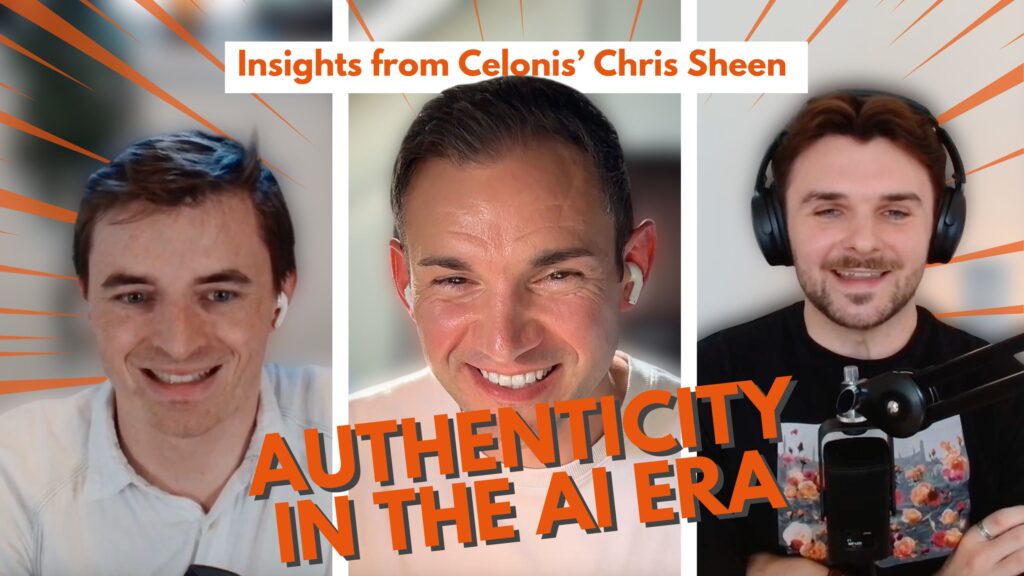
Celonis: when employee reach overtakes the brand
Chris Sheen, Director of Social Media at Celonis, didn’t realize employee reach had overtaken the company’s own channels until he ran the numbers. Celonis now reports advocacy reach first in internal updates, not as an afterthought at the bottom of the deck.
Corporate channels: ~375,000 followers · Employee advocates: ~1.8M reach
If we really want to get the message out there, we have to be using advocates.
The leaderboard above shows the whole sector. A free Employee Advocacy Health Check goes further: it benchmarks your company specifically against the competitors you name, and breaks down activity by seniority.
Leadership outpaces the wider team
Software is one of the few sectors where leadership participation actually outpaces the wider team. Candidates check LinkedIn before they apply, and who’s actually visible there says more than a careers page can.
of US software executives are active on LinkedIn
of all employees in the sector share content
On DSMN8’s Software Development executive leaderboard, active leaders in the US sit at roughly 2.5x the rate of the wider workforce.
Regional leaders: executives sharing in Software Development
UK
XTM
of executives sharing · regional average 23.21%
USA
QuestionPro
of executives sharing · regional average 22.07%
Europe
Ultimo
of executives sharing · regional average 27.40%
Source: DSMN8 executive leaderboards, Software Development: UK, USA and Europe, June 2025.
95% At Ultimo in Europe, nearly every executive on LinkedIn is personally active there. That’s the kind of signal a candidate notices before they ever read a job description.
Dropbox: split the rollout by motivation
Dropbox didn’t launch to everyone at once. It split its employee advocacy rollout by what each group actually wanted.
Power users
Early access. People already active on LinkedIn got in first.
Sales team
Timed to a launch. The program arrived alongside a product launch, with a reason to post.
Recruiting team
Pre-written captions. Built on Dropbox’s key messaging, so content stayed live even when they were offline.
Katherine Keenan, Talent Brand Program Manager, connects with every new hire on LinkedIn after their onboarding session and spends a few minutes a day liking and commenting on her team’s posts to keep reach moving. People can tell when a program is a mandate: a manager who personally connects with every new hire is what makes it feel like an invitation.
Employee advocacy isn’t one-size-fits-all.
incident.io: no formal program, just company culture
Megan Batterbury, Senior Talent Operations Specialist, incident.io, runs a looser version of the same idea but with no formal program, just a culture that started with two co-founders and spread from there. Once a month, employees gather in a room to brainstorm and write posts together, and tenure doesn’t gate who gets heard.
The hiring push
When the talent team pointed that same energy at its own hiring posts, one January LinkedIn push was enough to spike site traffic and job applications.
You can’t be a thought leader in an industry you’re not actively posting about.
See how your leadership team compares against the regional and sector averages above, broken down by seniority, with a free Employee Advocacy Health Check.
From a handful of enthusiasts to a program
A handful of enthusiasts will post on their own. Scaling that across a whole company, where headcount is high and attention is scarce, is the real problem.
Salesloft: scaling past the early adopters
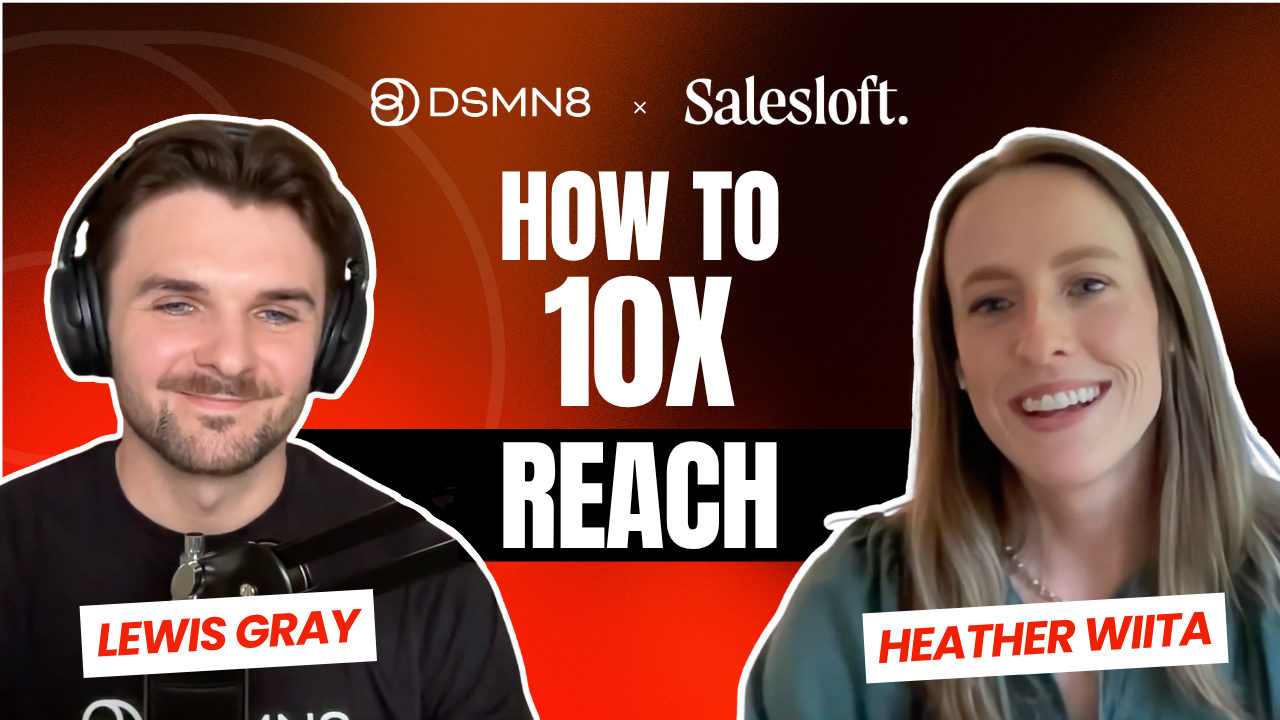
Heather Wiita, Senior Brand and Social Media Manager, Salesloft:
- The CMO joined the pilot group. She wrote onboarding emails and spoke about advocacy in team meetings, so it read as a company priority, not a marketing ask.
- It rolled out department by department, not company-wide on day one.
- It led with value, not the brand. The program helped employees build their own presence with timely, relevant content first. Brand reach followed as a side effect.
- It lived inside Slack, not a separate tool. A dedicated channel flags new content and posts that need a boost.
200+ active participants — “Place your employee as the hero, and the brand reach becomes the by-product.”
The two objections Salesloft removed:
“Why should I do this?”
Answered with executive buy-in and value-first framing.
“Where do I even do this?”
Solved by integrating the program into Slack.
Harness: from 54th to 4th in twenty months
Harness, a California-based software delivery platform with 1,200+ employees, had the same problem at a bigger scale.
Before
Social posts lived in a shared document, but technical and commercial teams needed different content for different audiences. Busy employees forgot to share because nothing prompted them.
With DSMN8
DSMN8 replaced the document with a platform full of ready-to-share posts, split into groups by audience, with auto-scheduling so posts went out without anyone having to remember.
| 54th → 4th | 18.74% → 31.16% | ~9x |
| on DSMN8’s Software leaderboard, in twenty months | of employees posting | reach compared with the company’s own corporate following |
| $200k+ | $0.31 | |
| earned media value in a year | cost per click |
Auto-scheduling meant our teams could essentially just set it and forget it.
Program scale for Harness came from removing as much friction as possible. Auto-scheduled posts split by audience meant employees never had to think about what to share, or remember to do it themselves if they didn’t want to.
The software advocacy program checklist
The leaders in every chapter follow a similar playbook. Tick off what your program already has, and build out what’s missing.
- Executives are active. A CEO who posts once a quarter doesn’t change the norm. One who posts every other week and engages with employee posts does.
- New hires get a kit on day one. Branded profile assets plus starter thought-leadership content.
- Curated content is a draft employees personalize, so marketing doesn’t have to approve every word to keep it safe.
- The nudge lives where people already work. Slack or Teams alerts, not a separate app to remember.
- AI-assisted drafts are guardrailed. Guardrails catch stock AI phrasing, like “thrilled to announce,” before it goes out, so posts still read like a person wrote them.
- Content is segmented, not one-size-fits-all. Different groups join for different reasons (marketers, recruiters, salespeople), and your program should match.
- Impact is tracked to pipeline. UTM tracking into your CRM and analytics, so the business case is clear.
Get the full framework and guidance on implementing each one in the report.
Turn your people into your best growth channel
Your employees already have the reach, the trust, and the audience, and DSMN8 turns that into a measurable program. Get a free health check to see where you stand against your competitorrs or book a demo to see the platform in action.
ISO 27001 certified · GDPR compliant · SSO · Approval workflows · Delegate access.
Go deeper
Hear how practitioners make this work in practice, on the DSMN8 podcast:


Podcast
Podcast
Podcast

Podcast
Podcast
Podcast
Further reading: How DSMN8 works for computer software companies. Or read our practical guide to employee advocacy for software companies.
Frequently asked questions
Can employee advocacy work for software companies that already have a strong brand account?
Yes. Buyers already discount brand copy because a brand account is still selling something. An employee posting under their own name isn’t, so individual posts earn trust a brand account can’t duplicate, no matter how good the brand account is.
Does employee advocacy help with AI search and AEO?
Yes. LinkedIn is already the most-cited domain for professional queries across AI search platforms, and employee posts make up a growing share of what gets cited. An active employee presence is one of the few levers that can help build your AEO/GEO strategy.
How do you get technical experts, like engineers, to post consistently?
Pre-approved starter content that employees are expected to personalize, plus light AI-tone guardrails, removes both the time cost and the risk of getting it wrong. Editing a caption drives about 3x more engagement than an unedited repost; writing original content drives about 9x more.
Should executives or the wider team drive adoption first?
Software is one of the few sectors where executive participation already outpaces the wider team. Leading with executives modeling it first makes the rest of the rollout read as normal rather than performative.
What's the difference between a formal program and just encouraging a sharing culture?
Both work. incident.io runs with no formal program, just a culture that started with its co-founders. Dropbox and Salesloft run structured, segmented rollouts instead. The right model depends on company size and how fast you need results.
How is impact on pipeline actually measured?
UTM tracking into your CRM and analytics, so reach and engagement connect to a business case rather than staying stuck as vanity social media metrics.