Employee Advocacy for Regulated Industries
The most active law, pharmaceutical, healthcare, and financial services firms get up to 6.4x more employee sharing than their industry average, without bending a single rule. See how.
- See the social media leaderboard for your sector.
- Get the governance framework active firms use to stay compliant.
- Benchmark your own employee sharing rate against the industry average.

Regulation isn’t the barrier you think it is
The most compliance-heavy sectors are also the most risk-averse, even though employee voices there carry the most trust. Three things keep experts quiet:
- Employees worry about sharing the wrong thing, so they share nothing.
- Experts are busy, and posting feels like one more risk for no clear return.
- ROI from employee social activity is hard to track, so leadership doesn’t prioritize it.
The result: silent experts, lost influence, and missed trust before a client or candidate ever gets in touch. The firms below face the same rules as everyone else. They’ve just built the guardrails that let people speak.
Get 'Safe to Share', the employee advocacy in regulated industries report:

See what the most active law, pharmaceutical, healthcare, and financial services firms do differently: the latest leaderboard data, real program results, and advice from practitioners who’ve done it.
What’s inside:
- Law: the five habits behind a 2.7x sharing rate, while staying in control.
- Pharmaceuticals & healthcare: how leaders get three to five times the average sharing rate with a short no-go list.
- Financial services: how the sector leader gets 6.4 times the industry average.
- The regulated industries advocacy checklist: the know-your-rules table and the governance framework.
Law: control without being controlling
of employees at the most active law firms share each month, nearly three times the 7.15% industry average.
What the most active law firms do differently:
- Pre-approved captions — employees pick from vetted options, so there’s no guesswork about what’s safe to say.
- A policy that empowers, not restricts — written guidelines focus on how to share well, not just what’s banned.
- Senior partners post first — when leadership shares, sign-ups rise by about 30%.
- They engage, not just post — replying to colleagues’ posts (10+ interactions) drives 3.8x more reach than posting alone.
You want to create controls, but you don’t want to be controlling, because that undermines the whole purpose of social media. If people think someone’s going to be monitoring every action they take, they also won’t ever take any action.
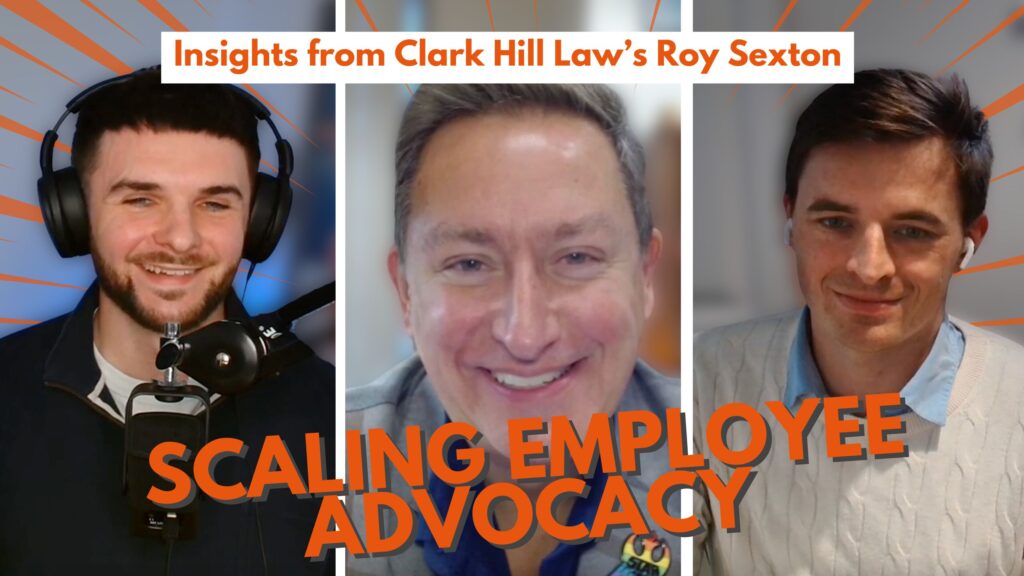
Clark Hill’s own numbers back this up: 9.61% of employees shared in September 2026, placing the firm 15th in the US (up 27 spots) and 39th globally (up 54). Hear the full conversation with Roy Sexton.
What this means for compliance: client confidentiality, professional conduct rules, and reputational risk are the main concerns for law firms. Pre-approved content, a clear written policy, and visibility into what’s shared address all three. For more on building a program like this, see 10 Law & Legal Employee Advocacy Cheat Codes.

See where your firm ranks. Get the full Law & Legal leaderboard:
The leaderboard above shows the whole sector. A free Employee Advocacy Health Check goes further: it benchmarks your firm specifically against the competitors you name, and breaks down activity by seniority.
Pharmaceuticals & healthcare: regulation isn't the enemy, ambiguity is
Pharmaceuticals: pharma has some of the strictest content rules of any sector, yet its leaders get more than one in ten employees sharing every month, double the 5.31% industry average. The difference is clarity. Employees know exactly what’s off-limits.
Clear limits, approved content, no pressure: keep the no-go list short and specific (product claims, clinical trial details, and medical advice are out; almost everything else is in), give employees approved content curated from the company website, press, and trusted partners, and keep participation optional.
As a user, this system gives me the security of being active in social media without taking risks.
Grünenthal, a family-owned pharmaceutical company in Aachen, Germany, has 86% of users active (compared with under 2% typically), 7,496 content clicks a month, and a cost per click of just £0.11. Active users rose more than 60% after senior leadership got involved, and gamification tripled engagement. Read the full case study.
Regulation isn’t the enemy. Ambiguity is.
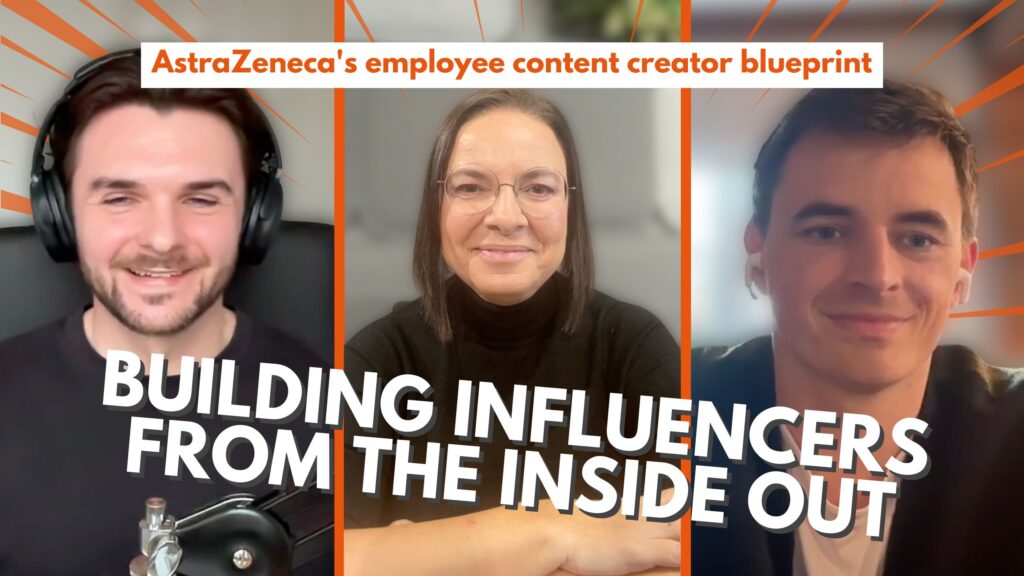
AstraZeneca ranks eighth in the UK Pharmaceuticals leaderboard, with 4,500 employees sharing in 30 days, working from a no-go list covering product claims, clinical trial details, and medical advice. Hear the full conversation with Agata Qanadilo.
Healthcare: healthcare shares pharma’s privacy pressures, with HIPAA and patient confidentiality front of mind. The leader, Spring Health, gets one in eight employees sharing each month, about five times the 2.45% industry average. Digital health, health IT, and mental health providers fill most of the top 10.
Scale is no barrier: 5,500 Abbott employees shared in 30 days, along with 3,000 at Philips, 2,500 at Siemens Healthineers, and 2,000 at NHS England.
What this means for compliance: HIPAA restricts sharing patient information for both sectors, including indirect disclosures, and FDA rules additionally prohibit off-label promotion for pharma specifically. A short, explicit no-go list plus pre-approved content covers both.

See where your company ranks. Get the full Pharmaceuticals leaderboard:

See where your organization ranks. Get the full Healthcare leaderboard:
The leaderboards above show the whole sector. A free Employee Advocacy Health Check goes further: it benchmarks your company specifically against the competitors you name, and identifies how active your senior leaders are, too.
Financial services: make compliance your best friend
of employees at Truist Wealth, the sector leader, share each month: more than six times the 4.74% industry average.
Trust in the sector is low, which makes authentic employee voices worth even more.
Scale is no barrier: 11,000 Edward Jones employees shared in 30 days.
What the sector leaders do differently:
- Pre-approved content — admins create and approve before anyone shares, so there’s nothing risky left for employees to decide alone.
- Delegate access for executives — approval workflows let marketing manage an executive’s posts without ever sharing their password.
- Authentic, not identical, captions — guideline captions, not mandatory scripts, so the whole firm doesn’t post the same words on the same day.
DSMN8 solves the problem of employees being worried that they might share the wrong thing.
Kreston Reeves, a London accountancy and advisory firm with more than 500 employees, has seen a 6x return on investment, $83,000 in earned media value, a $0.97 cost per click, and 205 active users. Read the full case study.
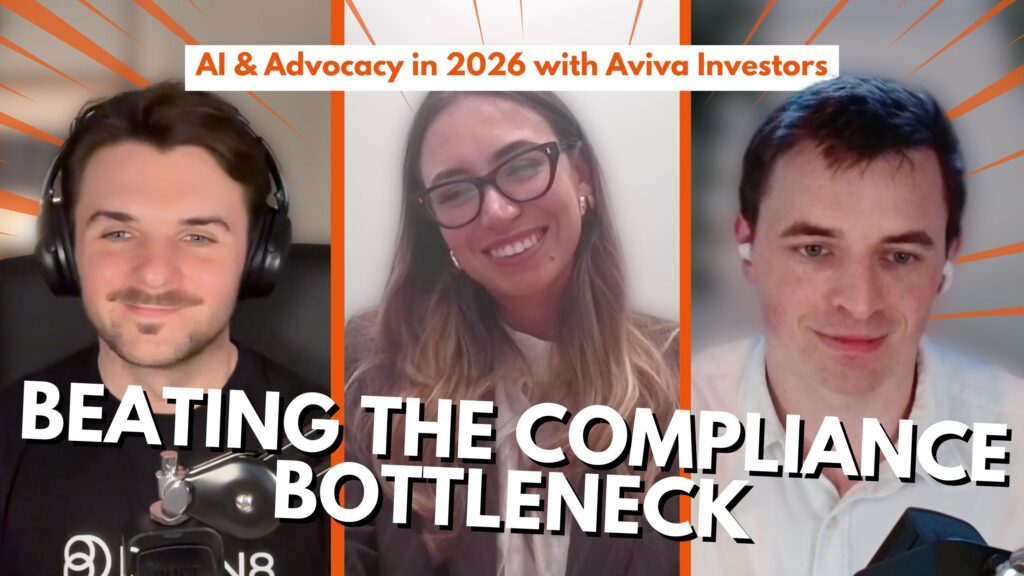
Aviva Investors (8.90% sharing in September 2026, 7th in the UK, over £500,000 in earned media value) advises making legal and compliance your best friends from the start; its AI flags posts red, amber, or green by regulatory risk. Hear the full conversation with Beatrice Edera Panariello.
At Barclays, about 2,500 employees share every month through its Creator Club, and moving from polished corporate video to employee-created content lifted engagement by 1,200%. Hear the full conversation on Barclays’ Creator Club.
What this means for compliance: FINRA Regulatory Notice 17-18 covers social media for member firms, SEC Rule 17a-4 requires communications to be archived, Regulation FD governs selective disclosure, and in the UK a misleading post can draw FCA scrutiny. Pre-approval, archiving, and a tiered review process are table stakes.

See where your firm ranks. Get the full Financial Services leaderboard:
The leaderboard above shows the whole sector. A free Employee Advocacy Health Check goes further: it benchmarks your firm specifically against the competitors you name in financial services.
For deeper financial services detail, see our dedicated employee advocacy for financial services use case page.
The regulated industries advocacy checklist
The leaders in all four sectors follow the same playbook: knowing exactly which rules apply to their sector, then building a governance and compliance process around them.
| Sector | Rule | What it means for employee posts |
|---|---|---|
| Financial services (US) | FINRA Regulatory Notice 17-18 | Covers social media and digital communications by member firms and registered reps |
| Financial services (US) | SEC Rule 17a-4 | Business communications on social platforms must be retained |
| Financial services (US) | Regulation FD | No selective disclosure of unreleased financial information |
| Financial services (UK) | FCA | A misleading post can draw regulatory scrutiny |
| All sectors (US) | FTC endorsement guides | Employees must not claim to be impartial third parties |
| Pharmaceuticals & healthcare (US) | HIPAA | No patient information, including indirect disclosures |
| Pharmaceuticals (US) | FDA promotion rules | No off-label promotion |
| Law | Professional conduct and confidentiality rules | No client-confidential detail; firm policy sets the line |
| Any (Germany) | Works council law | An agreement must be in place before using employee advocacy software. See the German works council rollout guide. |
Build the governance framework
Seven things companies in regulated sectors ensure when running employee advocacy programs:
- Compliance signs off before launch
- Written guidelines specific to your organization
- Admin-controlled content
- Tiered approvals
- Archiving
- Recurring training
- Regular audits
Get the full framework and guidance on implementing each one in the report.
Go deeper
Hear how practitioners make this work in practice, on the DSMN8 podcast:
Podcast
Podcast
Podcast

Podcast
Turn your people into a compliant growth engine
Book a demo and see how DSMN8 helps regulated firms get employees sharing, safely.
ISO 27001 certified · GDPR compliant · SSO · Approval workflows · Delegate access.
Frequently asked questions
Can employees in regulated industries use employee advocacy safely?
Yes. The firms with the most active employees on LinkedIn aren’t the ones with looser rules. They’re the ones with pre-approved content, clear written guidelines, and visibility into what’s shared.
What does FINRA say about employee social media use?
FINRA Regulatory Notice 17-18 covers social media and digital communications by member firms and registered reps. SEC Rule 17a-4 requires those communications to be retained.
Does HIPAA stop healthcare and pharmaceuticals employees from posting on LinkedIn?
No, but it does restrict sharing patient information, including indirect disclosures. A short, explicit no-go list plus pre-approved content keeps posts compliant.
Can law firm employees share content without breaching client confidentiality?
Yes, when marketing writes pre-approved captions and the firm’s social media policy sets clear dos and don’ts that every new hire receives.
Does the FCA regulate what UK financial services employees post on social media?
A misleading post can draw FCA scrutiny. Pre-approval, archiving, and a tiered review process, light-touch for low-risk updates and closer review for product or performance claims, address this.
Is employee advocacy software compliant in Germany?
Where a works council exists, an agreement must be in place before using employee advocacy software.